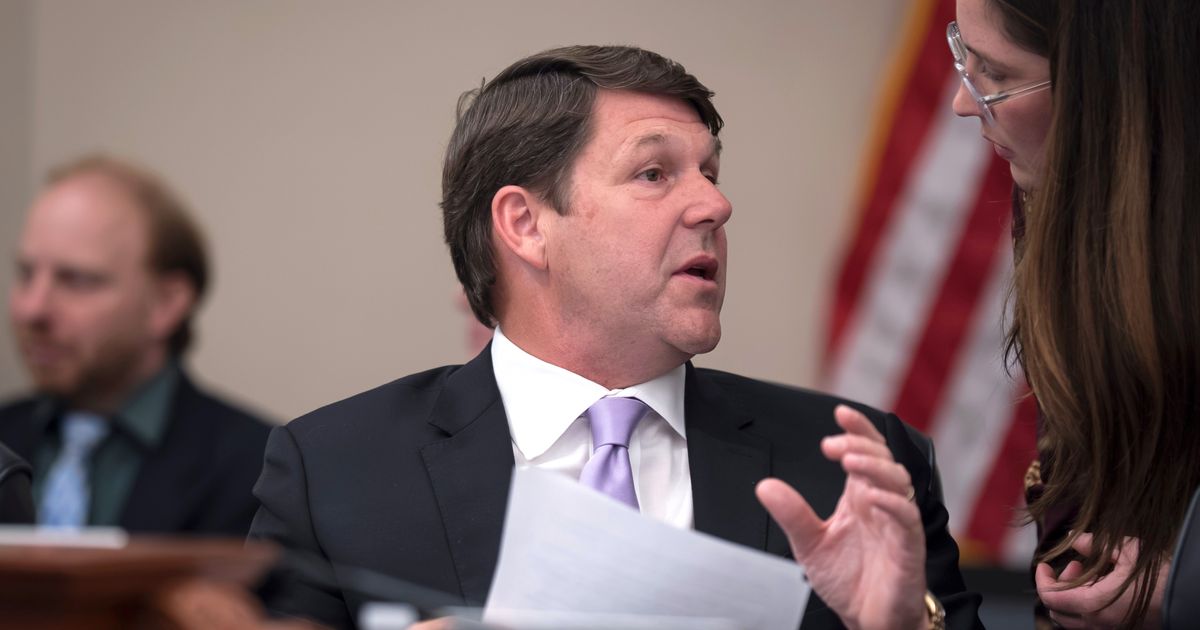
Republicans on the House Budget Committee have propelled a notable $95 billion funding package aimed at the Iran conflict, agricultural assistance, and President Donald Trump’s initiative for stringent voter ID regulations. This decision came during a party-line vote, reflecting significant challenges that may arise in both the full House and Senate.
Strategic Push Ahead of Midterm Elections
Budget Committee Chairman Jodey Arrington articulated this proposal as a final effort to deliver results for constituents before the crucial midterm elections that could reshape congressional control. The measure passed with a narrow 20-14 vote, signaling a unified effort among Republicans. Arrington emphasized the importance of fulfilling the commitments made to the American electorate, stating, “We are rallying to finish what we started when the American people sent us here.”
The funding plan predominantly emphasizes military support, allocating around $60 billion for the Iran conflict. Arrington recognized that there are differing opinions about the U.S. involvement in this overseas engagement but stressed the necessity of financial resources for military essentials. He remarked, “Just the bombs, bullets and battlefield readiness for our men and women in uniform” are crucial for ensuring success in their missions and for their safe return.
The resolution also outlines funding directives for various congressional committees, earmarking $13 billion for Intelligence, $12 billion for Agriculture, and $10 billion for the Administration, which oversees voting and election processes.
Speaker Johnson’s Legislative Strategy
This proposal represents the third budget reconciliation effort by Republicans this session, aiming to push through Trump’s priorities despite Democratic opposition. Utilizing a legislative strategy that permits simpler majority votes, House Speaker Mike Johnson has applied this approach previously to pass significant initiatives like tax cuts and Homeland Security funding.
Johnson has taken the lead on this initiative independently, engaging in detailed discussions with Trump and hosting private gatherings with fellow Republicans at Camp David to refine the proposal. However, the viability of the 47-page package remains questionable, as it seems too limited for some and overly expansive for others, with a vote scheduled in the full House next week.
Notably, Rep. Chip Roy, a key Republican and member of the Freedom Caucus, abstained from voting during the Budget Committee session due to flooding in his Texas district, highlighting the internal divisions and differing priorities within the party.
Democratic Opposition and Concerns About Affordability
Democrats are preparing to unanimously oppose the budget proposal, as demonstrated in the committee votes. Ranking Democrat Rep. Brendan Boyle criticized the document for neglecting essential issues like affordability, stating, “People know this is a failed presidency, and a failed Republican majority.” His sentiments reflect growing concerns about how the new spending will be financed—whether through cuts to existing programs or increased national debt.
During committee discussions, Democrats proposed numerous amendments aimed at addressing pressing issues, such as the reinstatement of enhanced Affordable Care Act subsidies and additional funding for food assistance programs. Rep. Lloyd Doggett, D-Texas, pointedly attributed the high cost of living to the ongoing Iran war, claiming that Americans are disproportionately affected by a conflict that never should have begun.
Future Uncertainties as Senate Resistance Looms
Looking ahead, the path for this funding package is uncertain, especially with a rare Saturday pro forma session being scheduled in the House to facilitate prompt resolution filing for upcoming votes. Johnson faces a delicate balancing act, needing to secure support from his narrow Republican majority while having no input from Democrats.
Furthermore, the resolution must also receive Senate approval, where Republican senators have expressed skepticism about the House’s approach. As fiscal concerns grow among party leaders, the Senate’s pivotal role in determining the fate of this proposal will be closely monitored.
In the meantime, committees in the House are expected to draft specific bill texts over the August recess, with plans to revisit the complete package for a final vote in the fall, setting the stage for continuing debates on budget priorities and governmental spending.