
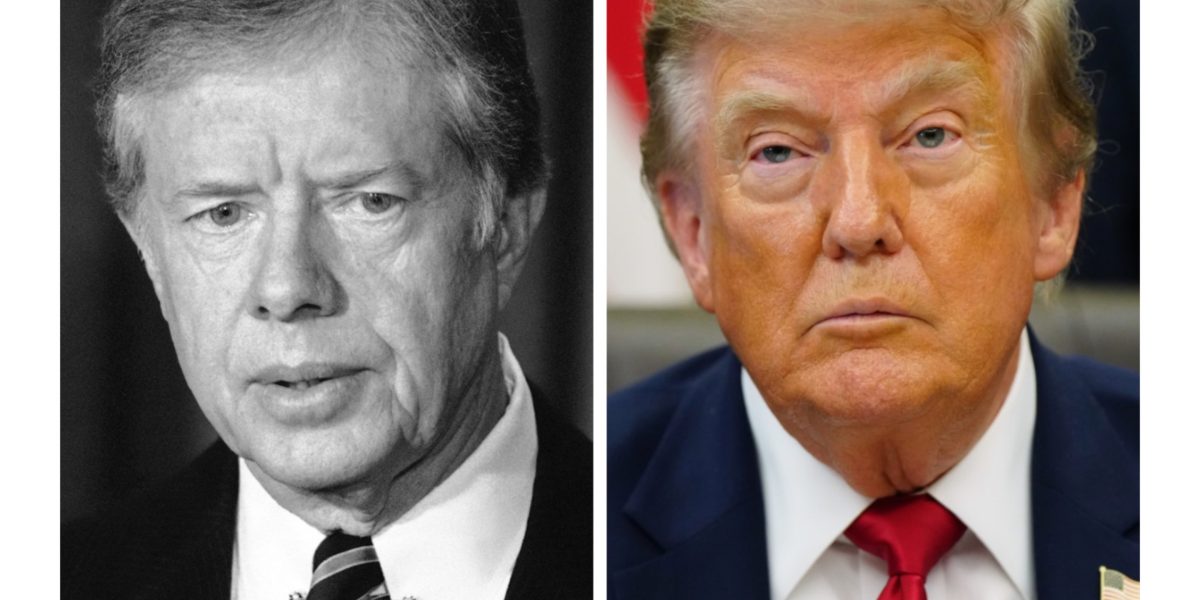
Jimmy Carter and Donald Trump have had an intertwined political narrative, marked by contrasting styles and legacies. While Trump has historically targeted Carter in his rhetoric, recent developments indicate a shift in Trump’s perspective, aligning him closer to the challenges Carter faced. Now more than ever, the connections between these two presidents seem relevant as they grapple with complex national and international issues.
Similar Challenges: Inflation and International Crisis
Both Trump and Carter have had to confront the persistent issue of inflation, a point of contention that has significant implications for their presidencies. Carter faced staggering inflation rates peaking at 14.7% in 1980, while Trump has dealt with rising consumer prices that have recently reached three-year highs. In May, inflation climbed by 4.2%, reflecting a growing economic concern that many Americans face. This economic turmoil not only threatens individual livelihoods but also affects the overall stability of both leaders’ administrations.
Moreover, both presidents have encountered ongoing crises involving Iran, specifically issues surrounding the Strait of Hormuz. Trump, echoing sentiments from Carter’s tenure, has found himself grappling with military and diplomatic challenges in the region. In a striking moment, Trump remarked he didn’t want to “be Jimmy Carter” when asked about military actions in Iran, revealing a recognition of the political repercussions that faced his predecessor. As the situation escalates, it is evident that parallels between the two leaderships are increasingly hard to ignore.
Evolution of Trump’s Views
Interestingly, Trump’s recent remarks suggest a shift in how he perceives Carter’s presidency. Historically, Trump has mocked Carter as a weak leader. However, with the challenges of his own, including escalating tensions with Iran and economic woes, he appears more reflective about the political implications of these issues. This evolution in Trump’s tone indicates a nuanced understanding of the previous president’s struggles, diverging from his earlier approach of simply using Carter as a comedic foil.
Johnathan Adler, an author focused on Carter’s legacy, speculated that the challenges facing Trump are leading him to reevaluate the significance of Carter’s time in office. This acknowledgment may not only stem from a place of empathy but also from a strategic understanding that public perceptions of leadership can shift based on current events.
Divergent Leadership Styles
Despite various similarities, the differences in leadership style between Trump and Carter are profound. While Carter was known for his integrity and religious dedication—vowing never to lie to the American people—Trump’s approach has been marked by a lack of transparency, frequent embellishments, and a brash public persona. These contrasting styles shape how each presidency is perceived and evaluated.
Carter’s commitment to ethical governance extended to placing his business interests in a blind trust during his presidency. In contrast, Trump has faced scrutiny over his financial dealings, with accusations of profiting from presidential actions that benefit his business interests. Carter’s diplomatic efforts, such as receiving the Nobel Peace Prize, stand in stark contrast to Trump’s self-assessment of deserving accolades without having received any of note.
As both presidents face historical comparisons amidst economic and geopolitical turmoil, it becomes clear the lessons from one leadership can resonate in another’s tenure. Whether Trump can learn from the challenges of the past, particularly those faced by Carter, may ultimately determine how history evaluates his own presidency. In the complex tapestry of American political legacy, the importance of recognizing past lessons can guide future leaders through challenges that seem all too familiar.