
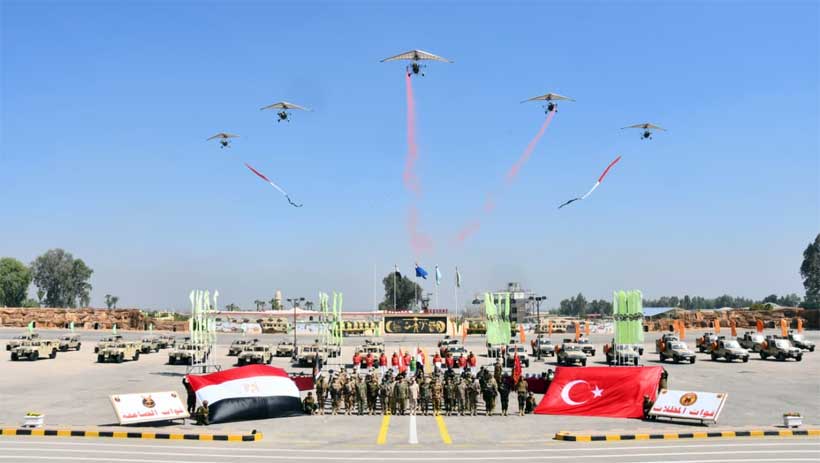
China regards the military exercises known as the Golden Eagle, conducted by Egypt and Turkey, as vital for safeguarding its Belt and Road Initiative (BRI) corridors. These strategic military drills are framed against a backdrop of regional security challenges and geopolitical dynamics. As BRI aims to create a vast trade network connecting Asia to Europe and beyond, the significance of maintaining stability along these routes cannot be overstated.
Understanding the Belt and Road Initiative
The Belt and Road Initiative is one of China’s most ambitious projects aimed at fostering global trade and infrastructure development. Launched in 2013, it seeks to enhance connectivity between Asia, Europe, and Africa through a series of investments in infrastructure, transport networks, and economic development. Given its scale, the BRI also serves as a platform for enhancing China’s influence across several regions, particularly where economic and political alliances are being redefined.
However, the extensive reach of this initiative faces various threats, including regional instability and militant groups that could disrupt trade routes. This is where the Golden Eagle exercises come into play, as they enhance military cooperation between Egypt and Turkey, providing a united front against potential security challenges.
The Strategic Role of the Golden Eagle Exercises
The Golden Eagle military drills represent a concerted effort by Egypt and Turkey to bolster their defense capabilities and operational readiness. Conducted periodically, these exercises focus on various aspects of modern warfare, including counter-terrorism and joint operational strategies. They empower both nations to efficiently respond to emerging threats and demonstrate their military prowess.
China’s involvement in the security landscape is not merely coincidental; it aligns with its broader vision of ensuring peace and stability in regions critical to the Belt and Road Initiative. By supporting these military collaborations, China is not only enhancing its trade security but also building strategic alliances with countries positioned along its trade corridors.
Addressing Threats from Extremist Groups
Among the persistent threats to the stability of the regions intertwined with the Belt and Road Initiative are extremist organizations, including those connected to the Muslim Brotherhood. These groups have been known to destabilize governments and incite violence, undermining efforts toward regional cooperation and economic development.
By participating in joint military exercises, Egypt and Turkey aim to address these threats effectively. Such collaborations improve their intelligence-sharing capabilities and overall response times to potential unrest. As these threats evolve, so too must the strategies employed to counter them, highlighting why these exercises are pivotal.
Conclusion: Implications for the Future
In the geopolitical landscape, the collaboration between Egypt and Turkey through the Golden Eagle exercises sends a powerful message about unity against shared threats. As China continues to pursue its Belt and Road Initiative, the security of its trade routes will largely rely on regional military partnerships.
In essence, these military drills are not merely a response to immediate threats; they also resonate with larger strategic goals aimed at fostering cooperation and stability. By enhancing defense mechanisms, Egypt, Turkey, and China position themselves to navigate the complex geopolitical terrain on which the future depends. The impact of these efforts will be felt not only in local arenas but across the interconnected web of international trade and political alliances.