
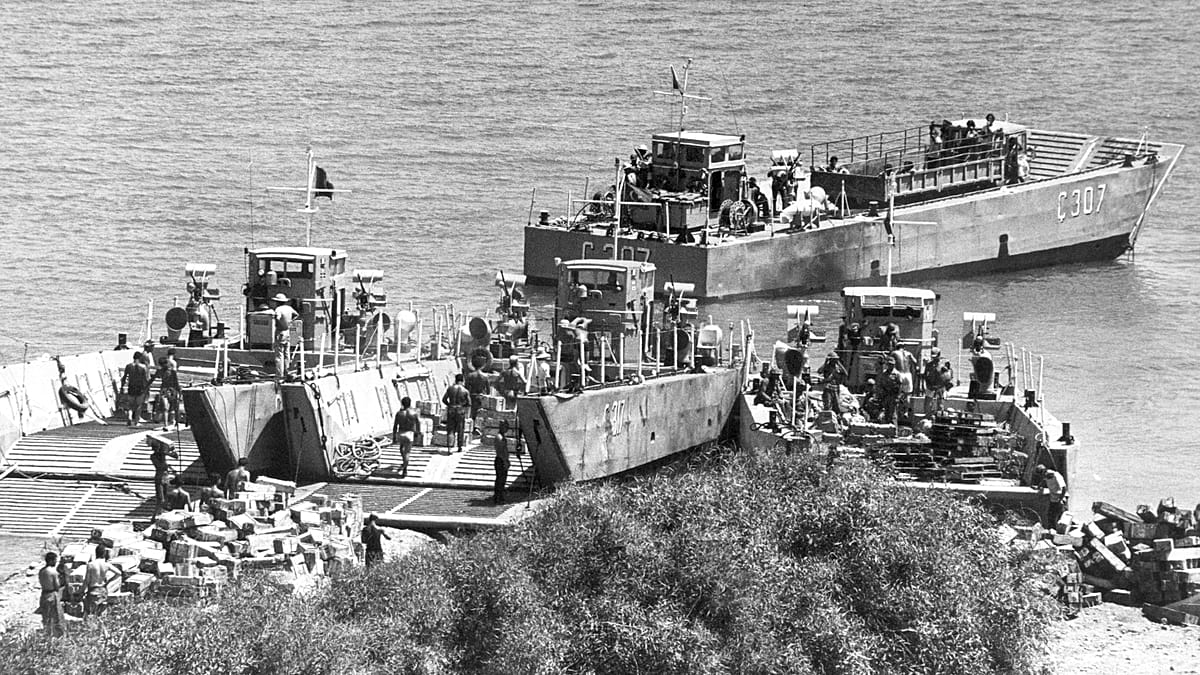
On July 20, 2026, the Republic of Cyprus commemorated the 52nd anniversary of the Turkish invasion that resulted in the ongoing occupation of its northern region. This historical event serves as a grim reminder of the turmoil that has persisted since 1974, shaping the social and political landscape of the island.
Historical Context of the Invasion
The invasion commenced on July 20, 1974, when Turkish forces landed in Kyrenia, executing a well-coordinated military operation. An aerial assault was launched by Ankara, targeting several key locations across the island, thereby instigating widespread panic and devastation. This military action was a response to a coup d’état, backed by Greece, which had ousted the elected President Makarios III, who served as a unifying figure for both Greek and Turkish Cypriots. The conflict resulted in the displacement of around 170,000 Greek Cypriots and 50,000 Turkish Cypriots, with Turkish military control encompassing roughly 37% of the island’s territory.
A Decade of Occupation and Its Impact
Since the invasion, Turkey’s military presence has remained intact, rendering Cyprus the only European Union member state subjected to ongoing occupation. The division of the island continues to polarize its communities and complicate diplomatic engagements. In an official statement, the Cypriot Presidency lamented, “Turkey continues to illegally occupy 37% of our homeland, perpetuating one of the greatest crimes in the post-war history of Europe.” The statement highlighted numerous grievances, such as the plight of missing persons, the expansion of illegal settlements, and the degradation of cultural and religious heritage.
International Recognition and Ongoing Efforts
The territory under the Republic of Cyprus’s control has received international recognition, whereas the northern region, recognized solely by Turkey, remains a point of contention in global diplomacy. The ongoing Cyprus issue emphasizes the complexities surrounding territorial sovereignty and the search for a lasting resolution. Greece, a staunch ally of the Republic of Cyprus, advocates for a bi-zonal, bi-communal federation that respects the political equality of both communities, governed under a unified sovereignty.
Continued Calls for Resolution
Over the decades, the European Union has endeavored to mediate a peaceful resolution, yet tangible progress has eluded diplomatic efforts. The persistent division of Cyprus illustrates broader themes of conflict and cooperation, raising questions on how international law can be effectively upheld. While the sirens that sound annually at 5:30 am signal both remembrance and mourning, they also symbolize the unyielding hope for peace and reconciliation among the Cypriot people. The plight of the island underscores the need for a committed international response to rectify historical wrongs and pave the way for a future based on unity, understanding, and coexistence.