
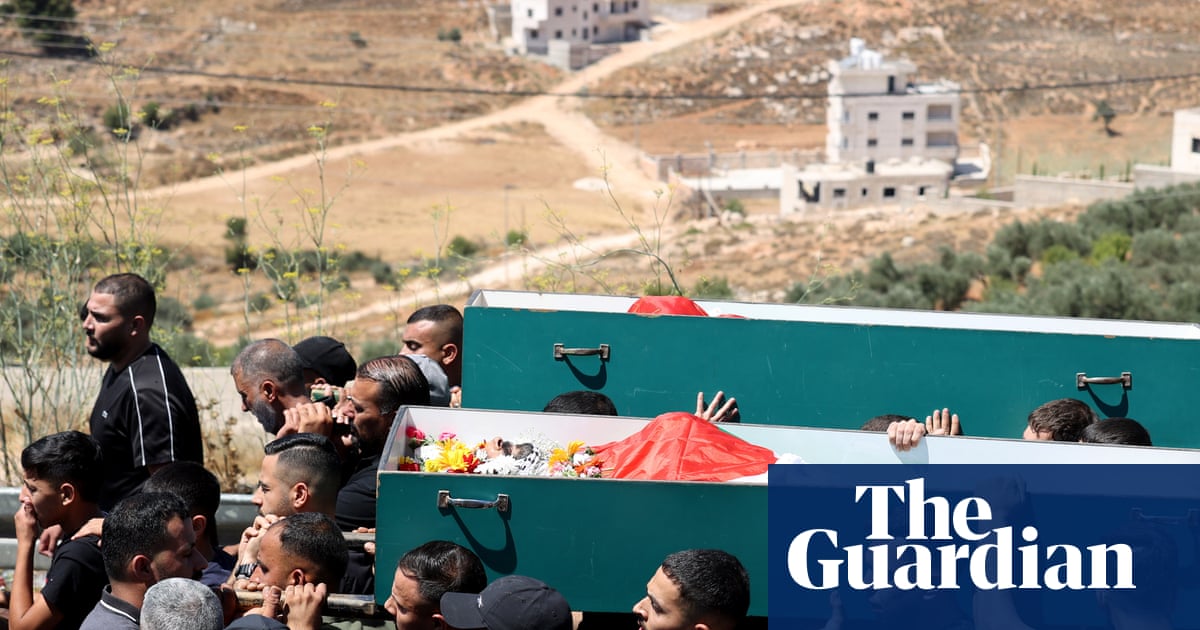
The recent violence in the West Bank has escalated to alarming levels, particularly in the village of Deir Jarir, where a brutal raid occurred, resulting in the deaths of two Palestinians and leaving another seriously injured. Such attacks reflect an ongoing pattern of vicious militant settler behavior that has intensified, fueled by the complicity of Israeli forces.
The Raids and Forces Involved
On a Sunday night just past 9 PM, settlers from a nearby outpost invaded Deir Jarir, alleging they were in search of stolen livestock. Israeli military personnel and police quickly joined the settlers, protecting them as they attempted to seize livestock from local residents. Eyewitnesses recount a chaotic scene; when villagers responded by calling for help, the military opened fire, killing two men and marking the beginning of a night filled with subsequent attacks by both settlers and Israeli soldiers that continued until the early hours.
One victim, Odeh Farajna, a respected member of the community at 53, was shot in the chest during the incident. His relative, Saber Ajaj, described the harrowing moment he discovered Farajna mortally wounded. This gut-wrenching account underscores the grim reality families face in the region, where each attack further tears the fabric of community life.
A Pattern of Violence
Local residents reported that incidents like this are becoming increasingly common, with settlers frequently launching attacks on the outskirts of Deir Jarir to steal livestock. Adel Rashid, the father of the younger victim, Abdul Adel Rashid Abu Mukh, expressed his grave concerns about what he termed a “partnership” between the Israel Defense Forces (IDF) and settlers. Rashid disclosed that on the night of the attack, a staggering 21 of his sheep were taken, with another villager losing an additional 50 sheep.
Witnesses captured video footage that illustrated the troubling dynamics of these incidents: one settler, shielded by four IDF soldiers, led a sheep away from a local house while the violence unfolded around him.
The Broader Context of Settler Violence
These violent incursions coincide with a growing trend of settler aggression, escalating since the recent Hamas attacks on October 7, 2023. This rise in violence is compounded by Israeli government plans to accelerate settlement expansion, which is often accompanied by heightened military presence in the region. The new settlements create additional pressure on Palestinian communities, while arbitrary checkpoints restrict access to essential areas like farmland, further compounding the hardships people in Deir Jarir face.
As Dror Etkes, who monitors Israeli land policies, points out, the apparent coordination between the military and settlers during these raids paints a troubling picture. Since October 7, seven individuals from Deir Jarir have lost their lives, their faces now marked on the village walls. Activists argue that the Israeli government promotes an environment of ethnic cleansing, enabling settlers to act with impunity while attacking those who attempt to defend their homes.
In light of these events, it becomes evident that Israel’s legal system often fails to hold its citizens accountable for violence against Palestinians, fostering a climate of fear and resentment. The cycle of violence, reinforced by a lack of accountability, poses significant challenges to achieving peace and stability in the region.
As the situation escalates, residents continue to demonstrate resilience in the face of adversity. Hundreds turned out for the funeral of the two slain men, marching through Deir Jarir to commemorate their lives. However, with checkpoints and military presence restricting their movement, the community’s future remains uncertain. Iyad Odah, a village council member, highlighted the despair felt by many, stating that attempts to disrupt daily life are merely tactics aimed at making existence unbearable for those in the village.
In the aftermath of the atrocious raid, military officials claimed their presence was justified, asserting they were escorting settlers to retrieve their stolen livestock. Yet, the use of live fire in response to perceived threats raises vital questions about crowd control tactics and the ongoing violence facing Palestinian communities in places like Deir Jarir. As tensions remain high, the community seeks not just justice, but an end to the relentless cycle of violence that has come to define their lives.