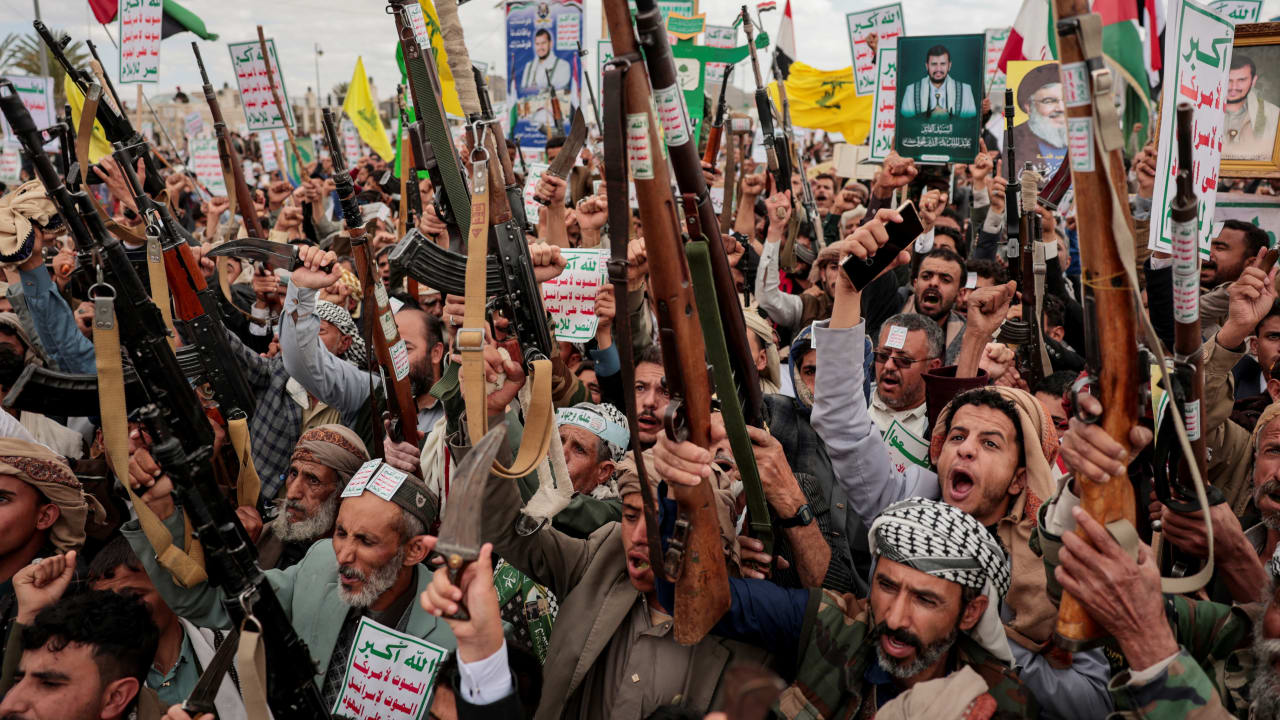
Yemen’s Houthi movement, supported by Iran, has made a significant announcement regarding its naval strategy against Saudi Arabia. In a recent televised address, the military spokesperson for the Houthis declared an immediate maritime blockade against the Kingdom, stating this move is a direct reaction to prolonged hostilities.
Houthi’s Justification for the Blockade
The Houthis framed the blockade as a measure of retaliation, emphasizing their stance against what they described as the “criminal Saudi enemy.” They declared that the blockade operates on the principle of “an eye for an eye,” signifying their intent to escalate military actions should they perceive any provocations from Saudi Arabia. This proclamation marks a crucial turning point in the ongoing conflict, which has been marked by cycles of violence.
Brig. Gen. Yahya Saree, the Houthi spokesperson, warned that any further “foolish acts” from Saudi Arabia will trigger a significant military response. The Houthis insisted that this blockade aims to guard against what they call Saudi Arabia’s unjust siege, which they claim has lasted for nearly 12 years. This siege includes restrictions on resources, access to ports, and air travel, they allege, imposed by Saudi military assets.
Escalation of Military Actions
This blockade is not an isolated incident; it follows a series of missile strikes by the Houthis targeting Saudi Arabia in response to alleged Saudi bombings of an airport under Houthi control. These recent events suggest a breakdown of the informal truce that had been maintained since March 2022. That period of relative peace saw the Houthis refrain from significant military actions, particularly against crucial Saudi energy installations.
The renewed hostilities have raised concerns regarding the potential implications for regional stability. The conflict, which has already resulted in a humanitarian crisis, could worsen as military tensions escalate. The Houthis’ assertive posture may provoke further retaliatory actions from Saudi Arabia or its allies, thereby complicating diplomatic efforts in the region.
Global Reactions and Future Implications
The international community is closely monitoring the situation, given the potential for economic repercussions that could arise from an expanded conflict. The water routes adjacent to Yemen are vital for global trade, particularly for oil supplies. A blockade could disrupt shipping, impacting not only Saudi Arabia but also broader markets. Countries that rely on a stable flow of resources from this region may call for de-escalation and dialogue to ensure navigational security.
In conclusion, the Houthi blockade represents another layer of complexity in an already tumultuous theater of war. The justification of this blockade, compounded by the potential for heightened military actions, poses significant risks not only to local civilian safety but also to international economic stability. Stakeholders are increasingly urged to prioritize diplomatic engagements in hopes of achieving a lasting resolution to this protracted conflict.