
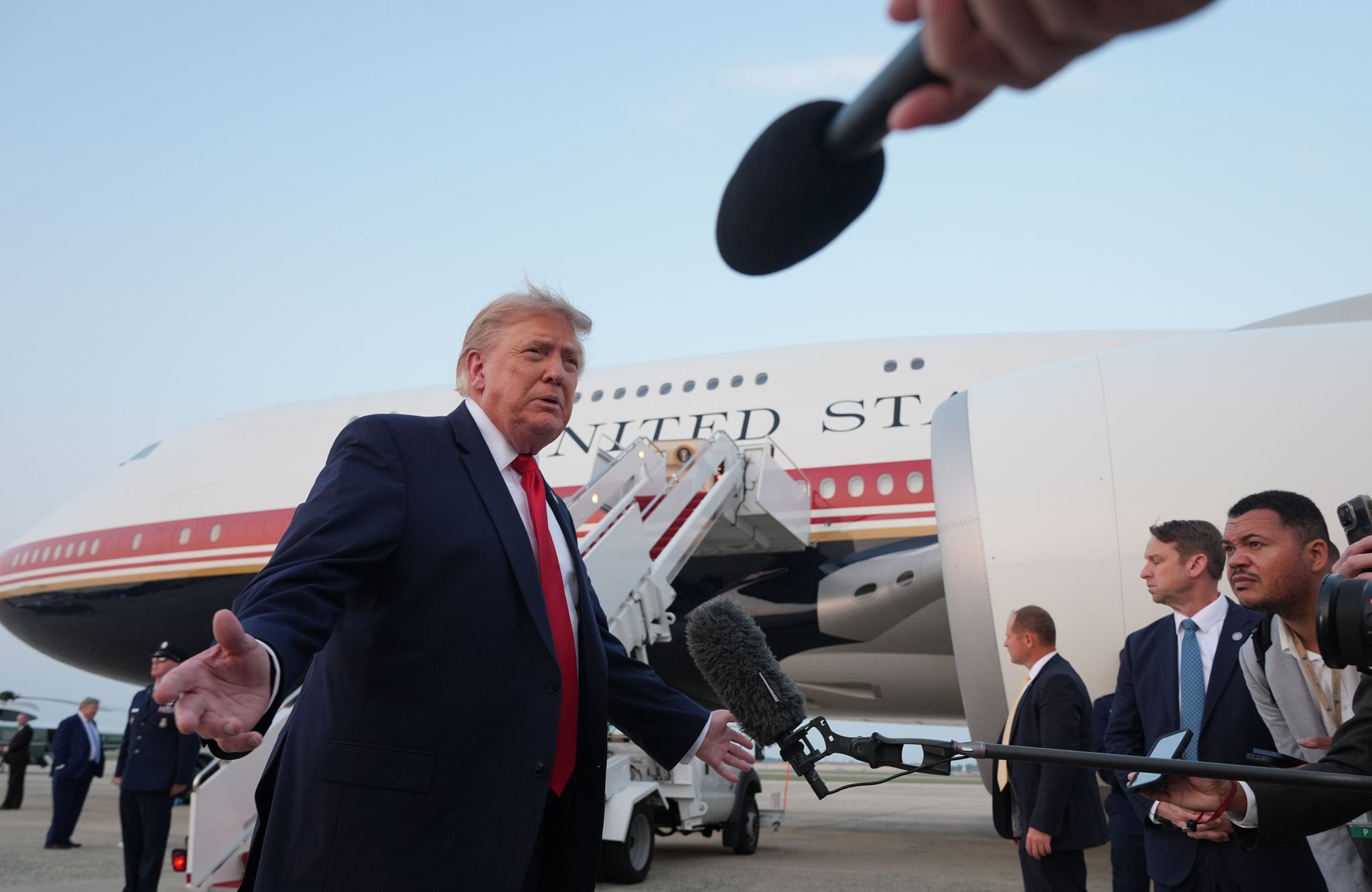
President Donald Trump recently discussed the modifications being made to a Boeing 747-8, which has been designated for temporary use as Air Force One. The aircraft, gifted by Qatar, is set to undergo significant upgrades, expected to take about a month starting in August. This announcement comes as Trump returns from various engagements, indicating a focus on enhancing the jet’s capabilities.
Upgrades and Features of the Boeing 747-8
In his remarks, Trump emphasized the jet’s advanced features but acknowledged its current deficiencies in defensive measures compared to previous Air Force One models. Initially put into use earlier this month, this retrofitted aircraft is now undergoing necessary enhancements to meet security standards expected of a presidential aircraft. “They’re going to send it to have it be maxed out,” he stated, highlighting the urgency behind the upcoming improvements. This acknowledges a growing concern regarding the security capabilities of the current configuration.
Concerns and Scrutiny over the Upgrade Costs
The transition to this luxury jet has sparked considerable debate regarding its financial implications. Critics worry about the potential financial strain on taxpayers as congressional leaders seek transparency about the costs involved. Senators have expressed their frustration over the lack of clarity concerning the substantial sums allegedly required for these modifications. Trump’s critics, including Senator Chris Murphy, have openly challenged the administration on its financial accountability, emphasizing that the American public deserves to know how taxpayer money is being allocated.
Trump’s administration claims the upgrade costs of the aircraft would be under $400 million; however, experts and others are estimating the figure may exceed $1 billion. The increasing concern regarding the financial outlay has led to a renewed focus on the ethical implications of utilizing such a luxurious aircraft for presidential travel, especially amid pressing national economic challenges.
Ongoing Congressional Oversight and Future of Air Force One
Concurrent with the scrutiny of the Boeing 747-8, the ongoing modernization of the traditional Air Force One fleet is also facing delays and budget overruns, reported to be around $2.7 billion over the initial estimate of $4 billion. This jet upgrade program is now more than four years behind schedule, raising concerns about accountability within federal expenditures surrounding presidential air travel.
As the Air Force undertakes these projects, there is uncertainty regarding the future of both the Qatari jet and the new Air Force One aircraft. Although the existing configurations are being subject to exhaustive modifications, it remains to be seen how these changes will align with logistical demands and security requirements for presidential travel moving forward. Given the complexities and challenges of integrating modern defense technologies, the operational readiness of these planes is key to maintaining national security.
In summary, while the administration works to enhance a gifted jet for presidential use, the accompanying financial and ethical concerns continue to stir debate in Congress and among the public. It is crucial that transparency is maintained throughout this process to ensure accountability for taxpayer dollars and to reinforce the integrity of presidential travel.