
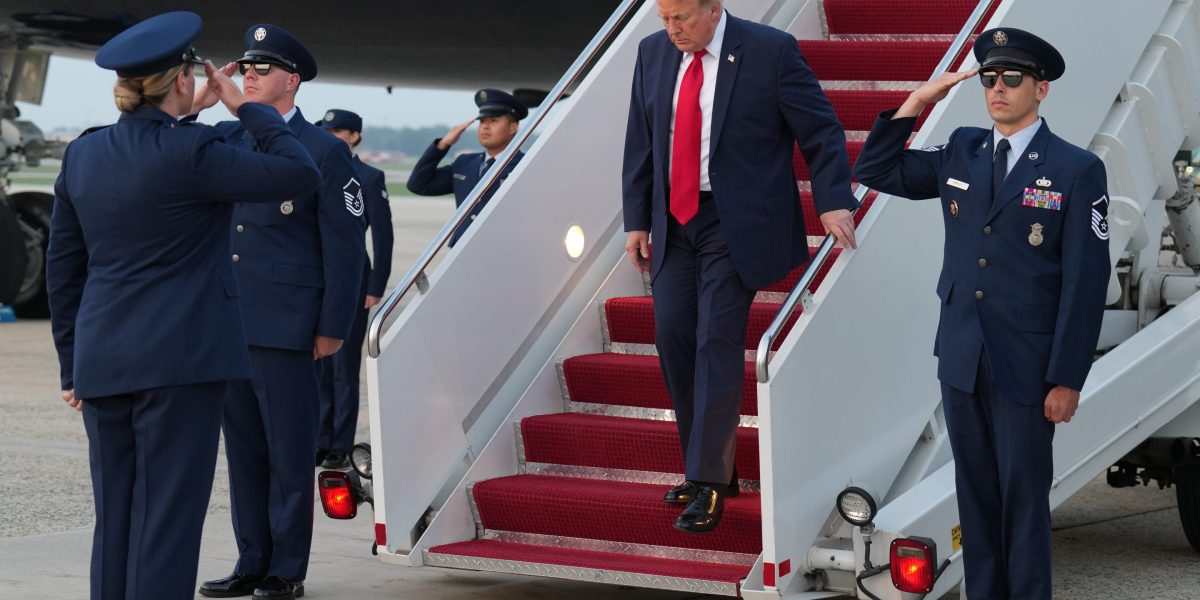
President Donald Trump’s administration implemented aggressive measures to obtain the phone records of several New York Times journalists, including some of their family members. This move was unveiled through a motion released on Monday and highlights a significant effort to expose the anonymous sources behind reporting on Trump’s Qatari-gifted Air Force One jet.
Controversial Subpoenas Expand Investigations
The attempts by Trump’s administration to identify journalists’ sources, utilizing numerous subpoenas, come amid an increasingly strained relationship between the executive branch and the media. The effort was detailed in a letter to the court from The New York Times, revealing that the government’s requests were broader than previously realized and extended beyond the timeline relevant to the stories in question. According to the Times’ attorneys, two subpoenas sought phone records beginning in January 2026, suggesting that the intent behind the investigation might not merely be related to the articles published in July but rather aimed at gathering extensive information about journalists’ source relationships.
Government’s Justification and Legal Challenges
Despite the government’s assertion that reporters were not the targets of these subpoenas, they have raised significant concern among media advocacy groups. The Times noted that several subpoenas were issued on the same day as grand jury demands for testimony from reporters about their sources. Legal representatives for the newspaper have challenged these grand jury subpoenas, arguing that the actions demonstrate bad faith on the government’s part. They claim the Justice Department ignored its own protocols by not informing journalists in advance about the request for their records.
The Justice Department defended its actions, indicating that the original subpoenas were justified since they claimed that the true targets were those leaking classified information. However, the additional subpoenas—some of which sought records related to journalists’ family members—have stirred alarm. The motion filed by The Times emphasizes that these requests pose serious risks to confidential newsgathering and implied a concerning pattern of governmental overreach that undermines First Amendment rights.
Escalation of Tensions Between the Administration and Media
This incident is part of an ongoing legal battle related to the Trump administration’s attempt to suppress media leaks. The original subpoenas, which were delivered directly to journalists in their homes, represent a significant escalation of tactics aimed at controlling the narrative seen in the press. This heightened approach has been condemned by many as a deliberate move to intimidate news organizations and stifle journalistic integrity. It follows recent incidents, such as the FBI searching a Washington Post reporter’s home and seizing electronic devices, which further exemplify the administration’s contentious stance towards the media.
The controversial jet in question, a gift from Qatar that underwent $400 million in upgrades, has been under scrutiny since it became operational. Reports indicated that security concerns prompted a switch from using the upgraded aircraft to an older model, raising questions about the motives behind such decisions. Trump’s denials regarding these security issues have not quelled skepticism, as media reports citing anonymous sources suggest a thorough investigation is warranted.
Constitutional Implications and the Press’s Role
Tensions between Trump’s administration and various media outlets—including newspapers, broadcasting networks, and non-profit organizations—have multiplied since his return to office. These confrontations have been characterized by lawsuits, administrative hurdles, and public threats against journalists. The First Amendment of the U.S. Constitution stands as a crucial safeguard for freedom of the press, emphasizing the importance of an independent media unencumbered by government intervention. As this story develops, the ongoing legal battles will undoubtedly highlight the critical need for transparency and press freedom in a democratic society.