
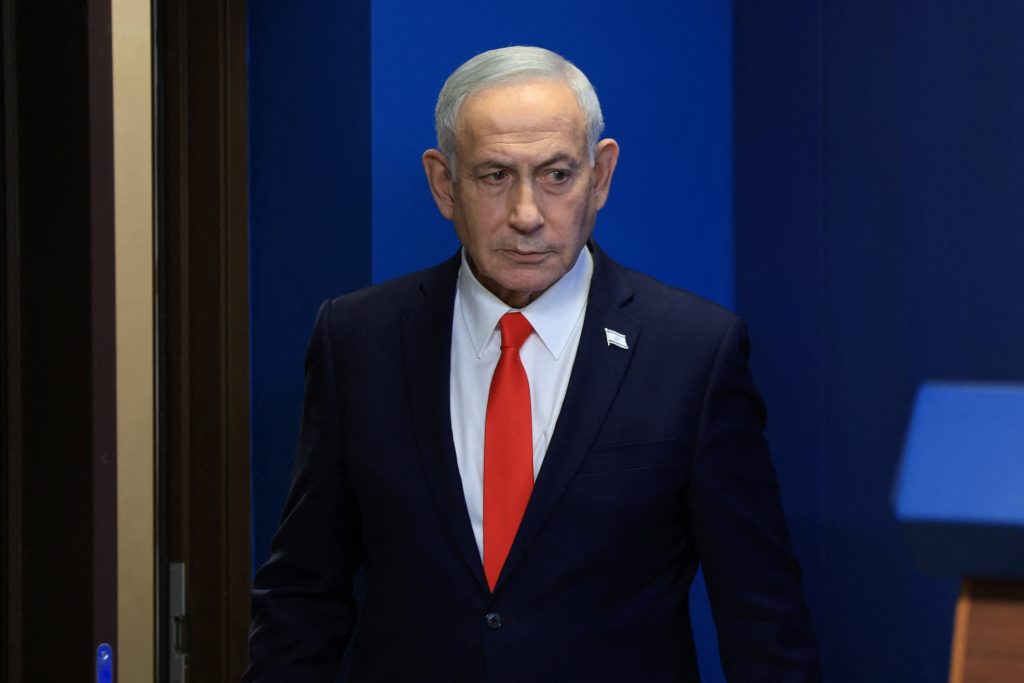
The Israeli political landscape is at a pivotal moment as the country gears up for elections in October following the dissolution of its Parliament. Facing an uphill battle, Benjamin Netanyahu, Israel’s longest-serving leader, is under scrutiny like never before, with his governance coming into question especially after the Hamas attacks on October 7. This situation has triggered a constitutional crisis that places his government in a direct conflict with the judiciary, revealing deep dissent among the populace.
Protests and Public Discontent
Recent protests in Tel Aviv’s Habima Square reflect an escalating tide of discontent among Israeli citizens. Demonstrators accuse Netanyahu of undermining democracy and misleading the nation about critical issues. Representatives from various civil society organizations emphasize the principle that no one is above the law, reiterating the need for adherence to judicial rulings—even in disagreement. This collective unease has crystallized into a movement demanding accountability from a government they view as increasingly authoritarian.
A Break from Judicial Norms
In a controversial move, Netanyahu’s Likud party recently claimed that a decision by Israel’s Supreme Court could be disregarded—a first in Israeli history. This ruling pertained to the controversial sale of a news channel to critics of Netanyahu. Former Supreme Court justice Ayala Procaccia has voiced concerns, arguing that allowing a governing body to act outside the law can sow seeds of disorder. Her apprehensions highlight the potential backslide into authoritarianism as Netanyahu seeks to consolidate power.
Judiciary Overhaul and Constitutional Crisis
Since the beginning of 2023, Netanyahu has pursued efforts to overhaul the judicial system, aiming to grant greater control to his ruling coalition over judicial appointments. Critics of this agenda, including Eliad Shraga of the Movement for Quality Government in Israel, assert that these changes have directly led to a constitutional crisis undermining democratic norms. Netanyahu’s attempts to alter fundamental laws for personal gain illustrate a shift towards governance that prioritizes political survival over rule of law.
Changing Political Sentiments
As the elections draw near, there is a noticeable shift in sentiment among Netanyahu’s traditional supporters. Figures like Michael Oren, a former Israeli ambassador to the U.S., argue that Netanyahu has lost the trust of many Israelis due to his failure to take responsibility for the events of October 7 and his fractious relationships with allies. Gadi Eisenkot, a retired army chief and Netanyahu’s political rival, is capturing attention as a reasonable alternative, with his candidacy hinting at a desire for transformative change in Israel’s governance.
The upcoming elections will ultimately determine whether Israel will continue under Netanyahu’s leadership or embark on a new political era. Given the growing calls for accountability and reform, the outcome remains uncertain, with many hoping for a restoration of democratic values and effective governance. As the political landscape evolves, both Israelis and the global community will be watching closely to see how this emerging narrative unfolds.