
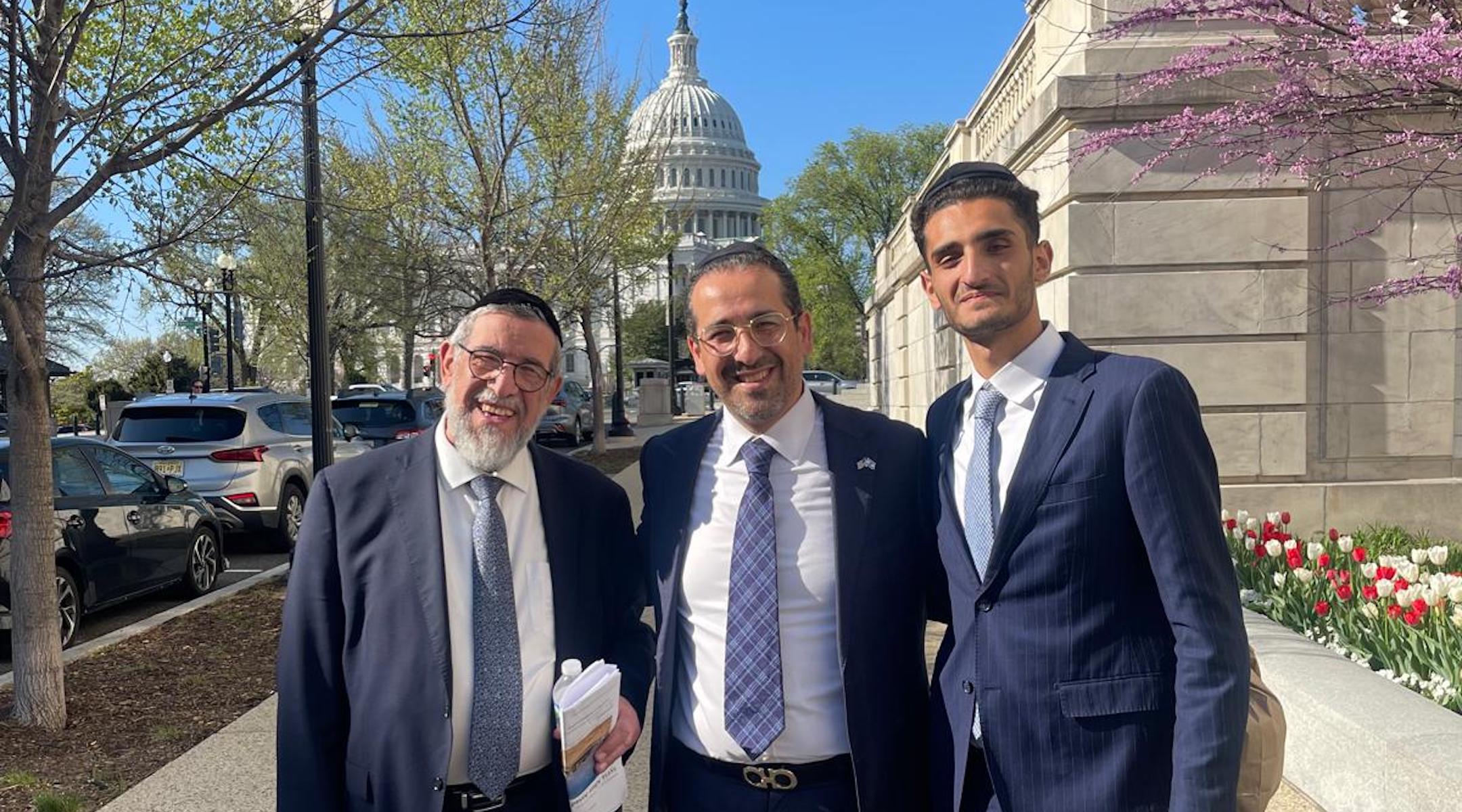
The rise of a new regime in Syria has ignited complex relationships among the Syrian diaspora, as demonstrated by the collaboration between Henry Hamra and Mouaz Moustafa. This partnership highlights the unique dynamics of identity and politics within the Syrian-American Jewish and broader Syrian community.
A Path to Reconnection
Henry Hamra, a Jewish refugee from Syria, had maintained a tenuous connection to his homeland after fleeing in 1992. With the Ba’athist regime ousted from power, the chance for a revitalized Syria emerged, prompting Hamra to consult with Mouaz Moustafa, a Palestinian-Syrian activist. Their discussions served as a catalyst for a concerted campaign aimed at lifting U.S. sanctions, which had historically stifled Syrian society.
Moustafa, who founded the Syrian Emergency Task Force in 2011, became a key figure in connecting exiled Syrian communities to the political landscape in Washington. The foundation aimed to not only bring attention to the struggles of Syrians during the civil war but also to focus on actionable steps toward recovery and rebuilding. Their alliance, particularly meaningful given the backdrop of their identities as Jewish and Palestinian descendants, showcased a rare convergence of interests.
Creating a New Narrative
The relationship between the Syrian-American Jewish community and Moustafa signifies more than mere political maneuvering; it encapsulates the broader struggles of a community seeking dignity and acknowledgment. These efforts were propelled by personal narratives, including those of Hamra’s family, who faced persecution and upheaval under the Assad regime.
With Moustafa’s guidance, Hamra became involved in lobbying for U.S. legislative changes aimed at addressing the humanitarian crisis in Syria, including the controversial Caesar Syria Civilian Protection Act, which imposed severe sanctions on the former regime. These sanctions, while intended to hold accountable those responsible for atrocities, had far-reaching effects on civilians and the economy.
Navigating Challenges and Opportunities
As exiles returned to the conversation surrounding Syria’s future, the complexities of rebuilding trust became evident. The duo’s activism focused on not only lifting sanctions but also fostering relationships with influential political figures in the U.S. Their experiences pointed to the notion that the Syrian Jewish community could play a critical role in determining the nation’s trajectory after decades of oppression.
Their efforts culminated in Hamra’s symbolic return to Syria, where he sought to unite family and faith amidst a backdrop of political uncertainty. He hoped to provide a platform for Jewish practices within a predominantly Muslim nation, wishing to reinstate a sense of belonging and identity that had often been denied.
The unfolding narrative of Hamra and Moustafa serves as a testament to the interconnections that can exist despite political divides. Their collaboration reflects a broader message of community solidarity and the belief in the transformative power of personal stories in influencing national discourse.
In the end, while the future of Syria remains uncertain, the relationship forged between these two men illustrates the potential for new hope amid a complex history. It emphasizes the need for reconciliation within the diverse fabric of Syria’s society and the imperative of working together for a common cause. The journey of Henry Hamra and Mouaz Moustafa is both an inspiring story of persistence and an ongoing quest for peace and understanding in a region long marred by division.