
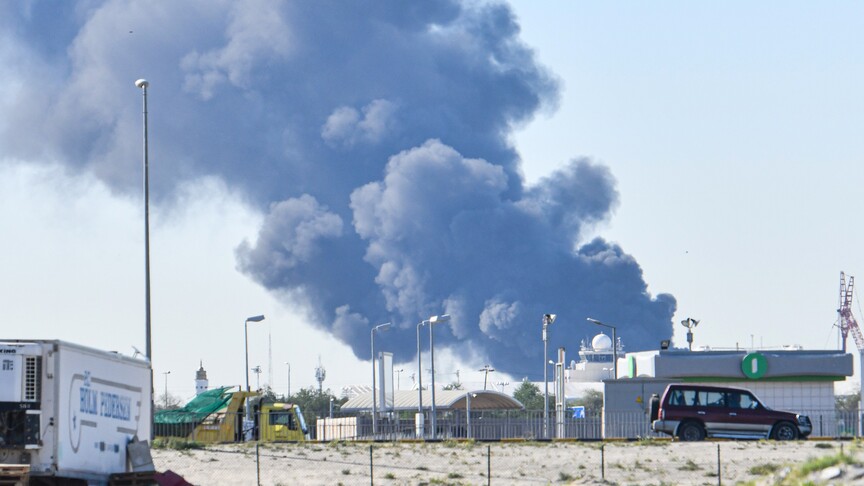
Iran’s Islamic Revolutionary Guard Corps (IRGC) announced on Thursday that it has attacked U.S. military installations in Kuwait and Jordan, as reported by the Iranian state broadcaster IRIB. These actions signify a further escalation in regional tensions, particularly following recent military engagements between the U.S. and Iran.
Details of the Attacks on U.S. Bases
The IRGC released a statement claiming responsibility for the assaults, which purportedly destroyed a significant military equipment storage facility, a U.S. Patriot air defense system, and a hangar for MQ-9 drones at Ali Al Salem Air Base in Kuwait. According to the IRGC, the strikes also targeted housing areas for U.S. personnel and two helicopter hangars at Udairi Camp, resulting in an unspecified number of casualties among American troops and causing substantial damage to various aerial vehicles.
Moreover, the IRGC asserts that they attacked a telecommunications tower in retaliation for U.S. aggressions targeting Iran’s communications infrastructure. This act indicates Tehran’s strategic approach to hit back at perceived vulnerabilities.
Justification and Sovereignty Claims
In their address to the public in Kuwait, the IRGC claimed that their operations were focused solely on military assets used by the United States and did not infringe upon Kuwait’s sovereignty. This assertion raises questions about the legality and morality of their military strategies in the region. The notion of protecting national sovereignty has become a hotly debated topic, particularly as regional conflicts continue to unfold.
Broader Context of Regional Tensions
The recent strikes follow an escalation in tensions following a joint U.S.-Israeli offensive against Iran that commenced in February. In response, Iran has conducted drone and missile strikes targeting Gulf States that host American military resources. Such actions highlight the fragile state of security in the region and the ongoing tit-for-tat exchanges between the involved nations.
Despite recent efforts to find a peaceful resolution—the U.S. and Iran signed a Pakistani-mediated memorandum of understanding last month aiming for a lasting peace—the relationship remains fraught. Escalations have intensified again, particularly involving incidents near the Strait of Hormuz, which are vital waterways for global oil supplies.
With these latest military confrontations, it’s clear that restoring stability will require extensive diplomatic efforts. The complexities of international relations in this area indicate that both sides must navigate a precarious landscape to avoid further escalation of hostilities. The recent attacks serve as a reminder of the volatility in the region and the potential for broader conflict if diplomatic solutions are not prioritized.
In summary, the attacks by the IRGC mark a significant moment in middle eastern military dynamics. This situation emphasizes the need for ongoing dialogue and negotiation to diffuse tensions and work towards long-term peace.