
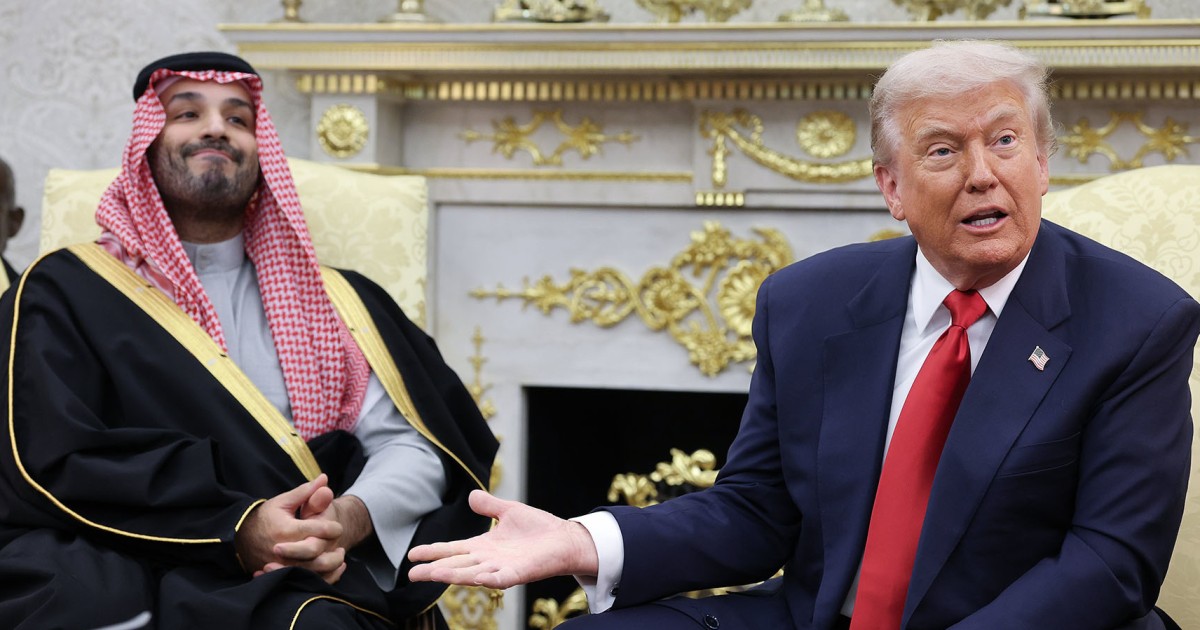
President Donald Trump recently stated that any nuclear agreement between the United States and Saudi Arabia would hinge on the kingdom’s normalization of relations with Israel. This requirement adds a new layer of complexity to negotiations that were previously thought to be more straightforward, now introducing a diplomatic condition that has not typically been emphasized in discussions about nuclear cooperation.
Key Components of the Agreement
Trump emphasized that the deal, which he announced on his social media platform Truth Social, would specifically prohibit any enrichment of nuclear material. He indicated that the agreement would be limited to non-military applications, aimed primarily at civil nuclear energy development. However, his comments have alarmed some lawmakers and experts who fear that this deal could inadvertently promote nuclear proliferation in an already volatile Middle East. The stipulation that Saudi Arabia commit to the Abraham Accords adds a diplomatic dimension, as these accords are designed to extend normalization of relations between Israel and various Arab states.
Implications for Middle East Diplomacy
The Abraham Accords, brokered during Trump’s first term, saw several Islamic-majority nations, including the UAE and Bahrain, establish formal ties with Israel. Saudi Arabia’s participation in these agreements has been a long-standing ambition for Trump as he aims to solidify peace in the region. While prior discussions indicated that an agreement allowing Saudi uranium enrichment would require progress in Palestinian statehood, Saudi leaders have been clear that genuine moves toward peace would be essential for any such discussions to gain traction.
Israeli Prime Minister Benjamin Netanyahu has downplayed the necessity of Palestinian statehood; however, his administration has acknowledged that Saudi Arabia joining the Abraham Accords would be a significant advance for peace efforts. The ramifications of this deal extend beyond the nuclear aspect, potentially reshaping alliances and diplomatic relations in the Middle East.
Concerns About Nuclear Proliferation
While the Energy Department stated that this agreement establishes a legal framework for long-term cooperation aimed at economic and strategic goals, including nuclear nonproliferation, skepticism remains. Reports suggest that the deal does not require the most stringent United Nations inspections, nor does it prohibit uranium enrichment or reprocessing of spent nuclear material. Such loopholes raise concerns that this agreement could facilitate nuclear weapons development rather than simply promote civilian nuclear energy.
In the backdrop of these discussions, Crown Prince Mohammed bin Salman of Saudi Arabia has expressed that the country’s intentions do not include developing nuclear weapons. However, he has also indicated that should Iran achieve nuclear capability, Saudi Arabia would need to follow suit promptly. This statement highlights the precarious balance of power in the region and the potential arms race that could result from this nuclear agreement.
As the deal moves forward, it remains uncertain how both the Saudi leadership and the Trump administration will navigate these complex geopolitical landscapes. The outlines of the agreement are still largely undisclosed, and the intricacies of the conditions surrounding Israel and Saudi normalization require careful consideration. Ultimately, this nuclear deal, while focusing on energy cooperation, runs the risk of becoming a pivotal factor in reshaping relations not only with Saudi Arabia but also among neighboring nations in the Middle East.