
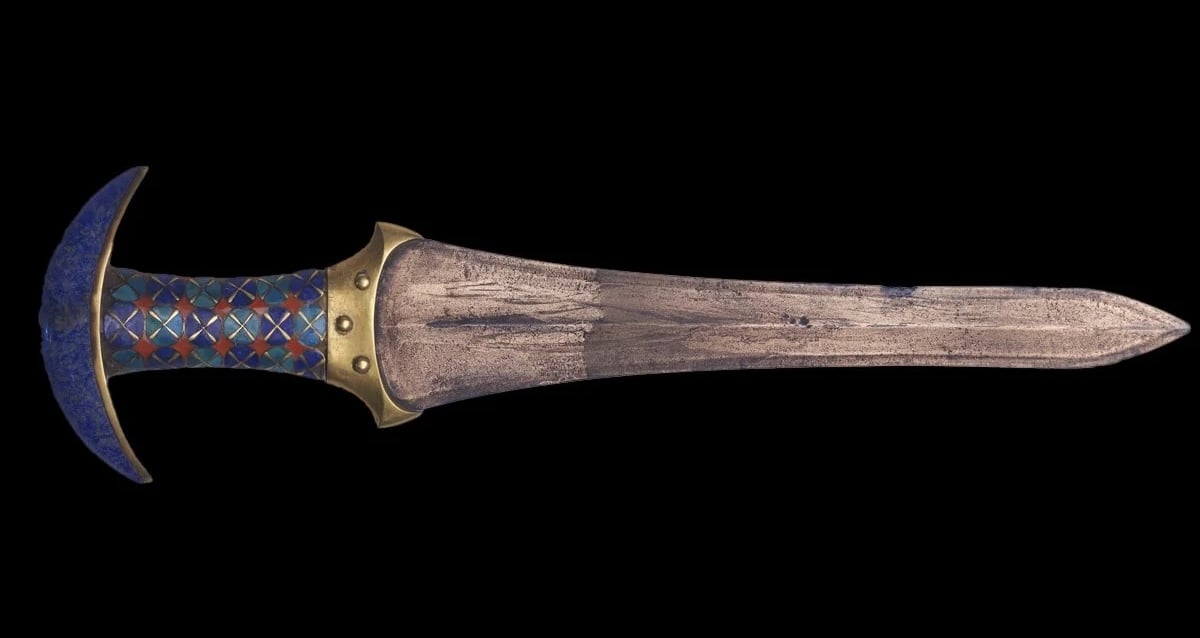
In recent years, significant archaeological findings have shed light on the lives of ancient Egyptian royalty. Evidence suggests that the four princesses unearthed from the Dahshur site were more than just ceremonial figures; they exhibited remarkable skills as hunters and archers, challenging our preconceived notions of gender roles in ancient Egypt.
Discovering the Ancient Princesses and Their Arsenal
In the 1890s, six mummies were found at an Egyptian funerary complex, buried alongside an array of weapons. These bodies remained mostly overlooked until their rediscovery in 2020 at the Egyptian Museum in Cairo. Among the remains were four princesses, the daughters of Pharaoh Amenemhat II, and another known as Noub-Hotep. The condition of both their weapons and skeletal remains revealed signs of extensive use, indicating these royal women were experienced hunters.
The four princesses—Princess Ita, Princess Khenmet, Princess Itaweret, and a cautiously identified daughter, Princess Sathathormeryt—were believed to have lived approximately 3,700 years ago. Their graves contained weapons typically associated with men, such as bows and daggers, suggesting that their roles extended beyond conventional royal expectations.
Reevaluating Historical Assumptions
Initially regarded by archaeologists as mere symbolic offerings for the afterlife, recent studies challenge this long-held belief. Researchers, led by Dr. Zeinab Hashesh, conducted an analysis that revealed significant wear on the weapons coupled with unique skeletal features in the mummies. For example, Princess Ita displayed strong upper-body muscle attachments, suggesting proficiency with maces or daggers, while Princess Khenmet exhibited robust ligaments indicative of physical activity. Additionally, Princess Itaweret’s injuries pointed toward an active lifestyle, possibly linked to hunting or military training.
The upper limb development observed in these mummies is consistent with repetitive motions inherent in archery, further corroborating their status as skilled archers. Such findings elevate our understanding of the abilities and training regimens of royal women during this era.
Insights into Ancient Egyptian Royal Life
These discoveries paint a new picture of life for elite women in ancient Egypt. Contrary to the traditional belief that royal women led sedentary lives, evidence suggests they received training that was integral to their identities as active participants in spiritual and military aspects of society. Their involvement in physical training may have been rooted in ancient Egyptian beliefs regarding the afterlife, wherein well-prepared bodies could continue to exist post-mortem.
Dr. Hashesh emphasized that these princesses were not merely imitating men; their royal blood and active roles required them to be formidable figures capable of wielding their skills effectively. The presence of bows and arrows was not just for decoration; they were essential tools that these women actively used.
While the analysis faced limitations due to the loss of skulls sent for examination in the early 1900s, researchers aim to reconstruct a comprehensive view of the lives of these iconic figures. Dr. Hashesh expressed the profound excitement of discovering these mummies—a journey of historical justice that sheds light on women who were much more than passive symbols in their narratives.
With these findings, the image of ancient Egyptian princesses transforms from passive figures to skilled, dynamic participants in their society, paving the way for a richer understanding of gender roles in ancient civilizations.