
This morning, the World Climbing Association made headlines by deciding against suspending Israel’s national climbing organization, the Association for Sport Climbing and Mountaineering in Israel (ILCA), amidst increasing geopolitical tensions. During a virtual General Assembly attended by representatives from over 70 national climbing federations, discussions focused on addressing the contentious participation of several national organizations, including those from Belarus and Russia. However, motions aimed at suspending them were overshadowed by a last-minute proposal that urged the Executive Board to create a “principles-based framework” for guiding national participation in the future.
### The Geopolitical Landscape of Climbing
This movement marks a significant moment in the intersection of sports and politics, particularly concerning the Israeli and Palestinian contexts. Climbers for Palestine Spain, a group advocating for the suspension of the ILCA, argues that allowing the ILCA to operate within the framework of international climbing equates to complicity in violations of international law. The group claims that the ILCA promotes climbing in regions from which Palestinians have been recently displaced, raising fundamental ethical questions about the legitimacy of such engagements in occupied territories.
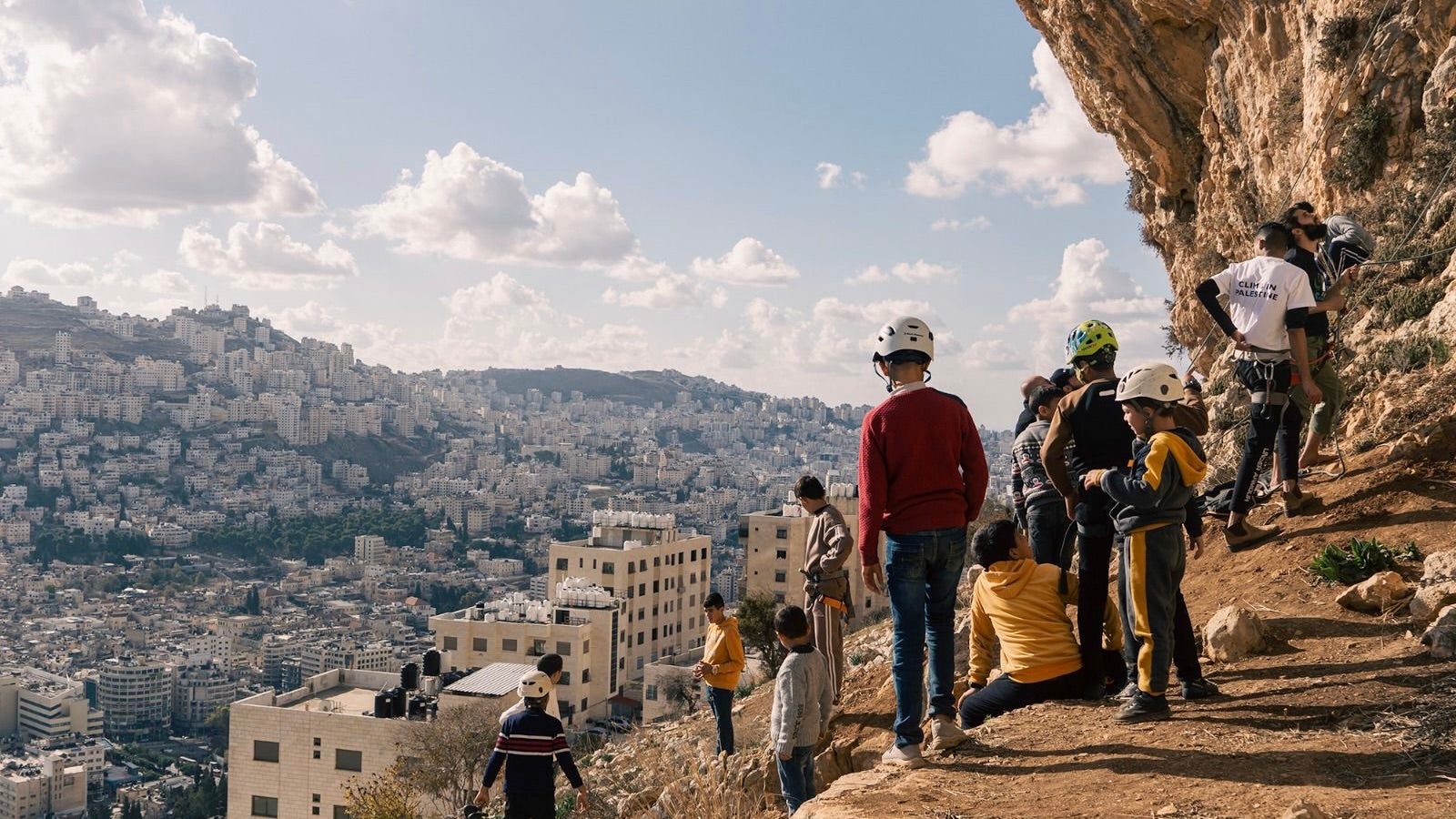
The crux of the issue lies in the ongoing Israeli occupation of the West Bank, deemed illegal by the United Nations. Since 1967, Israeli expansion in this territory has led to the displacement of Palestinian communities, exacerbated by the establishment of settlements and military checkpoints. As a result, Palestinians face significant barriers to accessing climbing routes, with many crags now deemed off-limits due to military regulations or settler violence.
### Climbing Routes Under Siege
Specific locations, like New Ein Qiniya and Burqa, once valued for their climbing potential, have become unsafe for Palestinian climbers to visit. This environment poses severe challenges, further complicated by violent encounters with Israeli settlers, who often claim these territories as their own. Climbers report being threatened with weapons while attempting to access these crags, illustrating how climbing in these areas is dangerously intertwined with the political climate.
The plight of Palestinian climbers extends beyond physical barriers. High-profile cases, such as the indefinite detention of Abdallah Motan—an award-winning climber and filmmaker—illustrate the systemic issues within the region. Motan was arrested while preparing to attend an international film festival, highlighting the unique struggles faced by Palestinian climbers in pursuing their passion. Critics have pointed out that such administrative detentions are not only unjust but reflective of broader patterns of oppression against Palestinian individuals under Israeli authority.
### A Call for Accountability
Amidst these ongoing challenges, some representatives, like Marc Norman, CEO of USA Climbing, assert that the new framework to determine participation isn’t designed to shield any federation from consequences. This perspective raises significant discussions about the responsibility of international sports organizations to maintain ethical practices concerning geopolitical realities.
As the climbers refuse to abandon their passion, they continue to face a relentless cycle of violence, oppression, and displacement. Despite losing access to five crucial crags, Palestinian climbers remain determined to create new routes, demonstrating resilience in the face of adversity. Their commitment to the sport serves as a potent reminder of the interconnectedness of climbing and the political landscape in the region, prompting a crucial dialogue about the responsibility of global climbing organizations in addressing these complex issues.