
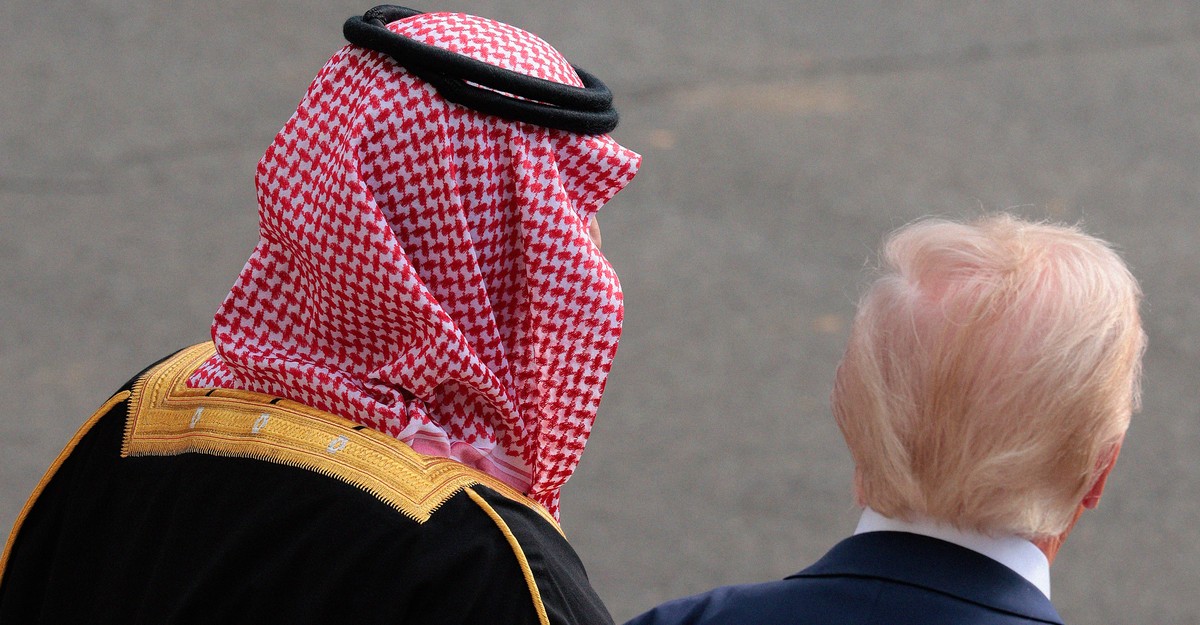
The recent deal to establish a civilian nuclear program in Saudi Arabia has raised eyebrows and sparked a complex debate regarding the future of U.S.-Saudi relations and regional security. Critics are questioning the wisdom of giving Saudi Arabia access to nuclear capabilities without sufficient safeguards, especially in light of growing tensions in the Middle East.
The Controversial Nuclear Agreement
Questions arise about the rationale behind the U.S. administration’s decision to support Saudi Arabia’s nuclear ambitions. The deal has alarmed Israel and U.S. lawmakers, who fear it may enable Crown Prince Mohammed bin Salman (MBS) to initiate uranium enrichment, paving the way for nuclear weapons development. Detractors argue that the U.S. received very little in return for this monumental agreement, raising concerns over whether it truly aligns with America’s national security interests.
In a surprising twist, just hours after the agreement’s announcement, former President Trump asserted that the deal is contingent upon Saudi Arabia normalizing relations with Israel through the Abraham Accords. Trump’s declaration appears to have been a reaction to criticisms of the agreement’s lack of conditions, as it had been viewed as a significant diplomatic misstep.
Implications for U.S. Foreign Policy
Trump administration officials touted this deal as a major victory for the “America First” policy, claiming it solidifies U.S. economic interests by positioning American firms at the forefront of Saudi Arabia’s nuclear infrastructure. However, experts suggest that this arrangement may diminish Trump’s reputation as a skilled negotiator. The previous administration’s attempts to secure a similar deal had faltered, making this rapid agreement appear even more questionable.
Critics highlight that the deal lacks crucial mechanisms to prevent nuclear proliferation. Many argue that the absence of restrictions on uranium enrichment and inadequate monitoring by the International Atomic Energy Agency (IAEA) could lead to far-reaching detrimental impacts not just regionally but globally.
Shifting Dynamics in the Middle East
The geopolitical landscape has also shifted significantly since Democrat President Joe Biden took office. Initial aims to encourage Saudi Arabia to normalize relations with Israel under the Abraham Accords were thwarted after Hamas’s attack on Israel, complicating the potential for deeper collaboration. The belief that Trump’s return to the presidency might offer better terms has contributed to a stall in negotiations.
Saudi Arabia appears to align well with Trump’s transactional style, seeking agreements that overlook human rights considerations. The crown prince’s strong ties with Trump’s son-in-law, Jared Kushner, highlight the reciprocal nature of this relationship and the likelihood that Saudi Arabia is banking on Trump’s return to power in 2024.
Future Consequences and Nuclear Proliferation Risks
While the Trump administration touts the deal as a path for Saudi energy diversification, concerns linger about the potential for an arms race in the Middle East. If Iran succeeds in developing nuclear weapons, Saudi Arabia may pursue its own nuclear arsenal, further destabilizing the region. Observers urge that without rigorous international oversight, including IAEA involvement, the very goals of nonproliferation could be compromised.
Emphasizing a need for strict oversight, critics point out that the current agreement could weaken nonproliferation efforts, creating a dangerous precedent where other nations might justify their nuclear ambitions based on Saudi initiatives. Analysts who favor rigorous nuclear regulatory measures argue that the U.S. has effective models, like the 2009 UAE agreement, which could have served as a blueprint for a more robust and safe Saudi nuclear program.
In summary, this controversial nuclear deal with Saudi Arabia raises significant questions about U.S. foreign policy, regional security, and the risks of nuclear proliferation. As these discussions unfold, the implications of this agreement could shape not only the Middle East’s geopolitical landscape but also broader international stability.