
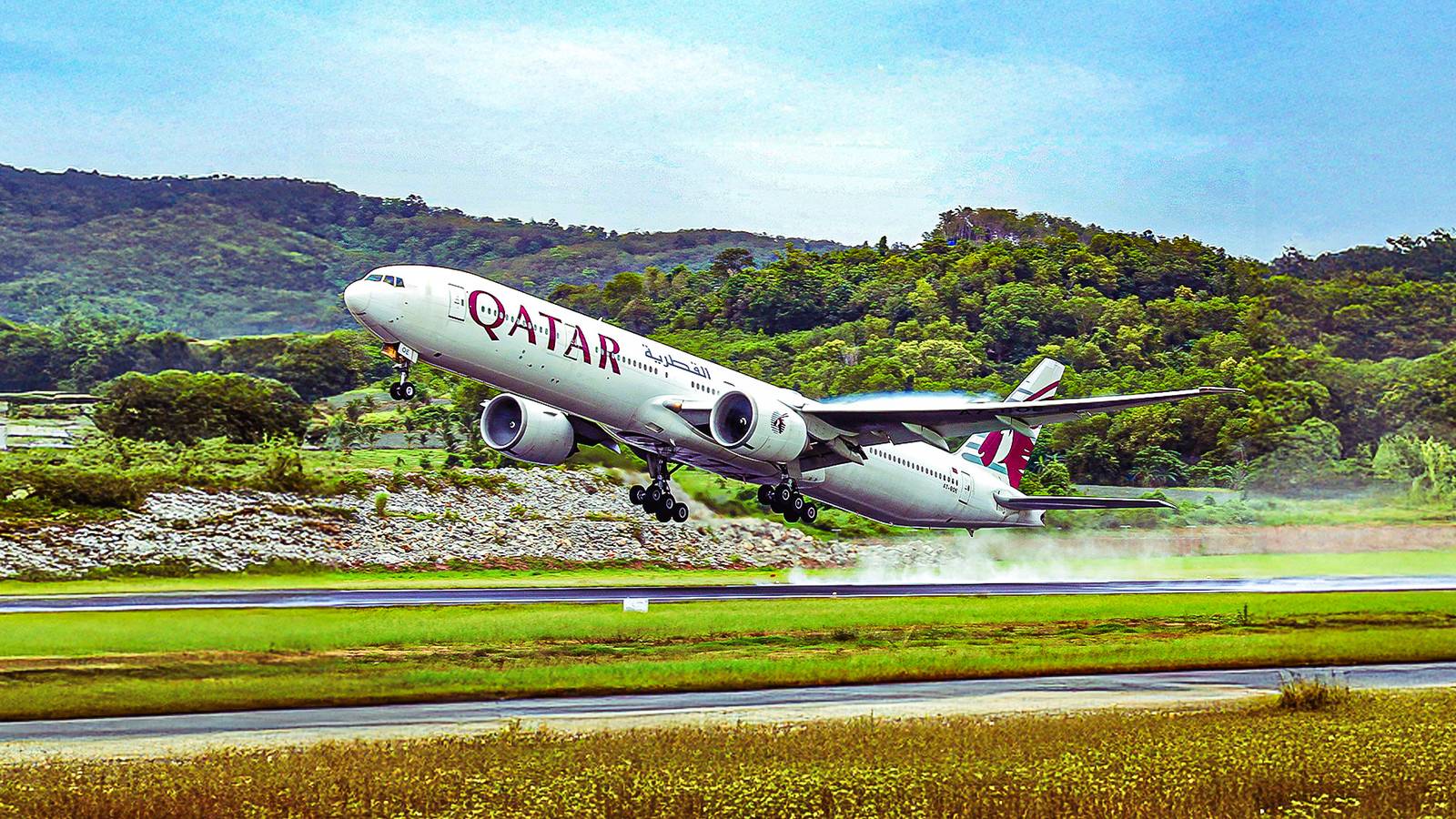
On a recent Friday evening, a Qatar Airways Boeing 777 en route to Manchester Airport faced a serious predicament when it lost communication with air traffic control. This incident prompted a swift response from the UK’s Royal Air Force (RAF), which scrambled two Typhoon fighter jets to intercept the aircraft as it flew over central England.
RAF Fighters Sent to Intercept Qatar 777
As Flight QR23 approached its destination from Doha Hamad International Airport, officials expressed concern over its unresponsiveness to air traffic communication. The UK Ministry of Defence confirmed the launch of a Quick Reaction Alert (QRA), with a spokesperson highlighting that the situation was deemed troubling for civil authorities. Fortunately, the Qatar Airways flight landed safely at Manchester shortly after the interception, without any additional incidents reported.
The Typhoons engaged the Qatar jet over Nottingham and escorted it across various regions before it safely reached the airport. Both the MoD and Qatar Airways acknowledged the event; however, neither provided specific details about the nature of the concern. Qatar Airways did mention that the flight was escorted due to a “security notification from UK authorities,” but no exact circumstances were revealed regarding the communications failure.
Possible Threats and Safety Protocols
While the primary reason for the QRA response was the loss of ATC communication, reports from the UK Defence Journal suggested that there might have been a more serious underlying issue, specifically a potential threat on board the flight. However, the credibility of such a threat remains unconfirmed. The situation escalated as tracking data indicated the 777 was not following the expected descent profile to Manchester.
Notably, this was not the first time Flight QR23 encountered an emergency. Back in 2014, the same flight experienced a security scare due to a hoax bomb threat made by a passenger. On that occasion, RAF Typhoons escorted the airplane into Manchester, leading to the arrest of the individual responsible for the false alert.
Understanding Quick Reaction Alerts
Quick Reaction Alerts are initiated for various reasons, predominantly when confronting unidentified aircraft or when a commercial jet ceases communication with air traffic controllers. The RAF maintains a fleet of fighter jets ready for immediate deployment, equipped to respond within minutes to any airspace emergencies.
The Typhoons involved in this recent interception, identified as RIGID 11 and RIGID 12, were launched from RAF Coningsby. These advanced jets can reach supersonic speeds if necessary, although no sonic booms were reported during this episode, indicating they likely operated within normal parameters. Interestingly, most RAF interceptions are related to general aviation or private jet traffic rather than scheduled commercial flights.
This incident underscores the importance of strict communication standards and protocols in aviation. In situations where air traffic control cannot contact an aircraft, national security measures come into play. For example, in a related event from October 2023, RAF Typhoons intercepted a Kenya Airways Boeing 787 that was diverted from its intended route due to concerns surrounding its communications.
In summary, while the swift response from the RAF successfully averted a potential crisis, it raises awareness about the critical need for effective communication and the responsibilities associated with air travel. Observing these protocols not only safeguards individual flights but also ensures the safety and security of airspace as a whole.