
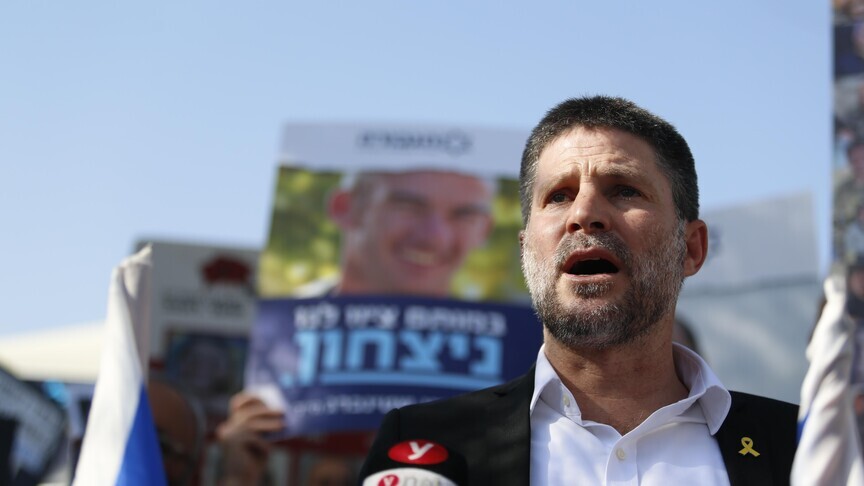
Israeli Finance Minister Bezalel Smotrich recently announced significant plans for settlement expansion in the occupied West Bank, highlighting ongoing tensions in the region. The government intends to develop 763 new housing units in the Eli settlement, which is located south of Nablus. This initiative is predicted to more than double the settlement’s population, raising concerns among Palestinian officials and international observers regarding its implications for peace and stability.
Plans for Expansion in the Eli Settlement
According to Channel 14, the expansion of the Eli settlement is a key element of Israel’s broader strategy to enhance settlement farms and communities in the occupied territories. Smotrich confirmed that the housing units would be constructed under the auspices of the Binyamin Regional Council. The anticipated growth will allow for the accommodation of thousands more Israeli settlers, thereby fundamentally altering the demographic landscape of the area.
This move aligns with Prime Minister Benjamin Netanyahu’s administration, which has positioned itself as one of the most pro-settlement governments in Israel’s history. Just earlier this month, Smotrich mentioned that since taking office in late 2022, the government has given the green light to establish 104 new settlements and 160 agricultural outposts in the West Bank. This escalation has been marked by a commitment to consolidating Israeli presence in disputed territories.
The Impact on Palestinian Communities
The implications of these settlements reach far beyond construction. Around 750,000 Israeli settlers currently reside in more than 140 settlements and over 220 outposts scattered across the occupied West Bank, including East Jerusalem. The Palestinian Wall and Settlement Resistance Commission reports a sharp increase in violence attributed to settlers, documenting 3,488 attacks against Palestinians and their properties in just the first half of 2026. These incidents include severe acts such as assaults on villages, arson, shootings, and unlawful land grabs.
Tragically, these confrontations have resulted in the deaths of at least 17 Palestinians, further compounding the humanitarian crisis in the region. Such violence is not merely a coincidence; Palestinian officials contend that the increasing settlement expansion and aggressive actions by settlers signal a possible formal annexation of the West Bank by Israel. This worrying trajectory jeopardizes any hopes for the establishment of a sovereign Palestinian state, a goal upheld by various United Nations resolutions and global diplomatic efforts.
International Reactions and Future Prospects
The international community has raised alarms regarding these developments, emphasizing the need for dialogue and restraint. Many fear that the ongoing expansion of settlements undermines the viability of a two-state solution, which has long been seen as the best path to peace in the Israeli-Palestinian conflict. Critics argue that the current policies are destabilizing and lead to increased hostility and mistrust among the involved parties.
As these tensions escalate, it remains uncertain how or if diplomatic efforts will adapt to the rapidly changing situation on the ground. The growing population in settlements combined with increasing violence poses serious challenges to achieving a long-lasting resolution. The world watches closely, understanding that the actions taken today will shape the future stability of the region for years to come.