
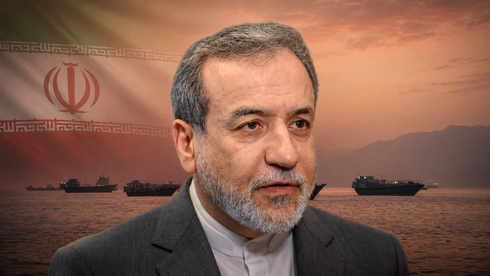
Iran is raising serious accusations against Ukraine following a recent incident in which an Iranian commercial vessel was reportedly struck, resulting in the death of a crew member. This confrontation underscores the deepening tensions within the ongoing conflicts involving both countries and highlights Iran’s assertive stance in international relations, particularly concerning its maritime security.
Claims of Aggression by Ukraine
Abbas Araghchi, Iran’s Foreign Minister, took to social media to assert that Ukrainian President Volodyr Zelensky had ordered the attack on the Iranian ship. He characterized this act as a clear violation of the United Nations Charter, suggesting that it was executed at the behest of Israel to embroil Europe in its ongoing issues. According to Araghchi, such actions cannot go unanswered, emphasizing the severity with which Iran views this incident.
Despite these strong claims, there is no available evidence to substantiate Araghchi’s assertion that Israel orchestrated the attack. Both Israel and Ukraine have so far refrained from commenting on this particular allegation, leaving the circumstances surrounding the event shrouded in uncertainty. This lack of clarity raises questions about the credibility of the accusations being exchanged.
Formal Protests and Diplomatic Reactions
In response to the attack, Iranian authorities have issued a formal complaint to Ukraine, labeling the operation a “hostile and criminal” act. They argue that it poses a significant threat not only to Iran but also to the security of neighboring countries bordering the Caspian Sea. Tehran’s Foreign Ministry has emphasized that it will not tolerate attacks on its citizens and property, asserting its right to respond to provocations.
During a conversation with EU High Representative Kallas, Araghchi urged the international community to take decisive action against those responsible for the attack and their supporters. This highlights Iran’s expectation for global accountability in situations it considers unjust. The discussion also encompassed rising tensions in the Strait of Hormuz, a vital waterway for international shipping.
Escalating Rhetoric and Military Implications
Iranian media has intensified rhetoric regarding its military capabilities, asserting that all Ukrainian territory is within the range of its ballistic missiles. This statement suggests that the conflict in Ukraine and the tensions in the Middle East might increasingly intertwine. The potential for a broader conflict could have substantial implications not only for the immediate region but for global geopolitical dynamics.
Ukrainian President Zelensky countered the narrative by claiming that Ukrainian forces have targeted a Russian warship and vessels used for transporting military supplies linked to Iran. He has accused Russia of assisting Iran by providing intelligence that could be used against U.S. military assets and Gulf nations. This exchange of allegations presents a complicated interplay of interests among Ukraine, Iran, and Russia.
Overall, the recent events signify an escalation in the multifaceted conflicts involving Ukraine and Iran, with implications that could reverberate across international relations. As accusations continue to fly, the need for transparent dialogue and conflict resolution becomes increasingly urgent to prevent potential escalations and ensure maritime security.