
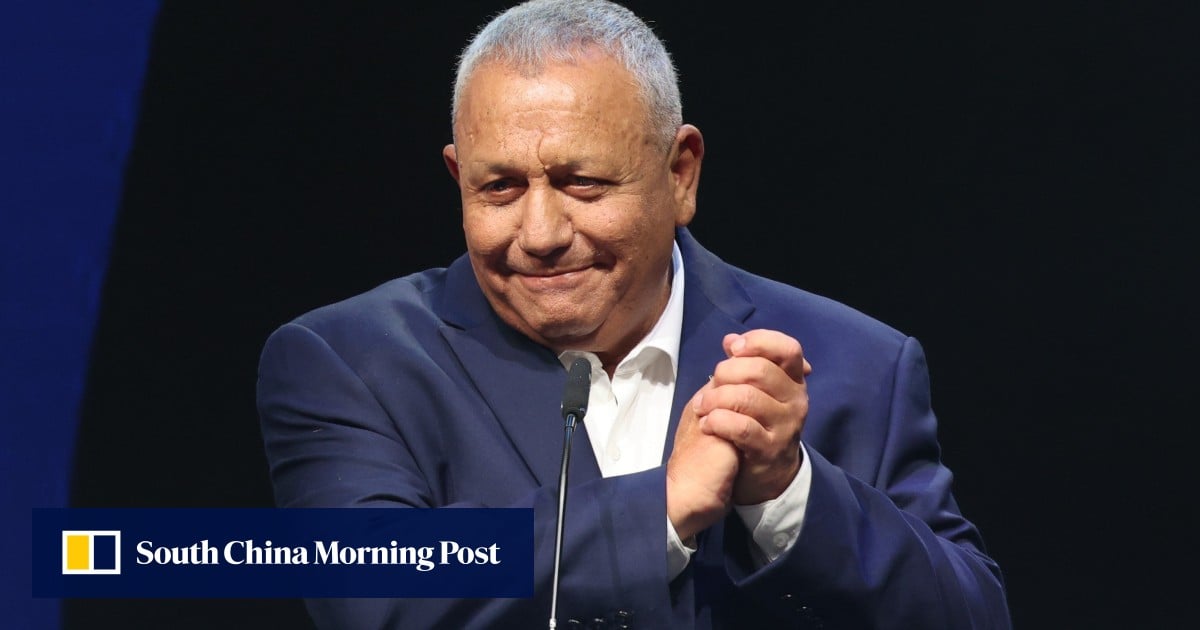
As Israel approaches a highly competitive general election on October 27, Gadi Eisenkot, the former head of the military, has emerged as the main contender against Prime Minister Benjamin Netanyahu. This election is particularly significant, seen as a crucial test of Netanyahu’s leadership amidst escalating tensions following Hamas’s attack on October 7, 2023.
Eisenkot’s Growing Popularity
Gadi Eisenkot’s political rise has come at a critical juncture for Israeli politics. A recent poll from Channel 12 indicates that his newly formed party, Yashar—meaning “Straight” or “Upright” in Hebrew—currently holds an edge over Netanyahu’s Likud party. The projection estimates that Eisenkot’s Yashar may secure 23 seats in the Knesset, while Likud could garner 22, reflecting a potential shift in voter sentiment. This growing support underscores the public’s desire for change amid the challenging political landscape.
Public Sentiment and Leadership Ratings
The polling data reveals that 43% of voters regard Eisenkot, age 66, as the most suitable candidate for the position of prime minister, in contrast to 34% who favor Netanyahu. This discrepancy illustrates a burgeoning confidence in Eisenkot as a leader capable of guiding Israel through its current turmoil. His military background and experience as Chief of Staff from 2015 to 2019 further enhance his credibility, particularly during times of conflict and insecurity.
A New Vision for Israel
In the wake of recent violence, Eisenkot has articulated his vision through a 10-point platform designed to enhance Israel’s security, promote unity, and strengthen democratic institutions. Notably, he has dismissed the relevancy of a future Palestinian state, citing the immediate security needs of Israel as paramount. His approach resonates with many Israelis seeking a robust response to threats while ensuring the nation’s stability.
Strategic Military Experience
Eisenkot is recognized for his significant contributions to military strategy, particularly the development of the “Dahiya Doctrine.” This doctrine, named after a Beirut suburb known for its Hezbollah presence, highlights Eisenkot’s advocacy for disproportionate military responses as a means to deter future threats. His tactical experience offers a unique perspective that could influence Israel’s defense policies, which may be pivotal in the upcoming elections.
In summary, as Israel heads into this crucial election, Gadi Eisenkot’s leadership and vision are garnering increasing support amid significant public unrest and security challenges. With his military background and a platform aimed at restoring stability, he could potentially reshape the Israeli political landscape and redefine the future of the nation’s leadership.