
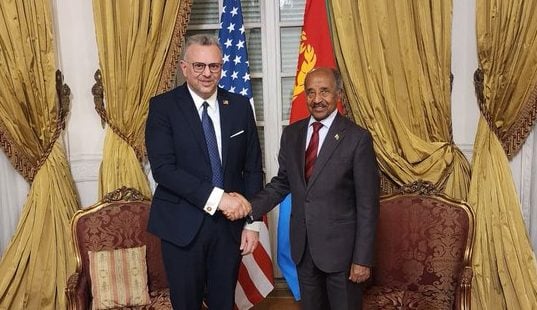
The evolving geopolitical landscape of the Horn of Africa presents a complex challenge for the United States, particularly under the Trump administration. Recent diplomatic engagements raise the alarm that the U.S. may be inadvertently aligning with specific nations, thereby risking the stability of the region.
Potential Alliances in the Horn of Africa
In Cairo, critical discussions featuring Massad Boulos, the senior adviser to President Trump for Arab and African Affairs, have sparked speculation about the U.S.’s future role in the Horn of Africa. The meetings brought together key figures from various nations, including Eritrea’s foreign minister, Osman Saleh. The potential shift in U.S. foreign policy may solidify an alliance with countries like Egypt, Somalia, and Eritrea. This trio forms a contrasting axis to a burgeoning partnership between Ethiopia, Somaliland, and Israel, both of which support a more progressive agenda in the region.
Such alignments pose a significant risk. By focusing on one faction over another, the U.S. could find itself embroiled in a complex power struggle that hinders its ability to effectively mediate conflicts. Ethiopia, in particular, has long been a crucial ally for the U.S. in its efforts to combat terrorism in the Horn of Africa. Environments like Somalia are rife with instability, and any favoritism from Washington could lead to unintended unrest.
Concerns About U.S. Strategic Vision
Critics argue that the current dynamics highlight a considerable gap in the U.S.’s strategic vision for the region. The Trump administration’s focus appears to be on short-term bilateral gains instead of fostering a more stable, multi-faceted approach that engages with all parties involved. This lack of foresight risks alienating key partners who may feel overlooked or threatened by perceived favoritism, thus fueling further discord.
Moreover, U.S. engagement in the Horn of Africa is about more than just geopolitics; it also encompasses humanitarian considerations. Countries in this region face various challenges, including famine, migration, and internal conflict, all of which require nuanced, long-term solutions. A binary approach may not only complicate diplomatic relations but could also hinder efforts to address these pressing humanitarian issues effectively.
The Path Forward for U.S. Diplomacy
For the U.S. to navigate this complex landscape successfully, it must develop a coherent strategy that considers the intricate web of relationships within the region. The future of U.S. engagement should prioritize diplomacy that encourages collaboration between nations rather than drawing lines in the sand. A balanced approach could serve to stabilize the Horn of Africa and solidify U.S. influence as a responsible partner committed to peace and development.
Ultimately, the U.S. stands at a crossroads in the Horn of Africa. With both opportunities and risks on the table, a careful reassessment of its diplomatic strategies is essential. The actions taken today will have lasting implications for the region and the integrity of U.S. foreign policy objectives. As new alliances emerge, the focus should be on fostering unity instead of division, ensuring a more balanced and prosperous future for all nations involved.