
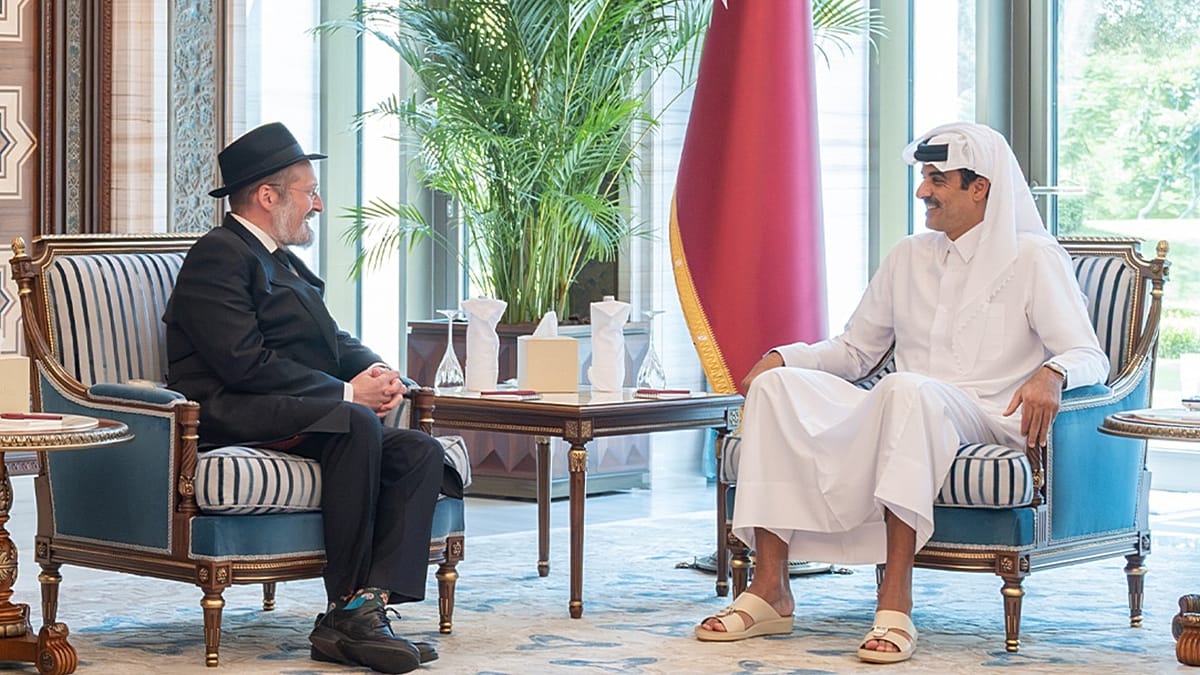
The recent visit of a rabbinical delegation to Qatar highlights the potential for dialogue and connection between Jewish and Muslim communities. Mendy Chitrik, the chairman of the Alliance of Rabbis in Islamic States (ARIS), expressed gratitude for the warm reception from Qatari leadership during a condolence meeting with Emir Sheikh Tamim bin Hamad Al Thani. Their gathering aimed to address the death of the Father Emir, Sheikh Hamad bin Khalifa Al Thani, showcasing the importance of friendship and mutual respect among diverse communities.
Strengthening Ties Through Dialogue
Rabbi Chitrik and his fellow rabbis traveled to Doha not only to pay their respects but also to recognize Qatar’s support for its Jewish community. In an interview following their meeting, Chitrik emphasized the significance of their presence in a time that calls for solidarity. “We felt very welcome in the Emir’s presence today,” he remarked. His words of appreciation reflected the bonds that can flourish even amidst turbulent times, reinforcing the need for ongoing dialogue to bridge cultural divides.
As the head of ARIS, which represents approximately 110,000 Jews across 18 predominantly Muslim nations, Rabbi Chitrik underscored the critical role Jewish communities play in promoting coexistence. “Jewish communities living in the Muslim world are bridges of tolerance,” he noted, illustrating how peaceful interactions can foster understanding between Jews and Muslims. The meeting served as a potent reminder of the shared values that unite these communities, emphasizing friendship as a catalyst for peace.
The Role of Individuals in Fostering Peace
When asked about the impact of current regional tensions, Rabbi Chitrik acknowledged the challenges but remained hopeful about the potential for dialogue to cultivate lasting peace. He asserted, “It is an obligation on every person to make peace.” This sentiment highlights the significance of individual actions in fostering a culture of understanding, starting from one’s own home, extending to neighborhoods and friendships. Simple acts of kindness and compassion can contribute to a more amicable world.
Reiterating that peace is not solely a governmental endeavor, Chitrik passionately called for a grassroots approach. “Peace starts between people. When you open your heart to another, that is another step in the right direction,” he stated. This perspective places the onus of promoting harmony on everyday interactions, illustrating how interpersonal connections can gradually reshape societal attitudes, reinforcing the idea that peace is achievable at the community level.
Hope for a Collaborative Future
Reflecting on the state of Jewish life in the Muslim world, Rabbi Chitrik recognized the challenges these communities face, particularly amid a significant decline over the last hundred years. Despite these obstacles, he stressed the importance of their ongoing presence and engagement. “We all belong to this region,” he asserted, affirming that Jewish communities are integral to the cultural tapestry of the area.
Chitrik’s observations about community interactions instill a sense of hope. He encouraged fostering understanding among neighbors, emphasizing that building relationships with individuals from different backgrounds cultivates optimism. “We have to strengthen each other. Jewish communities, Muslim communities, Christian communities—we’re all here, and we are here to stay,” he concluded. This collaborative mindset is essential in overcoming divisions and creating a more harmonious social landscape, underscoring the importance of unity among diverse faiths.
In conclusion, the visit of the rabbinical delegation to Qatar underscores the profound impact of friendship and dialogue in bridging cultural and religious divides. Through mutual respect and understanding, communities can work together to promote peace and coexistence, paving the way for a brighter, more inclusive future.