
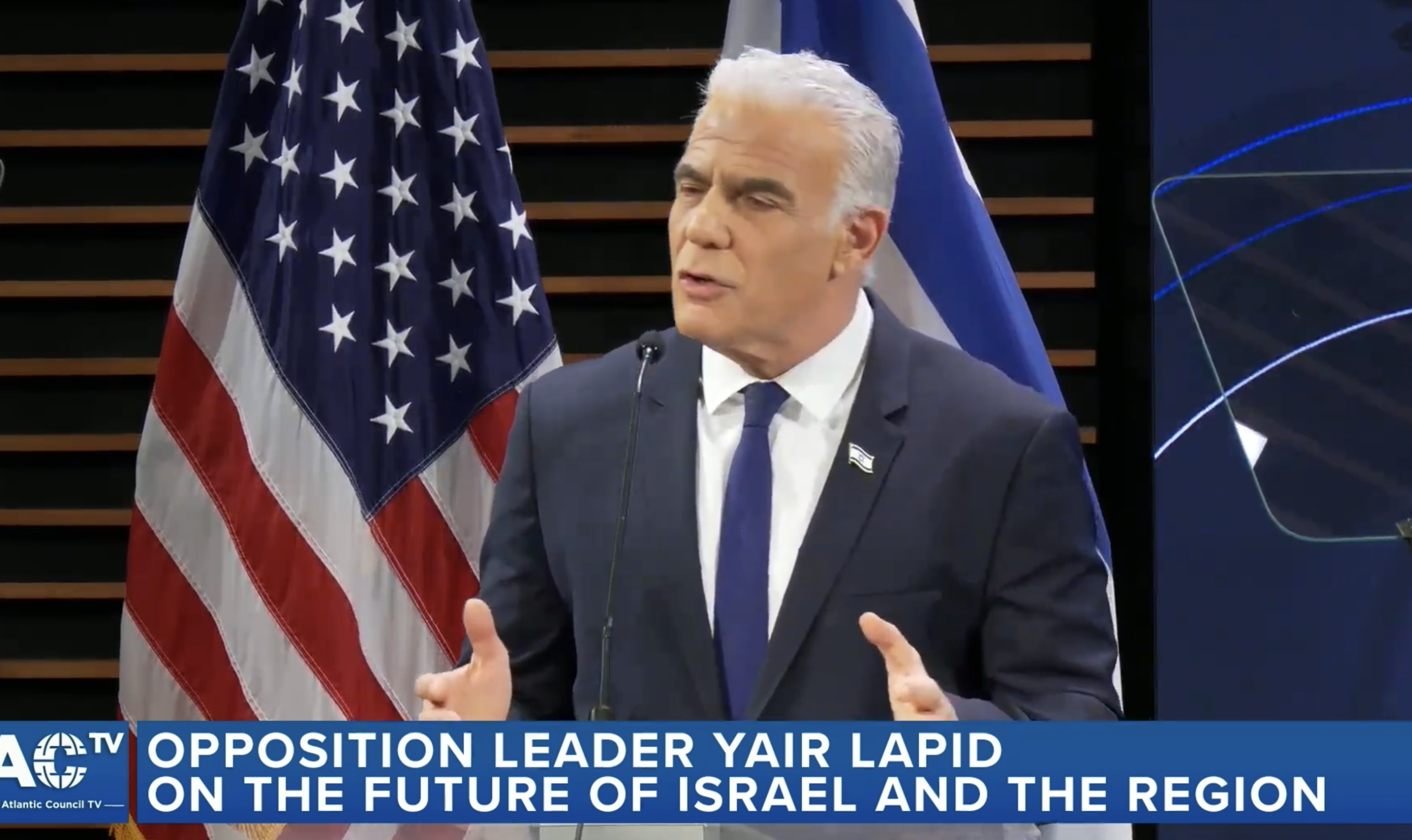
Former Israeli Prime Minister Yair Lapid recently addressed a prominent foreign policy think tank in the United States, sharing his perspective on Israel’s diplomatic future. As the nation approaches its upcoming elections, he proposed a new direction for Israeli diplomacy, especially if his opposition bloc gains power.
The Need for Diplomatic Change
Speaking at the Atlantic Council in Washington, Lapid criticized the current government, led by Prime Minister Benjamin Netanyahu, for isolating Israel on the global stage. He emphasized the necessity for a more balanced and bipartisan approach in foreign relations, which he believes is critical for mending fractured ties with allies, particularly in the United States. Lapid proposed that a new government should distance itself from extreme rhetoric and anti-democratic sentiments, asserting the need for empathy in addressing the humanitarian issues resulting from conflict.
Lapid’s vision for the future includes the removal of officials with extreme viewpoints and a commitment to evaluating the impacts of military actions on civilians. He argued for a government that acknowledges the tragedies of war, including the loss of innocent lives, and urged for a strong stance against what he termed “Jewish terrorism” in regions like the West Bank.
Rebuilding Relationships and Bipartisanship
Lapid emphasized that Israel cannot operate with the same freedom as the United States and must remain attentive to the concerns of its allies. Encouraging an end to partisan politics, he stated that being pro-Israel necessitates a bipartisan approach within political circles. His message was clear: to foster a broad coalition of support, Israel should actively engage with those who may disagree with its policies, rather than alienate them.
Arguing that the U.S.-Israel relationship is precarious due to Netanyahu’s leadership, Lapid projected optimism that a new government could reset these critical ties. He stressed that the Israeli electorate would be inclined to vote for change in recognition of the current administration’s challenges on the international front.
Strategic Military and Regional Relations
Lapid highlighted the interplay between Israel’s military strategy and its international standing. He advocated for military actions that are embedded in a moral, legal, and strategic context, prioritizing peace over ongoing conflict. This approach is intended to restore Israel’s international reputation while addressing the long-term goal of coexistence rather than perpetual warfare.
On regional matters, he urged for negotiations with neighboring countries such as Lebanon and Saudi Arabia, as well as working with the Palestinian Authority to address mutual concerns. He underscored that dialogue does not equate to full recognition of statehood but is vital for fostering stability and security in the region.
Lapid’s remarks also extended to addressing key issues within Israel, suggesting that societal responsibilities be equally shared. He underscored that those who do not participate in military service or adhere to educational standards should not receive governmental support, reflecting a commitment to fairness in democratic participation.
In summary, Lapid’s address laid out a multi-faceted approach where diplomacy, bipartisanship, and societal responsibilities intertwine to reshape Israel’s future. As the forthcoming elections loom, the urgency for a renewed commitment to effective governance and international relations grows ever more pressing.