
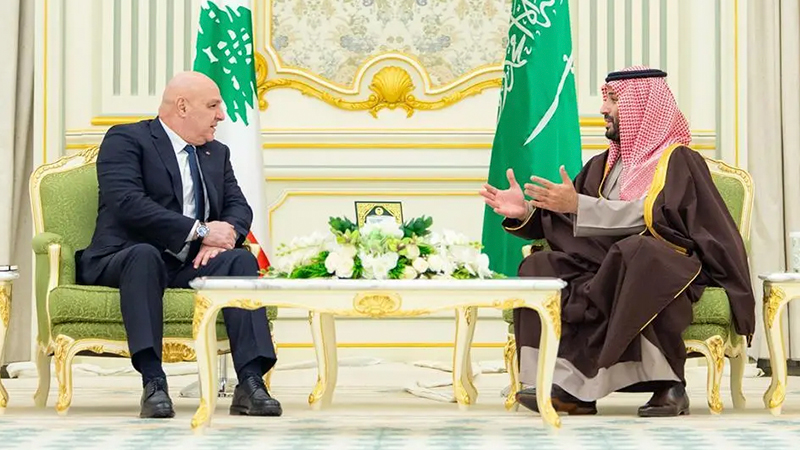
Saudi Arabia’s foreign policy is witnessing notable shifts, particularly regarding its relationship with Lebanon. Crown Prince Mohammed bin Salman (MBS) recently confirmed Saudi Arabia’s backing of Lebanese President Joseph Aoun, emphasizing Lebanon’s sovereignty and readiness for recovery during a July 2026 phone call. This strong support emerges as Aoun seeks U.S. assistance for withdrawing Israeli forces from Southern Lebanon and integrating armed groups under Lebanese authority.
Saudi Arabia’s Vision for Regional Stability
The developments reflect Saudi Arabia’s increasing prioritization of state sovereignty as essential for stability in the Arab region. The Kingdom envisions a framework where independent nations manage their affairs free from external influences. As Saudi Arabia advances its Vision 2030—an ambitious initiative aimed at economic diversification and modernization—the regional backdrop becomes critical for fostering foreign investment and ensuring long-term economic projections.
Riyadh perceives escalating geopolitical tensions as threats to regional security, deterring investment opportunities and complicating economic collaboration. Therefore, Saudi leaders view events in Lebanon as interconnected with the regional power dynamics. Lebanese stability is vital for the Kingdom’s broader ambitions, particularly as conflicts in the Levant have ramifications that reach far beyond its borders.
Saudi Stance on External Influences
Saudi Arabia regards both Iran and Israel as disruptive actors that could jeopardize the sovereignty of Arab states. While Hezbollah is consistently labeled as a significant proponent of Iranian interference, Riyadh is also wary of potential Israeli military actions that could substitute one form of external control with another. The Kingdom seeks to prevent Lebanon from becoming either an Iranian or an Israeli sphere of influence, aiming instead for a strengthened Lebanese state capable of maintaining authority free from foreign powers or non-state actors.
Riyadh believes that any military effort targeting Hezbollah could destabilize Lebanon further, leading to increased sectarian conflicts. The Kingdom’s strategy is focused on ensuring that Lebanese institutions—not foreign entities—determine the country’s security policies, fostering an environment conducive to state governance.
The Shift in Focus Towards State Institutions
Historically, Saudi Arabia has played a crucial role in Lebanon, providing substantial financial support and cultivating ties with local political elites. However, by the late 2010s, officials in Riyadh began to view Lebanon as a “lost cause,” given the challenges posed by Hezbollah and the failure of local leadership to resolve pivotal issues. This culminated in a strategic reevaluation, whereby Saudi Arabia opted to form a more pragmatic approach, focusing on institutional frameworks rather than traditional patronage networks.
A series of setbacks for Iranian-aligned forces, including Hezbollah, have motivated Saudi Arabia to reengage with Lebanon amidst changing regional dynamics. The restoration of diplomatic relations with Iran in early 2023 also prompted Riyadh to reassess its position on Hezbollah while emphasizing the need for a stable Lebanese political landscape.
Coordinated Approaches to Regional Sovereignty
Saudi Arabia’s desire for Lebanese stability aligns with broader regional goals shared with countries like Turkey, which also seeks to limit external influence from both Israel and Iran. Both nations urge the reinforcement of political stability and state sovereignty, advocating for minimal foreign intervention. Their converging interests highlight an emerging consensus on establishing a balanced regional order free from dominant external powers.
In concluding, Saudi Arabia’s Lebanon strategy aims for a secure and sovereign state where local institutions reassert control over national security. The Kingdom grapples with challenges that threaten to either reinforce Iranian influence or facilitate an Israeli presence, both of which impede Lebanon’s journey toward genuine statehood. Through diplomatic efforts and collaborative regional strategies, Saudi efforts encapsulate the ongoing quest for a stable Middle Eastern order defined by national sovereignty and reduced external meddling.