
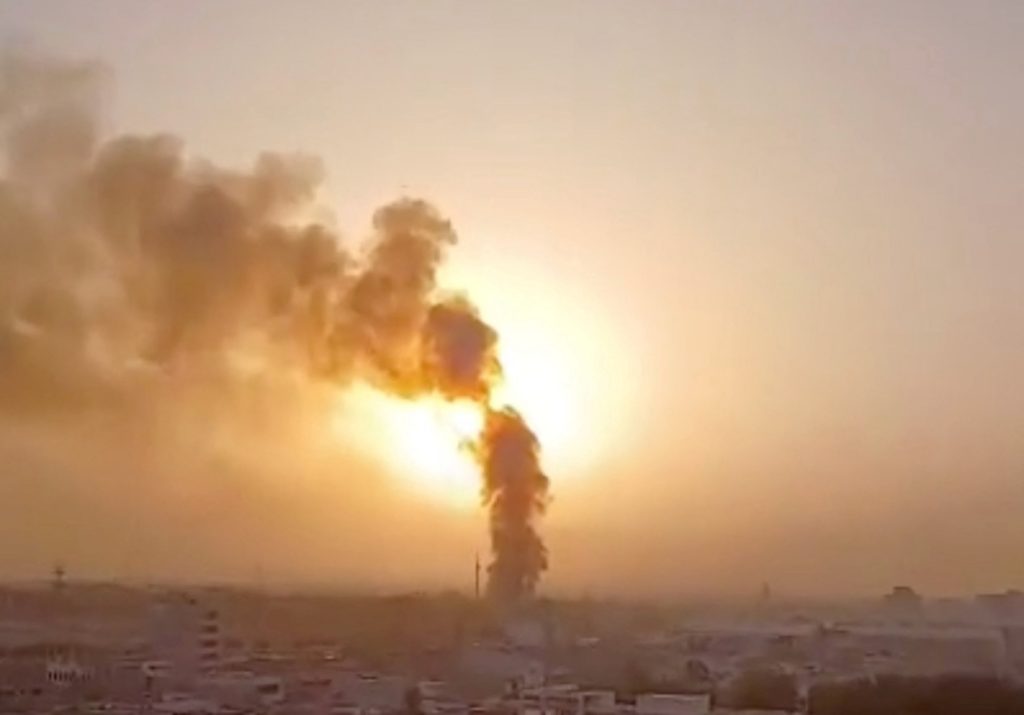
Cairo (AP) – Recently, the U.S. and Iran have intensified military actions against each other, with missile strikes marking a resurgence of hostilities in a conflict that has lasted five months. Despite brief periods of tranquility, new attacks have reignited fears of a wider regional war, as both nations seem entrenched in their positions and diplomatic efforts appear stagnant.
Growing Conflict Threatens Regional Stability
After a short lull in fighting, tensions have escalated dramatically. For the second consecutive day, Jordan’s military successfully intercepted missiles fired from Iran, while in Kuwait, a strike reportedly claimed a life. This week has also seen drones set ablaze ships docked at an Egyptian port, and Saudi Arabia came under fire from militias backed by Iran. The ongoing violence not only raises alarms about a larger war but also has far-reaching implications for the Middle Eastern geopolitical landscape.
Pakistan, a key intermediary, expressed growing concern over the precarious security situation. Spokesperson Tahir Andrabi acknowledged that there are ongoing diplomatic efforts aimed at restoring peace, particularly in critical zones such as the Strait of Hormuz, a crucial waterway for global energy supplies.
Escalation of Strikes and Immediate Consequences
On Thursday, Iranian forces targeted a building belonging to a Chinese firm in Kuwait, severely damaging it and resulting in one fatality. Jordan’s military reported that their air defense systems neutralized five missiles launched from Iran without any reported injuries. This back-and-forth exchange of strikes follows a series of U.S. military assaults on Iranian positions in response to prior attacks against American bases.
The U.S. military announced an extensive series of strikes aimed at Iranian Revolutionary Guard targets, including missile and drone facilities. Meanwhile, Iran reported casualties resulting from a strike in the Strait of Hormuz, further complicating an already volatile situation. In a joint effort, the U.S. partnered with Saudi Arabia to target Iran-affiliated militias in Iraq, resulting in significant losses among militia forces.
Merchants of Conflict: Economic Impact and Strategic Moves
The conflict has wreaked havoc on the global economy, particularly concerning energy markets. Early incidents of Iranian threats against maritime navigation in the Strait of Hormuz have contributed to significant spikes in fuel prices worldwide. Efforts to restore normality in shipping routes through the strait are increasingly urgent, as it accounts for a substantial percentage of the world’s oil and natural gas shipments.
As tensions escalate, Saudi Arabia has claimed that Iraqi militia groups have engaged in operations targeting its oil facilities. The Houthi rebels in Yemen have added another layer of complexity by declaring a blockade on Saudi shipping routes, threatening to further disrupt key trade routes, including the Bab el-Mandeb Strait.
While critical diplomatic measures are underway to de-escalate hostilities, the war’s economic implications continue to grow, casting a long shadow over regional stability. Meetings between Saudi officials and U.S. leadership indicate a mutual desire for a diplomatic resolution without exposing vital oil infrastructures to further risk.
As conflict persists, the call for a return to negotiations remains pressing, with the international community observing closely. The efforts of mediators and concerned nations are essential, as the risk of further escalation could disrupt not only regional dynamics but also the global economy as a whole.