
Tensions in the Middle East have surged following recent drone attacks on Saudi Arabia originating from Iraqi territory. Saudi air defenses intercepted these drones, which were launched by militias reportedly affiliated with Iran, as per a statement from the Saudi Ministry of Defense. These assaults primarily targeted oil sites in the Eastern Province and the capital city, Riyadh. This incident follows a series of aggressive maneuvers by Houthi forces in Yemen, who recently claimed to have struck vital oil transport routes connecting to the Red Sea export hub of Yanbu.
### Escalating Conflict Amidst Geopolitical Strife
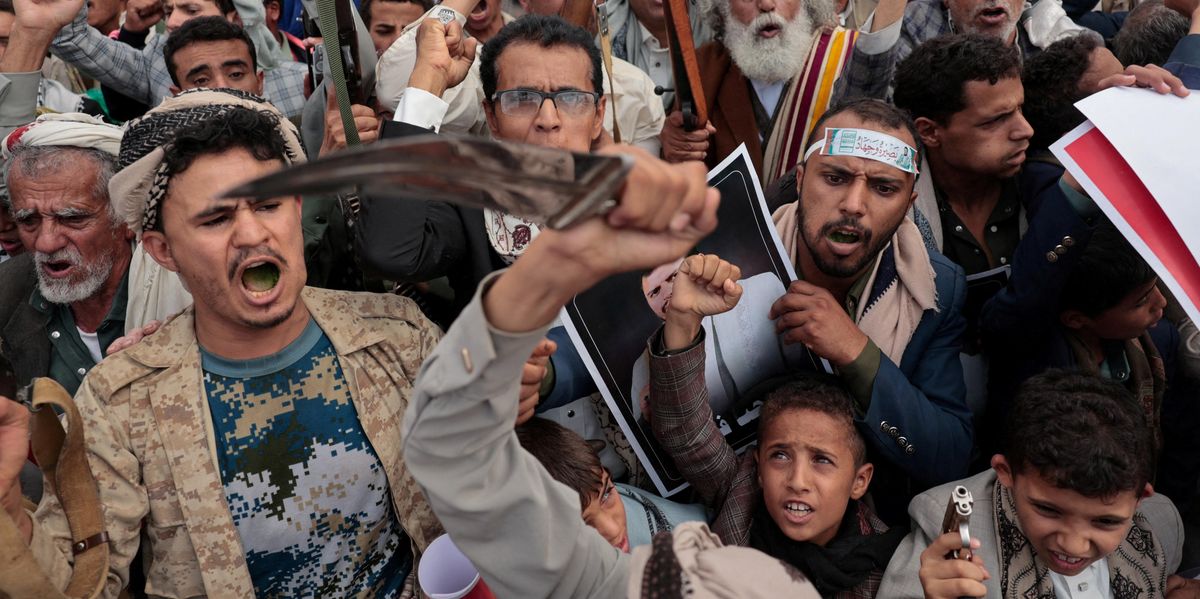
The intensity of conflict is undeniable, with both attacks part of a broader escalation triggered by a naval blockade initiated by the Houthis against Saudi ports. This blockade has been accompanied by missile strikes against several ships, marking a bitter exchange of hostilities between the Houthi rebels and the Kingdom. The Houthis have stated that they will lift the blockade only if Saudi Arabia dismantles what they term a “blockade” on Yemen, thereby advancing their specific economic demands, including salary payments for public sector employees and a share of revenue from Yemen’s oil industry, controlled by the Saudi-backed Yemeni government.
Saudi Arabia is now confronted with threats from three fronts: the north through Iraqi militias, the south with the Houthis, and to the east with Iran itself. This precarious situation became more apparent when Iranian forces struck the Prince Sultan Air Base near Riyadh, marking a significant escalation in Iranian military engagement on Saudi soil.
### Understanding the Scope of the Yemen Conflict
To grasp the increasingly fragile dynamics, it is essential to dissect the crises in layers. At the heart lies Yemen’s own civil war, an unfinished struggle that began over a decade ago between the Houthis and Yemen’s internationally recognized government. The conflict can be traced back to the 2011 Arab Spring, which toppled the long-serving president and gave rise to a vacuum that the Houthis filled by seizing the capital, Sana’a, in 2014. Saudi Arabia intervened in 2015 with the aim of reinstating the government, but fighting continues to this day.
Broadening our focus reveals Saudi Arabia’s enduring rivalry with Iran, a contest rooted in religious and political differences that dates back to Iran’s 1979 Islamic Revolution. Iran’s support for the Houthis has further complicated matters, effectively transforming Yemen into a battleground for regional proxy warfare.
### Increasing Complexity of Regional and Global Tensions
The outermost layer of conflict is tied to the broader U.S.-Iran tensions, which have escalated into a nearly six-month-long standoff that has notably affected global oil markets. A previous truce that had kept violence in Yemen relatively subdued was disrupted recently, exposing the interconnectedness of the Houthi-Saudi conflict and the larger Iranian-American rivalry.
Clashes intensified in July, leading to tragic losses on both sides as Houthi fighters engaged government-aligned forces. Statements from Yemen’s new foreign minister indicate readiness for further escalations, with warnings suggesting that the Houthis aim to replicate Iranian strategies in the region.
### Diplomatic Efforts and Their Challenges
In light of rising hostilities, Saudi Arabia has been cautious in directly accusing Iran of exacerbating tensions. Instead, accusations predominantly flow from Yemeni officials alleging that Houthi military decisions are closely tied to Iranian directives. Notably, Riyadh has sought to maintain a diplomatic pathway while simultaneously engaging in military action against Iran-aligned groups.
Oman has emerged as a potential mediator, conducting parallel negotiations aimed at reviving stalled discussions around Yemen while also addressing broader regional issues such as the Strait of Hormuz. Yet, concerns are mounting regarding the viability of diplomatic resolutions, particularly as Houthi rhetoric becomes increasingly aggressive and Saudi Arabia reaffirms its stance on retaliating against incursions into its territory.
With regional conflicts becoming intricately interwoven, the need for effective diplomacy is more pressing than ever. However, with the outlook dimming and hostilities escalating, the prospect for peace remains fragile, requiring urgent international attention and strategic intervention.