
This summer, San Francisco is set to host an extraordinary exhibition titled Treasures of the Pharaohs, showcasing over 100 artefacts from the renowned Egyptian Museum in Cairo (EMC) and Luxor Museum. Curated by Tarek El Awady, the former director of the EMC, the exhibition will include statues, jewelry, ceramics, furniture, and ancient clay molds, representing a magnificent span of 3,000 years of Egyptian history. Among the highlights is a collection of 20 artefacts from the recently discovered Golden City, an ancient settlement from the 14th century BC near Luxor, unveiled in 2021.
The Golden City Discovery
Renée Dreyfus, the curator for the San Francisco segment of the exhibition, emphasizes the significance of the Golden City, stating, “The discovery of the Golden City is amazing in that it shows exactly the time when Amenhotep III was ruling.” This ancient city was unearthed while searching for the mortuary temple of Tutankhamun and offers an unparalleled look into the daily lives of the workers and artisans who served the pharaoh. The layout of the city features homes, workshops, and administrative centers, providing a vivid glimpse into the socio-economic fabric of ancient Egypt.
A Glimpse into Pharaohs’ Lives
Amenhotep III, who reigned from approximately 1390 BC to 1352 BC and is believed to be King Tut’s grandfather, presided over a flourishing era marked by artistic and architectural achievements, including the iconic Luxor Temple. After his reign, the city appears to have been abandoned, partly due to his successor Akhenaten’s radical shift in religious practices, which emphasized the worship of the sun god Aten. The Golden City’s well-preserved artifacts offer comparisons to Pompeii, revealing not just monumental art but also the mundane, everyday experiences of its inhabitants.
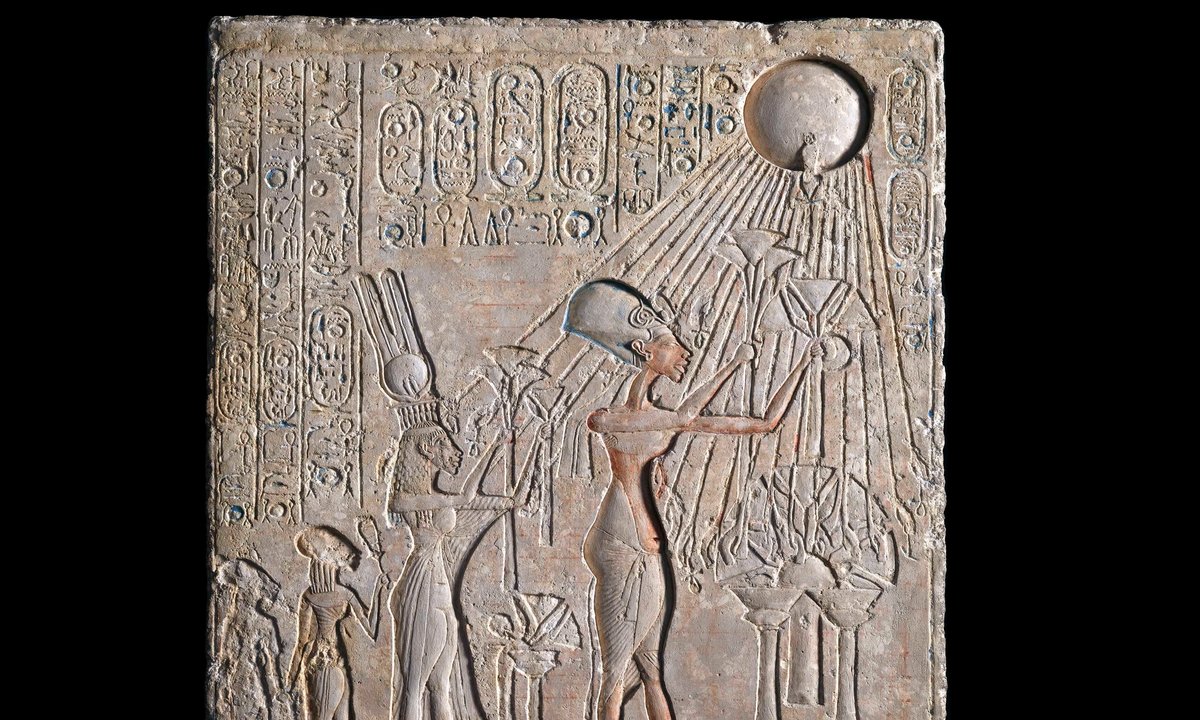
Dreyfus showcases two pivotal artefacts in the exhibition that illustrate this religious transformation. The first is an Old Kingdom statue of the Triad of Mycerinus, representing the essence of Egyptian kingship. In a stark contrast, the second object—a limestone carving depicting Akhenaten and his family—embodies the newfound monotheism in a culture that once thrived on polytheism.
Insights into Daily Life
The newly discovered items from the Golden City bring to light what life was truly like for ordinary Egyptians. Dreyfus notes the remarkable quality of these everyday objects, which provide insights into daily activities, from brick-making to family care. Items discovered range from ovens in bakeries to artifacts like a baby’s rattle, offering a well-rounded view of ancient domestic life. One of Dreyfus’s favorite pieces is a simple limestone headrest, designed to shield sleepers from insects, which exemplifies the intimate details of how the ancient Egyptians lived.
The True Treasures
Ultimately, Dreyfus contends that the pharaohs’ truest treasures may not be the extravagant jewels and artifacts typically associated with their rule, but rather the lives of the craftsmen and laborers who created those beautiful objects. “The treasures of the pharaoh are the people who worked for and under him,” she reflects. This perspective invites visitors to appreciate the contributions of ordinary individuals whose skills and efforts played a vital role in shaping the magnificent legacy of ancient Egypt.
In summary, Treasures of the Pharaohs offers a unique opportunity to explore the duality of grandeur and the everyday realities of ancient Egyptian society. This captivating exhibition will be on display at the de Young Museum in San Francisco from August 1, 2023, to January 31, 2027, before moving to the Kimbell Art Museum in Fort Worth from March 14 to September 19, 2027.