
Saudi Arabia, Qatar, Jordan, and Kuwait recently expressed their support for an agreement to advance a comprehensive peace plan for the Gaza Strip. The pact emphasizes the necessity for Israel to adhere to its commitments, withdraw its military presence, and facilitate the continuous flow of humanitarian aid to the region. This collaborative push arises in the wake of an announcement from U.S. President Donald Trump, alongside the Board of Peace, regarding the next phase of the ceasefire plan.
Roles of Regional Powers in the Peace Process
The Board of Peace was established as part of Gaza’s transitional governance system, which was ratified by the White House on January 16. Key institutions within this framework include the Gaza Executive Council, the Palestinian National Administration Committee, and the International Stabilization Force. Saudi Arabia’s Foreign Ministry lauded the “historic agreement” on Gaza’s disarmament and appreciated the collective efforts of regional stakeholders like Egypt, Qatar, Türkiye, and the United States in achieving this significant milestone.
Riyadh has reaffirmed its intention to implement the comprehensive peace plan officially backed by the United Nations Security Council through Resolution 2803. The Saudi government underscored the importance of executing all stages of this peace process within an established timeline “in a credible, final, and irreversible manner.” This emphasis includes the withdrawal of Israeli forces from Gaza, the deployment of international stabilization measures, and the guarantee of unhindered humanitarian assistance and reconstruction support.
International Reactions and Expectations
The Prime Minister and Foreign Minister of Qatar, Sheikh Mohammed bin Abdulrahman Al Thani, engaged in discussions with Hamas Political Bureau chief Khalil al-Hayya to congratulate him on his new leadership role. Sheikh Mohammed expressed optimism about Hamas approving the roadmap for the subsequent phase of the agreement, believing it could alleviate the hardships faced by Palestinians in the region. He also urged the international community to apply pressure on Israel to comply with its obligations, halt violations of Palestinian rights, and ensure that the roadmap is fully executed.
Jordan’s Foreign Ministry echoed these sentiments, voicing approval of the disarmament arrangements in Gaza and the planned withdrawal of Israeli forces. The ministry commended President Trump’s leadership and the collaborative efforts of Egypt, Qatar, Türkiye, and the Board of Peace. Jordanian officials reaffirmed their commitment to implementing the comprehensive peace plan as outlined in Resolution 2803, emphasizing the necessity for a strict timetable to guarantee full compliance from all parties involved.
Kuwait also welcomed the agreement and recognized the mediation efforts of various countries and organizations involved. The Kuwaiti Foreign Ministry reiterated its support for the complete execution of the peace plan, which includes ensuring the full withdrawal of Israeli forces, ongoing humanitarian aid, reconstruction initiatives, and the return of the Palestinian Authority to Gaza.
Current Conditions in Gaza
On November 17, 2025, the UN Security Council endorsed President Trump’s Gaza peace plan, which established the Board of Peace and an International Stabilization Force while supporting a Palestinian technocratic committee to oversee governance and humanitarian aid. The initial phase, which began on October 10, 2025, included a ceasefire, prisoner exchanges, and increased humanitarian assistance; however, ongoing violations by Israel have led to restricted aid and increased casualties among Palestinians.
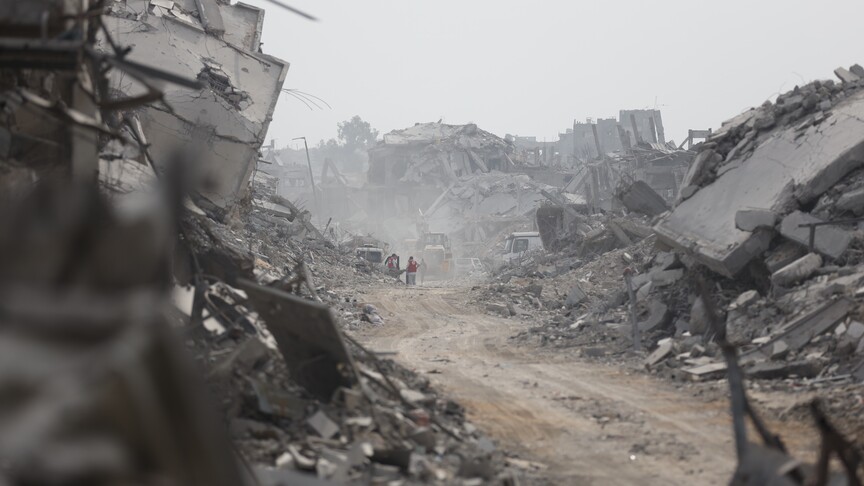
Current conditions in Gaza remain dire. The region is grappling with widespread displacement, as hundreds of thousands of individuals live in temporary shelters after their homes were destroyed during military operations. The humanitarian crisis is exacerbated by a staggering toll; since the escalation of violence on October 8, 2023, almost 73,000 Palestinians have been killed, with over 174,000 injured, while an alarming 90% of civilian infrastructure has been obliterated. This situation underlines the urgent need for a sustainable and comprehensive resolution to the ongoing conflict.