
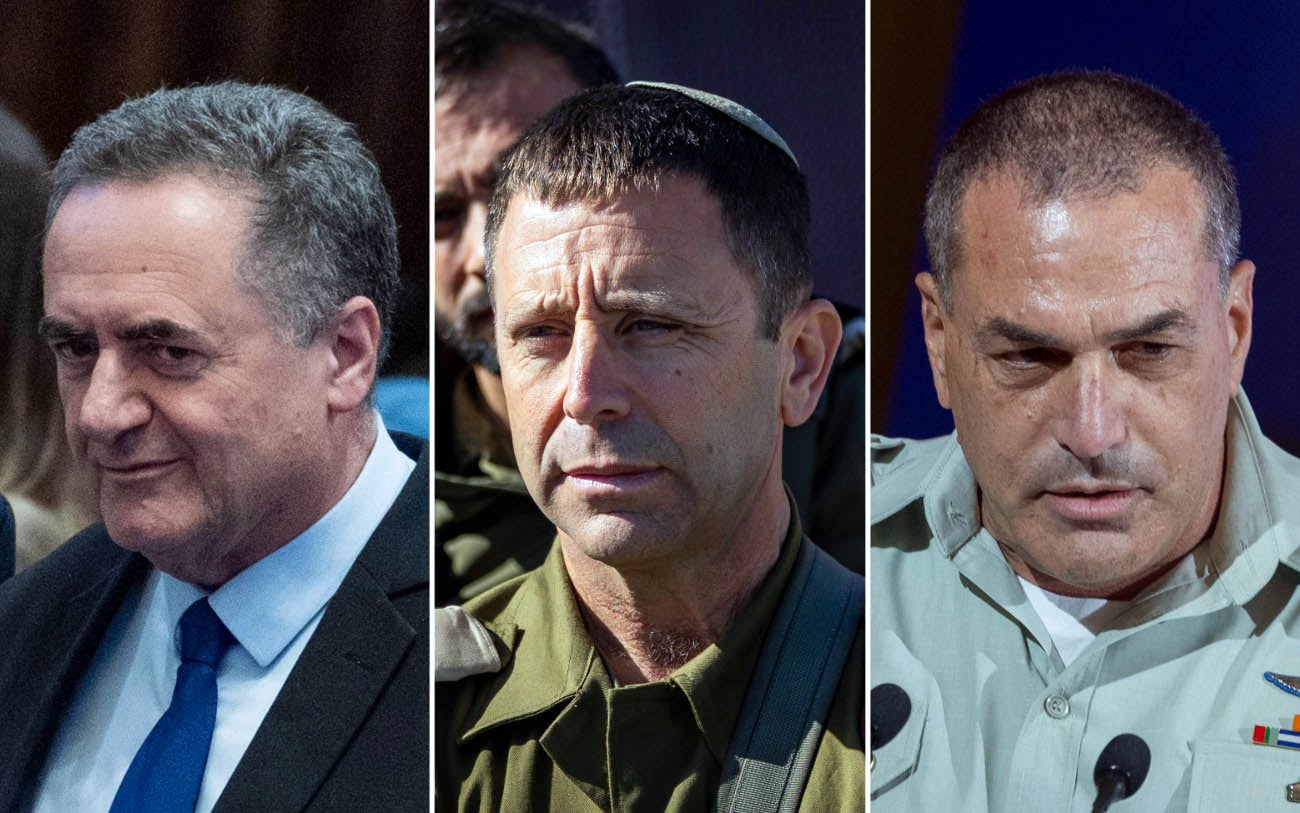
Defense Minister Israel Katz recently faced backlash after appearing on live television to announce the dismissal of IDF Central Command chief Maj. Gen. Avi Bluth. This announcement quickly drew criticism from various sectors, with many suggesting that Katz’s actions could undermine the military’s independence for political gain, particularly with Likud party primaries approaching.
Katz’s Controversial Announcement
During an interview with Channel 14, Katz revealed his decision to replace Bluth, claiming that the general had gone against his directive by attempting to renew an administrative restraining order against a violent settler. Katz proposed Maj. Gen. Dado Bar Kalifa, the head of the IDF Personnel Directorate, as Bluth’s replacement. In his statement, Katz emphasized that he wanted an army focused on decisive victories and the protection of settlers, indicating a strong stance on military strategy.
However, the IDF quickly refuted Katz’s claim, asserting that he did not possess the authority to unilaterally dismiss senior military officials. IDF Chief of Staff Lt. Gen. Eyal Zamir took action by freezing senior military appointments to shield the army from political interference, with a focus on events leading up to the elections scheduled for October 27. This extraordinary measure highlights ongoing tensions between the defense ministry and military hierarchy.
Political Fallout and Military Independence
Katz’s pronouncement elicited sharp criticism from various politicians, including former defense ministers, who called for his resignation. Benny Gantz and Yoav Gallant emphasized that politicizing military appointments threatens national security and undermines the IDF’s chain of command. Gallant described Katz’s live announcement as a “contemptible act,” stating that it jeopardizes the military’s integrity by dragging it into political conflicts.
In response to the criticism, Katz attempted to clarify his position, asserting that he never intended to call for Bluth’s immediate dismissal. He claimed his comments were a part of advancing Bar Kalifa’s appointment, which had already been recommended by Zamir months prior, underlining a systematic process rather than a sudden decision.
Reactions from Settlement Leaders and Military Personnel
Settlement leaders also expressed their support for Bluth, praising his work in establishing and legitimizing numerous settlements in the West Bank. Shai Alon, a settlement council leader, called Katz’s actions “shameful and disgraceful,” arguing that Bluth’s contributions significantly benefited the community. The Yesha Council, representing various settlement authorities, echoed these sentiments, emphasizing Bluth’s effectiveness in dealing with terrorism and advancing settlement efforts.
Meanwhile, Katz’s actions sparked discussions regarding the broader implications for military politics. Critics argued that such moves reflect poorly on the government, with figures like former UN ambassador Gilad Erdan describing Katz’s behavior as a level of “petty politics” detrimental to national security.
Future Implications and Military Leadership
Looking ahead, IDF Chief of Staff Lt. Gen. Zamir’s decision to pause senior appointments suggests a strategy to maintain military stability during politically tumultuous times. Bluth is likely to stay in his role for an extended period, as the typical duration for such positions ranges from three to five years. This approach aims to prevent direct political influence over military leadership, especially amid rising tensions surrounding boundary issues and security in the West Bank.
The clashes between Katz and Bluth reveal a deeper issue concerning the intersection of military and political realms. With accusations of improper conduct and misuse of authority, the potential fallout from this incident could reverberate across Israel’s political landscape. As blame shifts and defense strategies come under scrutiny, the need for safeguarding military independence remains crucial for national stability.