
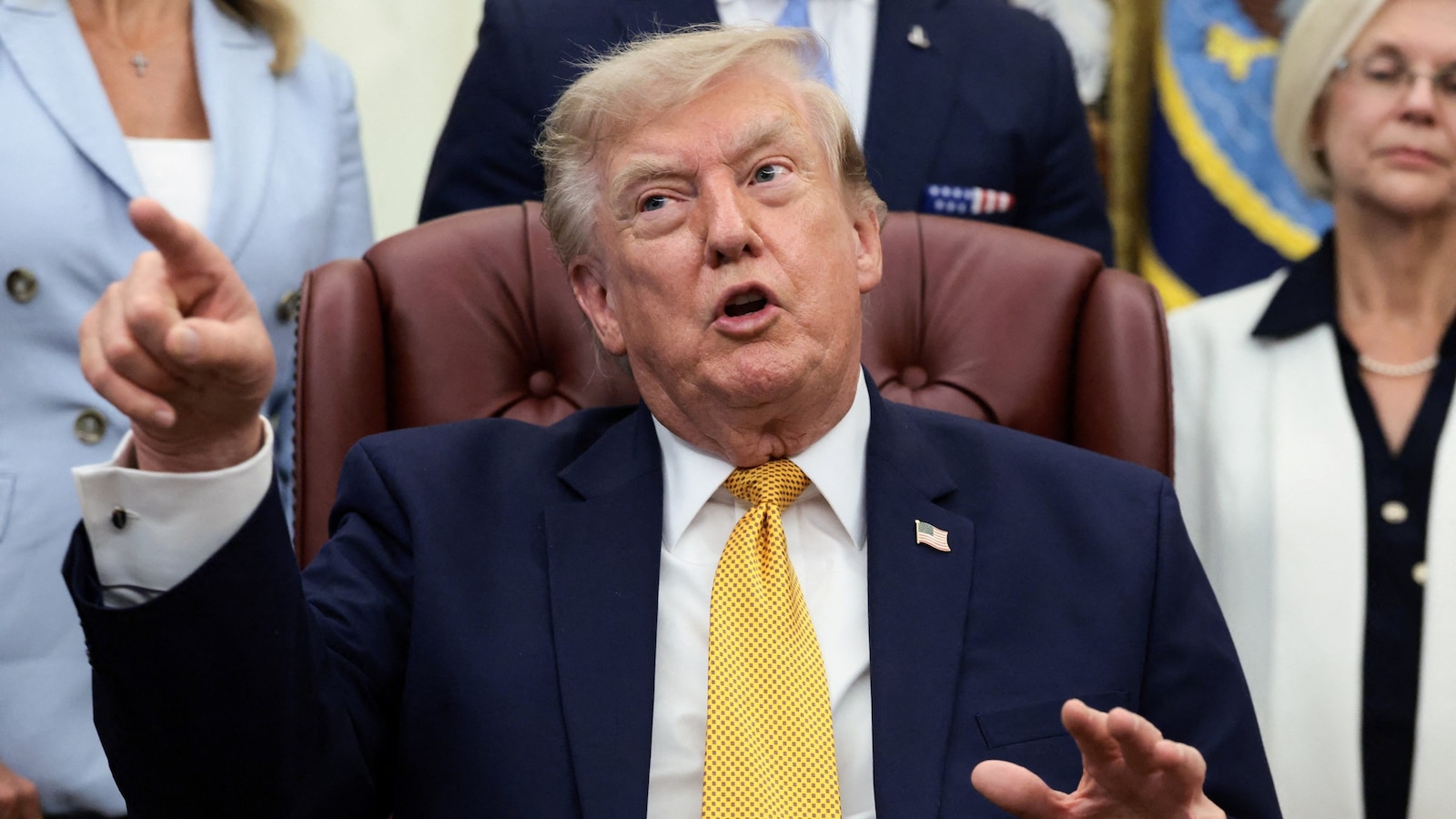
In recent months, former President Donald Trump’s approach to Iran has involved a high-stakes strategy of threatening severe damage to the country’s infrastructure, then abruptly pausing military action in hopes of reinitiating negotiations. This pattern has emerged repeatedly over the course of a protracted conflict, raising questions about its effectiveness as a diplomatic tool.
Repeated Threats and Abrupt Pauses
Trump’s tactics include a series of threats against Iranian facilities, particularly targeting energy production capabilities. By some estimates, he has made over seven such threats in less than five months, yet the anticipated diplomatic outcomes have yet to materialize. For instance, after almost a month into renewed hostilities, Trump publicly threatened to attack Iran’s power plants unless the Strait of Hormuz was opened for shipping lanes. However, just two days later, citing positive dialogue, he postponed the strikes, indicating that further discussions were ongoing.
This back-and-forth approach has characterized much of Trump’s interaction with Iran during the conflict. On March 26, after promising initial action, he extended the delay on military strikes at the request of Iranian officials. The messaging from Trump oscillated between aggressive posturing and overtures for negotiation, creating a chaotic narrative that challenges both allies and adversaries.
Escalation and Ceasefires
On multiple occasions, Trump underscored the severity of the situation with dramatic warnings. For example, he once proclaimed that “a whole civilization will die tonight,” implying that the consequences of military action would be catastrophic. Yet only hours later, he called off the strikes, declaring a temporary ceasefire to allow for peace talks. This pattern continued after one two-week truce expired when he opted for an indefinite ceasefire, reiterating the need for a unified proposal from Iranian leadership before any hostilities resumed.
This inconsistency raises crucial questions about Trump’s long-term strategy and its feasibility in ensuring regional security and effective diplomacy. Time and again, the promise of military action clashed with Trump’s inclination to defer to negotiations, especially under pressure from other nations.
Challenges in Diplomatic Solutions
Despite the seemingly aggressive posturing, Iran has often countered these diplomatic overtures by denying any ongoing discussions with the United States. Such dynamics create an impasse where diplomatic solutions appear increasingly elusive. The situation underscores a significant challenge: how to reconcile military readiness with effective communication and negotiation tactics that can yield favorable outcomes.
Trump’s interactions culminated in dramatic calls for military withdrawals and discussions of “massive attacks,” only for him to later emphasize a commitment to peace talks. The stark contrast between aggressive threats and diplomatic engagement not only complicates U.S.-Iran relations but also casts doubt on the prospect of a sustainable agreement.
In conclusion, Trump’s strategy of alternating between military threats and diplomatic discussions reflects the complexities of international relations, particularly in the context of the Middle East. As the situation evolves, the effectiveness of this approach will be closely monitored, both in terms of potential long-term agreements and the broader implications for U.S. foreign policy.