
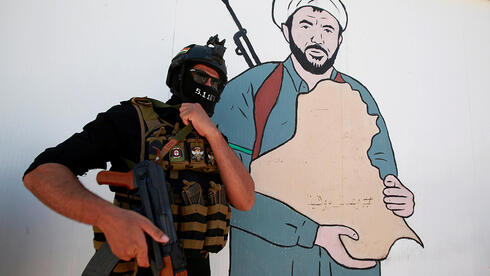
The dynamics of Middle Eastern security are shifting, and a more complex challenge is emerging that could have dire consequences for Israel. While the focus on threats from Lebanon, Gaza, and Syria is understandable, new developments involving the Houthis in Yemen and Iranian militias in Iraq signal a critical evolution in regional threats that Israel must address.
The Increasing Collaboration Between Houthis and Iraqi Militias
What was initially a series of political gestures and proclamations has now transformed into a tangible alliance on the ground. In particular, a significant operational hub has formed in Jurf al-Sakhar, Iraq, where fighters from both factions are coordinating their activities. This Iranian-backed site is more than a mere office; it serves as a command center that integrates Yemeni drone capabilities into Iran’s established militia framework in Iraq, putting Israeli cities within a more accessible strike range.
The strategic geography of this partnership is alarming. Drones or missiles launched from eastern Iraq can reach Israeli airspace much faster than those launched from Yemen. Consequently, this shortens early-warning times and complicates interception efforts. Iranian forces recognize these advantages, embedding skilled Houthi operatives within Iraqi groups. Jurf al-Sakhar allows both factions to avoid oversight from the Iraqi government while functioning as a training and planning ground, further enhancing their capabilities.
The Operational Structure: An Unsettling Hybrid
It’s crucial to note that the organization of this partnership is not arbitrary. Reports indicate a structured division of responsibilities. Leading the collaboration, a senior Houthi figure, Abu Idris al-Sharafi, liaises with Iraqi militia commanders, while experts like Abu Ali al-Ezzi focus on drone warfare and tactical training. Logistics is managed by coordinators familiar with supply chains in Syria, Iraq, and Yemen, creating a network that obscures accountability and complicates countermeasures.
This blend of expertise makes the potential for attacks very real. When strikes are executed with the combined might of Houthi technology and Iraqi operational resources, attributing responsibility becomes deliberately murky. This serves Iran’s strategy well, complicating Israel’s decision-making processes. Targeting Houthi infrastructure in Yemen leaves the Iraqi launch points unscathed, while action in Iraq could evoke severe political repercussions.
Implications for Israeli Security Strategy
The emergence of such a consolidated threat can no longer be ignored. The 2026 regional attacks involving Houthi elements acting from Iraq against Saudi targets highlight the seriousness of this operational alliance. These same networks could easily be redirected to target Israel, causing significant security concerns.
In this complex landscape, it’s essential for Israel to reconsider its approach to its eastern front. The operational capabilities and support networks established in places like Jurf al-Sakhar indicate that these are not isolated incidents but part of a broader Iranian strategy to extend its influence and operational reach within the Middle East.
The responsibility falls on Israeli intelligence and military strategists to adapt. A focused effort must be made to disrupt the financial and logistical channels supporting these militias while developing sophisticated methods to pinpoint the technical markers of drone and missile launches. It’s crucial for Israel to make it clear that any attacks using Iraqi bases will have serious consequences, emphasizing that these regional frameworks are not merely internal matters for the Iraqi government.
In conclusion, the eastern front represents a significant, evolving threat that reflects Iran’s ambition. Ignoring the implications of the Houthi-Iranian alliance could leave Israel vulnerable to sudden attacks. Proactive and measured responses are needed to safeguard national security against this new phase of regional destabilization.