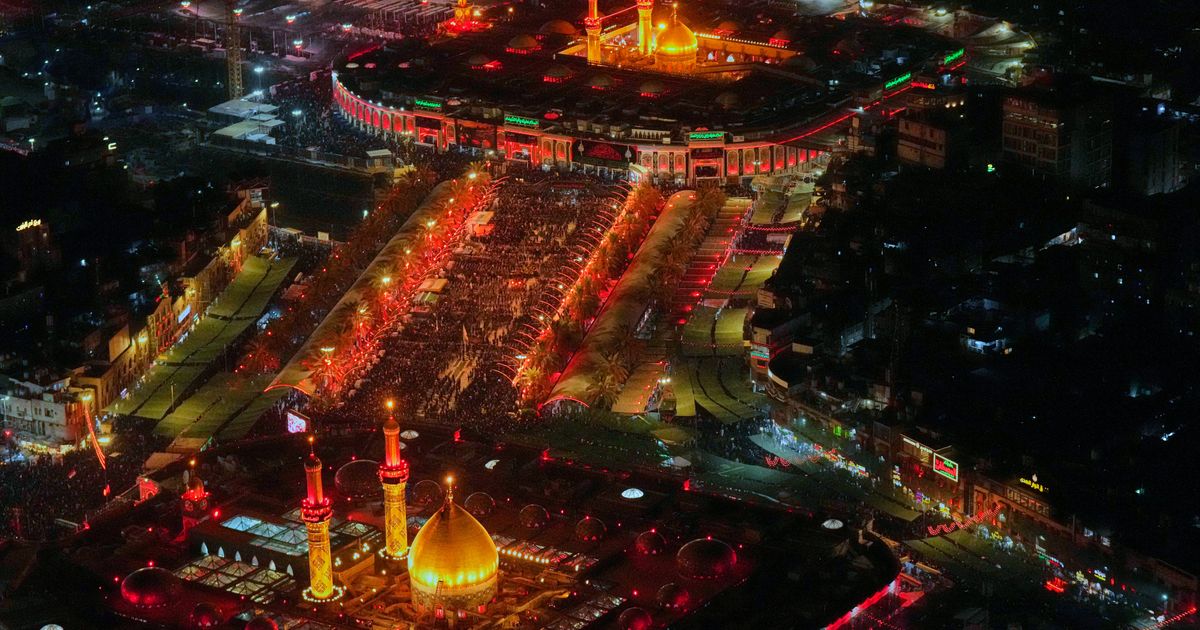
Millions of Shiite Muslims participated in the annual Arbaeen pilgrimage in Karbala, Iraq, amid rising regional tensions and apprehensions regarding the U.S.-Iran conflict. This significant event draws attention from various countries and communities, highlighting the enduring legacy of Imam Hussein and the historical Battle of Karbala.
The Significance of Arbaeen
Arbaeen occurs 40 days after Ashoura, a solemn day marking the martyrdom of Imam Hussein, who was killed during the Battle of Karbala in 680 A.D. This pilgrimage is one of the largest religious gatherings globally, attracting millions of devotees from across Iraq and beyond. As reported, over 4.88 million pilgrims had entered Iraq since the beginning of the Islamic month of Muharram, including Ashoura, highlighting the scale of the event and the devotion of the participants.
Hailing from various regions within Iraq, many more pilgrims also flocked to Karbala for this occasion. The influx of worshippers showcases not only a spiritual pursuit but also a profound sense of community and solidarity among Shiite Muslims worldwide. The pilgrimage symbolizes resilience and unwavering faith, despite the backdrop of political instability.
International Participation Amid Tensions
Notably, Iranian Foreign Minister Abbas Araghchi joined the festivities, reflecting the intertwining interests of Iraq with both Iran and the United States. Iraq’s unique geopolitical position has forced it to navigate delicate relations with both nations carefully. Observations indicate that while Iranian pilgrims arrived in droves, the turnout of pilgrims from other nations appeared to dwindle.
Local pilgrims, like Aqeel al-Rubaie from Baghdad, remarked on the predominance of Iranian flags along the roads to Karbala, indicating a shift in the diversity of attendees this year. He suggested that ongoing conflicts and regional upheavals have dissuaded many from traveling to the pilgrimage. Fellow pilgrim Hassan al-Sarai echoed these sentiments, noting a noticeable absence of flags from European, Arab, and other Islamic countries, further emphasizing the evolving landscape of the pilgrimage.
Community Support and Current Challenges
As pilgrims made their way to Karbala, volunteer groups were visible along the routes, providing essential services such as food, water, and medical attention. This grassroots effort underscores the community spirit and shared purpose among participants, highlighting how these gatherings unite individuals in their faith and shared experiences.
However, the pilgrimage occurs against the backdrop of significant economic challenges facing Iraq. The ongoing disruptions in oil exports due to geopolitical tensions have exacerbated economic instability. With over 90% of state revenues reliant on oil, Iraq’s economy remains vulnerable, complicating the government’s efforts to stabilize the nation.
Moreover, Baghdad is grappling with the daunting challenge of integrating many Iran-backed militias. Notably, the powerful militia Kataib Hezbollah publicly rejected disarmament calls, reaffirming its commitment to retaining what it deems the “weapons of the resistance.” This statement reflects the complex interplay between religious devotion and political realities, which continue to shape Iraq’s future and the dynamics of the Arbaeen pilgrimage.
In essence, the Arbaeen pilgrimage not only serves as a testament to spiritual resilience amidst adversity but also acts as a reflection of the broader socio-political climate facing Iraq and the region today.