
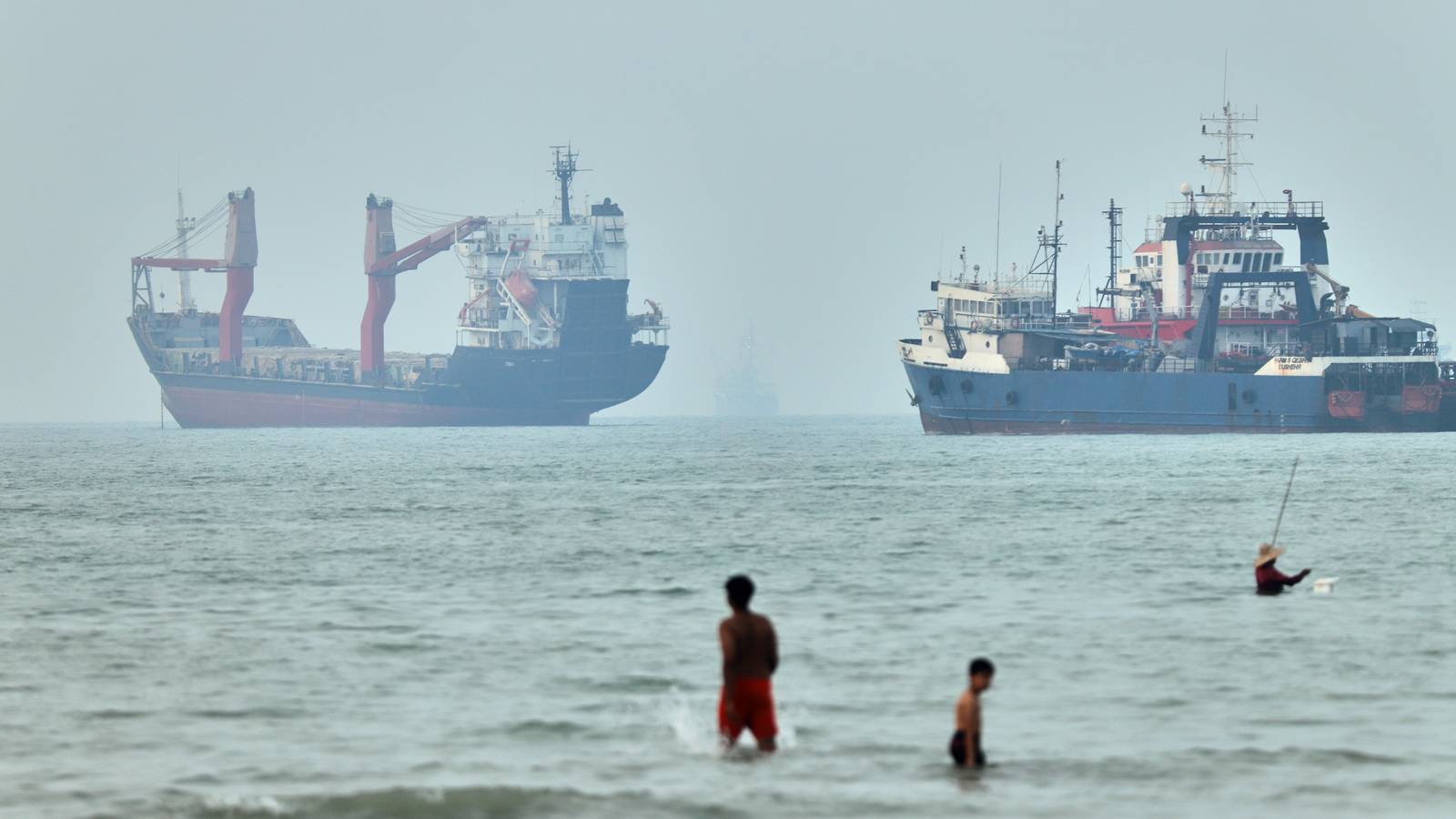
Iran and Oman are currently navigating towards an agreement that could potentially reopen the crucial Strait of Hormuz, a vital waterway for global oil transportation. This development, if formalized, is expected to play a significant role in de-escalating ongoing tensions in the Middle East. Regional officials have indicated that talks are well underway, presenting a glimmer of hope for a more stable maritime environment in the volatile region.
Details of the Proposed Agreement
The proposed arrangement involves ships entering the Persian Gulf via an Iranian-controlled route and exiting through Oman’s maritime domain. This setup is aimed at ensuring maritime security while also preserving the delicate environmental balance. Regional officials noted that any finalized agreement would likely include service fees for security provisions. However, discussions are still ongoing, and the specifics could change before any deal is officially confirmed. Significantly, this agreement would be interconnected with the potential lifting of U.S. sanctions on Iran’s ports.
If Iran successfully secures control over the Strait of Hormuz through this agreement, it would mark a notable strategic gain for Tehran. The U.S. government is challenged to consider its position, as blocking this deal through the maintenance of the blockade could lead to repercussions in international relations. Before the recent conflicts, the strait was recognized as an open international waterway; it has seen closures and restrictions due to attacks attributed to the hostilities high in the region.
U.S. Officials Weigh in on Progress
U.S. government officials, including Secretary of State Marco Rubio, have confirmed that progress has been made in talks, though no final resolution has been achieved yet. Rubio pointed out that the negotiations are still sensitive and complex, expressing hope for a swift conclusion. He has previously dismissed the idea of any arrangement that would grant Iran control over the maritime route, citing the dangerous implications such a precedent would set globally.
Reports indicate that U.S. Treasury Secretary Scott Bessent has also hinted at the possibility of a deal being finalized imminently. He mentioned that there could be enhanced movement through the strait, countering concerns over potential restrictions or tolls. Despite the current tensions, shipping activity appears to be resuming, which could suggest that stakeholders are cautiously optimistic about an outcome that favors maritime freedom.
Trump’s Remarks on Negotiations
Former U.S. President Donald Trump has emphasized that this negotiation represents Iran’s “last chance” to avoid further military conflict. Trump suggested that the reopening of the Strait of Hormuz is merely the initial step, with subsequent phases focusing on denuclearization. Despite these remarks from Trump, Iranian officials have categorically denied that they are engaged in talks with the U.S., maintaining that their discussions are solely with Oman.
Earlier attempts to broker a similar arrangement collapsed due to rising hostilities surrounding the strait. The timeline for reaching a final accord is tight, as an interim agreement established in June is approaching its deadline.
Recent Incidents in the Strait
In the backdrop of these negotiations, maritime security remains a significant concern. A cargo ship recently reported being struck by an unidentified projectile in the Strait of Hormuz, underscoring the volatility of the area. British maritime security sources confirmed that damage occurred, although further details regarding the ship’s identity and its cargo remain unclear. Tensions have surged due to Iranian attacks on vessels, primarily those operating on routes close to Oman which are typically monitored by U.S. forces.
As discussions continue, the fate of the Strait of Hormuz—and indeed, broader Middle Eastern relations—hangs in the balance. The resolution of these talks could potentially reshape maritime security and trade flows for much of the world.