
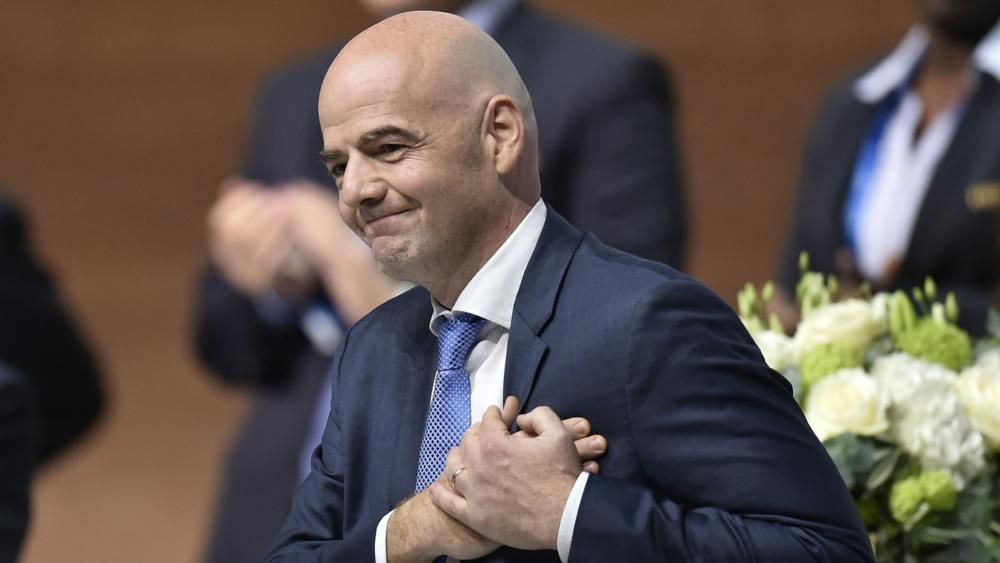
A coalition of African and Asian football federations has declared their support for FIFA President Gianni Infantino amid ongoing unrest within the organization. With FIFA comprising 211 member nations, each country—regardless of size or football prowess—holds equal voting power. This means that nations like Spain, Brazil, England, and Argentina exert the same influence as much smaller nations such as Vanuatu or Guam, making it crucial for candidates to gain favor across a broad spectrum of countries.
Support for Infantino Amidst Resignation Calls
Recently, a notable group of countries has expressed support for Infantino even as calls for his resignation grow louder, particularly from European nations. This division highlights the varying interests within global football governance. The next presidential election for FIFA is scheduled for March, and the tension surrounding Infantino suggests that he may face significant pressure to resign prior to the election, as numerous federations have vocalized their opposition to his leadership.
Infantino’s recent proposals, which aimed to involve private investors in the World Cup, drew criticism from three major confederations, including AFC (Asia) and UEFA (Europe). These developments prompted high-profile figures within FIFA to distance themselves from the president as his plans for reform faced backlash. In the wake of this turmoil, many federations have formally declared their opposition to Infantino’s re-election, yet reports indicate that around 15 countries continue to stand by him.
Support from Key Nations
Among the countries that support Infantino are influential members of the Asian Football Confederation, such as Qatar and the UAE. Their endorsement could play a crucial role in Infantino’s attempts to consolidate power as the election approaches. Currently, only seven of the 15 supportive nations have made their backing public, with countries such as Sri Lanka, Lebanon, Kuwait, Egypt, and Morocco among them. This suggests that while there is dissent, there is also a significant level of backing from various regions.
The general narrative among those favoring Infantino has highlighted his willingness to adapt and withdraw controversial proposals, as well as his efforts to fund football development in smaller, less affluent nations. This funding has been essential for growth and will likely continue to be a factor in fostering support for him from various federations.
Potential Outcomes of Infantino’s Leadership
The dynamics within FIFA paint a complex picture. Despite substantial opposition from European countries, the backing Infantino receives from nations in Africa and Asia indicates that the upcoming election could be more competitive than many anticipate. With no clear contenders for his position emerging at this time, the playing field remains open, and Infantino’s capacity to maintain alliances with key nations might prove pivotal for his political future.
In summary, while calls for Gianni Infantino’s resignation are being voiced loud and clear from several major football nations, a diverse coalition of support remains vital for his leadership. As the election nears, the interplay of regional alliances and funding considerations will likely shape the future of FIFA and its presidency. The potential for a more closely contested election could redefine not just Infantino’s role, but also the broader governance of football worldwide.