
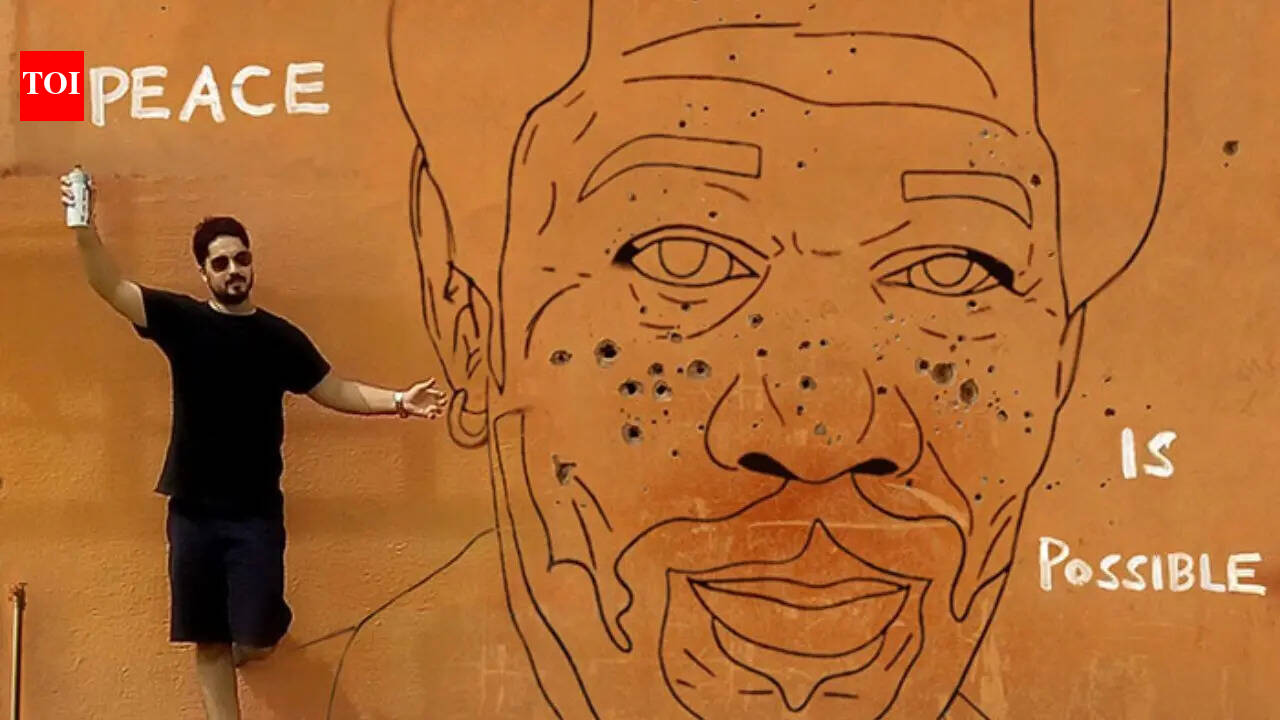
In the heart of Iraq, the scars of war are inescapable, weaving a complex narrative of pain and resilience. While viewers from afar may perceive the conflict as merely a headline in the news cycle, for many Iraqis, it is a daily reality marked by the remnants of violence and destruction. Walls riddled with bullet holes and shattered glass serve as constant reminders of their tumultuous history. Yet amidst this bleakness, artists like Mokhallad Habib, dubbed the “Banksy of Iraq,” are turning these wounds into symbols of hope and regeneration.
Mokhallad Habib: A Beacon of Hope in Iraq
Mokhallad Habib confronts the graphic remnants of war head-on. He adopts these damaged surfaces as his canvas, breathing new life into the narrative of suffering. By transmuting bullet holes into striking images, he instills a sense of optimism that resonates deeply within the community. His artistry encompasses not only playful, vibrant visuals but also profound themes that evoke emotional responses, making onlookers smile or reflect on their turbulent circumstances.
Through his work, Habib plays with the themes of hope and rebirth. For instance, he transforms a cluster of bullet holes on a white door into beautiful butterfly patterns or depicts craters on a wall as part of a painted galaxy. A yellow door, previously defined by its scars, now bears fruit illustrations alongside the uplifting message of “Give Hope.” In another poignant display, a shattered car window becomes the backdrop for a woman delicately blowing on a dandelion, embodying fragility and resilience simultaneously. These artistic innovations serve to remind viewers that beauty can emerge from even the most harrowing experiences.
The Impact of Art on Communities
The social and emotional impact of Habib’s work transcends aesthetics. By turning sites of destruction into sites of reflection, he encourages viewers to engage with Iraq’s complex history actively. Many who encounter his art are urged to pause and consider the narratives trapped within these battered structures. It becomes an invitation to confront the past while cultivating a sense of communal unity.
Habib has successfully harnessed social media, particularly Instagram, to share his creations with a wider audience. With a growing following of around 3,000, he uses this platform to convey the profound messages behind his artwork. While he is also a trained pharmacist, his passion for art enables him to forge connections that transcend professional boundaries. Notably, he has shared his work with influential figures, including the Ambassador of Japan to Iraq and renowned Saudi poet Ali Al-Nahwi, amplifying its reach and impact.
Art as a Tool for Healing
Ultimately, Habib’s artistry transcends its immediate visual appeal. Each mural and painting serves as both a commentary on the scars of war and a celebration of survival and group resilience. His work suggests that the tapestry of Iraq’s narrative, embroidered with threads of trauma, can be woven anew through creativity and expression. Rather than shying away from the harsh reality of conflict, Habib urges communities to confront their history, ultimately crafting a story of hope and unity.
In a land where war’s legacy looms large, artists like Mokhallad Habib play an essential role in reshaping perceptions and fostering hope. Through his art, he transforms the remnants of destruction into a vibrant dialogue about renewal and the possibility of brighter days ahead for Iraq. His work is a reminder that even in the darkest times, beauty and resilience can emerge, creating pathways toward healing and a hopeful future.