
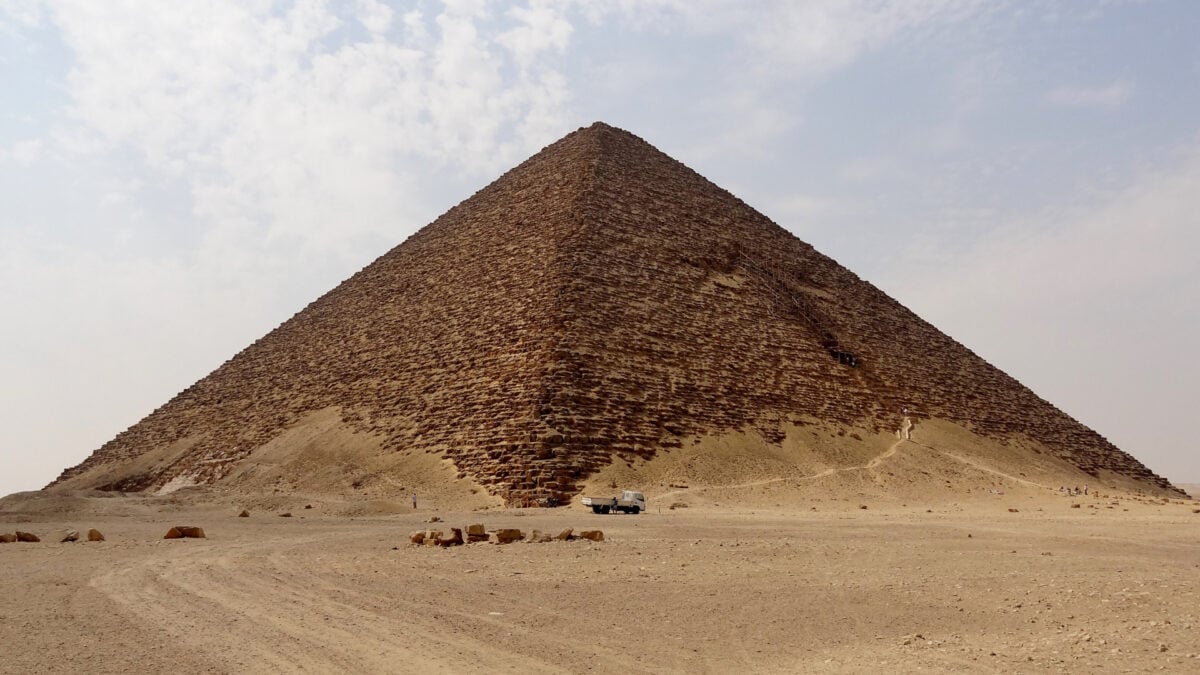
For almost a century, the vast linear formations adjacent to Egypt’s Red Pyramid were thought to be ramps for stone transportation. However, recent investigations suggest that these structures might actually serve another purpose: they could be large dams. This revelation indicates that ancient Egyptian builders may have utilized a sophisticated hydraulic system for construction, dating back nearly 5,000 years.
New Insights About Ancient Construction Techniques
Recent findings at the Dashur necropolis, located near modern Cairo, point to the possibility of these formations being dams rather than ramps. This perspective aligns with the historical context of King Snefru’s reign, during which significant advancements in hydraulic engineering took place. The research highlights a shift in understanding how resources were managed at ancient construction sites, particularly during the period that gave rise to monumental structures like the Red Pyramid.
The study, published in npj Heritage Science, emphasizes the need for a deeper investigation into the technical infrastructures surrounding pyramid complexes. Researchers, including a collaborative team of French and Egyptian archaeologists, noted that various infrastructural elements, such as diversion channels and flood-control systems, have not been thoroughly assessed. As a result, this new interpretation opens up exciting avenues for future archaeological exploration.
Snefru’s Reign and the Birth of Hydraulic Engineering
King Snefru, who ruled from around 2,613 to 2,589 BCE, is often referred to as the ‘builder pharaoh.’ He commissioned several monumental projects including the notable Sadd el-Kafara dam, which is recognized as one of the world’s earliest large-scale dams. Though later damaged by a significant flood, its construction underscores that state-level hydraulic engineering was taking shape during Snefru’s era. This suggests that ancient Egyptians were not merely focused on monumental construction but were also concerned with effective resource management.
Snefru’s obsession with pyramid architecture significantly influenced the engineering practices of his time. His efforts allowed architects to refine techniques related to weight distribution and structural integrity, ultimately leading to the construction of the Red Pyramid, the third-largest in Egypt. This monumental achievement highlights how advancements were rigorously tested and improved upon, laying the foundations for subsequent structures.
Utilizing Advanced Research Methods
The recent investigation into the suspected dam structures utilized state-of-the-art methodologies, including satellite imagery and digital terrain modeling. Although these features have been studied over the past two centuries, they have never been excavated, leaving them buried under layers of sand. Current access to these sites is restricted, heightening the intrigue for archaeological endeavors in the area.
After thorough analysis, researchers deduced that the structures could extend nearly 2,000 feet (600 meters) and exhibit designs more typical of hydraulic systems than transport routes. Their research suggests that one of these formations might represent a duckbill weir, a hydraulic feature used to control water flow, and could have been directly connected to the construction efforts of the pyramid.
Future Prospects and Uncertainties
Despite the promising implications of these findings, researchers acknowledge that uncertainties remain due to the limited excavations conducted so far. The conclusions drawn are intended to guide future excavations, providing a framework for validating or refining their hypotheses. This ongoing investigation highlights the complexities associated with ancient Egyptian engineering and raises the possibility that valuable hydraulic structures might still lie concealed beneath the desert sands.
Ultimately, the study underscores a more intricate relationship between water management and the construction practices of Egypt’s Old Kingdom than previously thought. It also opens the door for further research into ancient technologies that remain hidden, awaiting discovery.
In summary, this emerging understanding points to a significant chapter in the history of ancient Egypt, where advanced engineering and resource management were crucial to monumental construction. As research continues to evolve, it may redefine our comprehension of the capabilities of the civilizations that built the great pyramids.