
Ancient Egypt continues to captivate archaeologists, revealing unexpected discoveries even after 5,000 years. With advanced technologies like muon detectors and ground-penetrating radar, researchers are uncovering buried cities and reinterpreting royal histories. Yet, the desert harbors sealed chambers and the obscured names of kings, adding layers of mystery to what is already a well-documented civilization. These recent discoveries shed light on eras ranging from the Predynastic period to modern-day findings.
A Hidden Entrance at the Smallest Giza Pyramid
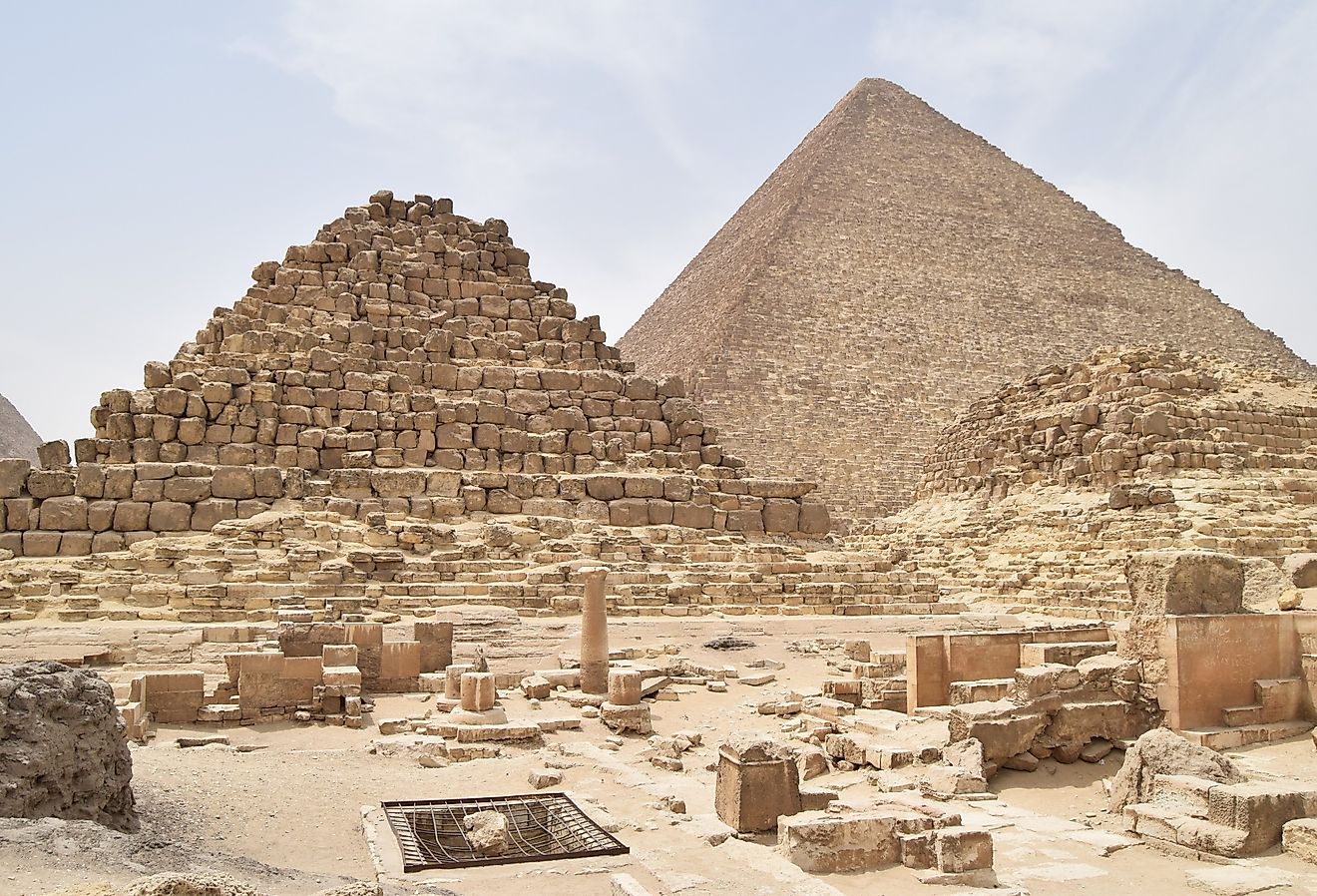
The Pyramid of Menkaure stands as the smallest of the Giza trio, towering at only 213 feet, significantly less than its larger counterparts, Khufu and Khafre. Constructed during the Fourth Dynasty around 2510 BCE, this pyramid is mostly limestone, but its lower courses feature a casing of smooth granite. One section of granite on the pyramid’s eastern face has perplexed Egyptologists for years due to its unusually smooth finish, correlating to the main entrance located on the north side.
In 2025, a study by Cairo University and the Technical University of Munich, as part of the ScanPyramids project, explored this eastern section. Their findings utilized ground-penetrating radar and other techniques, revealing two air-filled voids located just behind the polished blocks. While the researchers stopped short of claiming it was an entrance, these voids provide the first tangible evidence supporting a theory proposed in 2019—that Menkaure may include a second, unopened entrance.
The Pharaoh Who Erased His Predecessors
Egyptian kings often treated historical accounts as malleable, erasing names and substituting their own in inscriptions. Horemheb, who ascended the throne around 1319 BCE, is noted for his extensive campaigns against his predecessors. Rising from military ranks, he showed little regard for the Amarna period rulers who came before him.
Horemheb systematically dismantled monuments erected by Akhenaten and recycled stones for his constructions, claiming heritage from Amenhotep III to establish legitimacy. His efforts to obscure the Amarna years persisted, as later royal lists, including one created by Seti I, omitted significant figures like Akhenaten and Tutankhamun, jumping directly from Amenhotep III to Horemheb.
The First Royal Tomb Discovered in the Theban Necropolis Since 1922
In February 2025, Egypt’s antiquities authority unveiled the discovery of a tomb in Wadi Gabbanat el-Qurud, approximately a mile and a half from the Valley of the Kings, identified as belonging to Thutmose II. This marked the first time a royal New Kingdom tomb was found in the Theban necropolis since Howard Carter’s discovery of Tutankhamun’s tomb in 1922. Thutmose II, who ruled in the early Eighteenth Dynasty, was the half-brother and consort of the powerful Queen Hatshepsut.
Initially discovered in 2022, the tomb’s entrance sparked assumptions that it belonged to a royal wife due to its proximity to other notable tombs. However, inscriptions on alabaster jars confirmed its royal lineage. Although the tomb itself was in disarray, likely affected by flooding, it is believed that many original burial artifacts may still remain hidden.
A Civilization Still Emerging From the Sand
Ancient Egypt remains one of the most researched yet enigmatic civilizations in history. Each excavation brings fresh insights, whether through the discovery of forgotten pharaohs, hidden chambers, or evidence of historical revisionism. As technological advancements in scanning and excavation continue, the next significant find could emerge from within monuments that millions visit annually, promising new chapters in the ever-evolving story of this ancient civilization.