
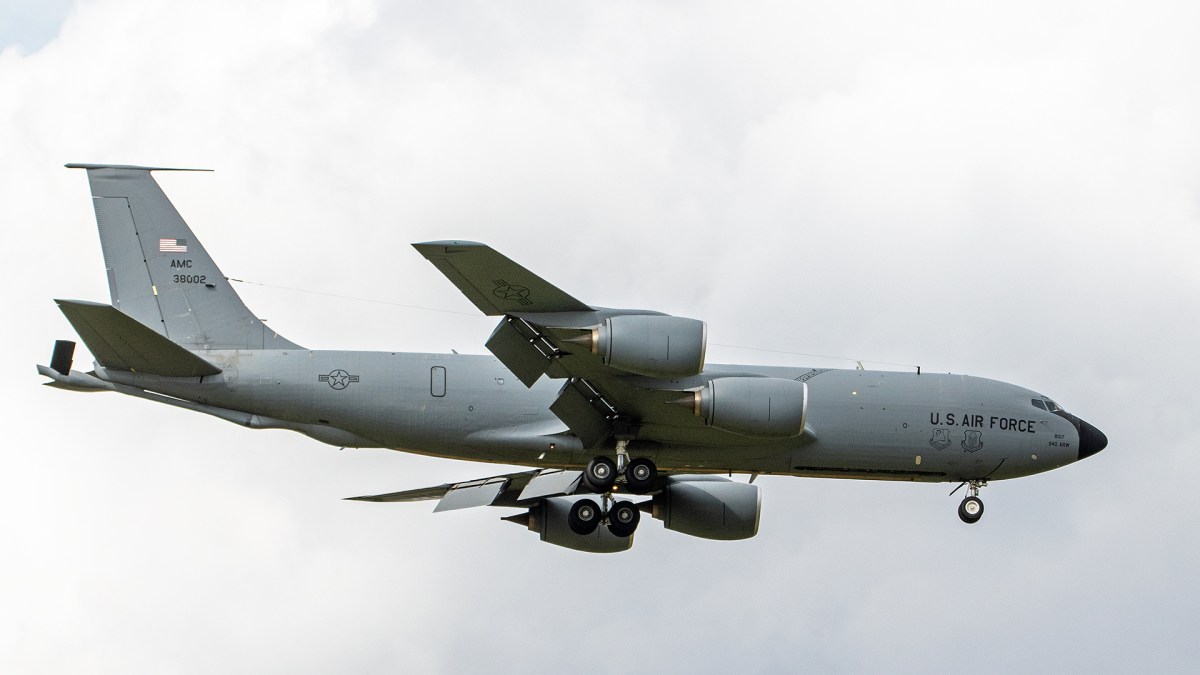
The KC-135 Stratotanker, a crucial aerial refueling aircraft, is currently receiving extensive repairs following a tragic midair collision in Iraq that resulted in the loss of an entire crew. The aircraft is being restored at Tinker Air Force Base, the only U.S. facility specialized in repairing battle-damaged refueling jets and bombers.
The Collision Incident
On March 12, the KC-135, known by its call sign Zeus 95, was involved in a midair accident that killed all six members of the crew. This tragic event has resonated across military circles, as the fallen crew members included officers from the 6th Air Refueling Wing and the 121st Air Refueling Wing. After the collision, the damaged jet managed to land safely at Ben Gurion Airport in Israel. Images displayed significant damage, notably the loss of half its tail, highlighting the severity of the incident.
Repair Process and Timeline
After the incident, the damaged KC-135 was transported to RAF Mildenhall in the U.K., where it received a replacement tail before finally arriving at Tinker Air Force Base on August 3. The maintenance process, which falls under programmed depot maintenance (PDM), involves comprehensive inspections and repairs to restore the aircraft to full operational capability. An Air Force spokesperson indicated that the standard duration for such maintenance is about 155 days but noted that additional defects discovered during the process could extend this timeline.
Efforts to maintain readiness in the fleet have been impressive; the Expeditionary Depot Maintenance Flight at Tinker has performed over 200 repairs within a short three-week period, allowing other KC-135s to remain operational while awaiting more extensive repairs.
Ongoing Conflicts and Aircraft Losses
The need for repair and replacement of these tankers underscores the current geopolitical climate, particularly the ongoing conflict with Iran. Recent attacks have targeted U.S. bases in the region, resulting in damage or destruction of at least 40 aircraft, including various tankers and bombers. These losses have prompted discussions in Congress regarding funding for replacement aircraft, with Air Force Chief of Staff Kenneth S. Wilsbach expressing urgency in addressing these operational needs.
Moreover, every damaged aircraft represents valuable lessons learned, particularly in executing battle damage repairs. The operational experience gained through real-life scenarios not only boosts the crews’ skills but also prepares them for potential future conflicts.
In conclusion, while the KC-135 remains an aging asset, its continued functionality after such significant damage is a testament to the dedication of the teams involved in its repair. The ongoing situation serves as a reminder of the critical role these aircraft play in modern military operations and highlights the importance of investing in their upkeep and replacement.