
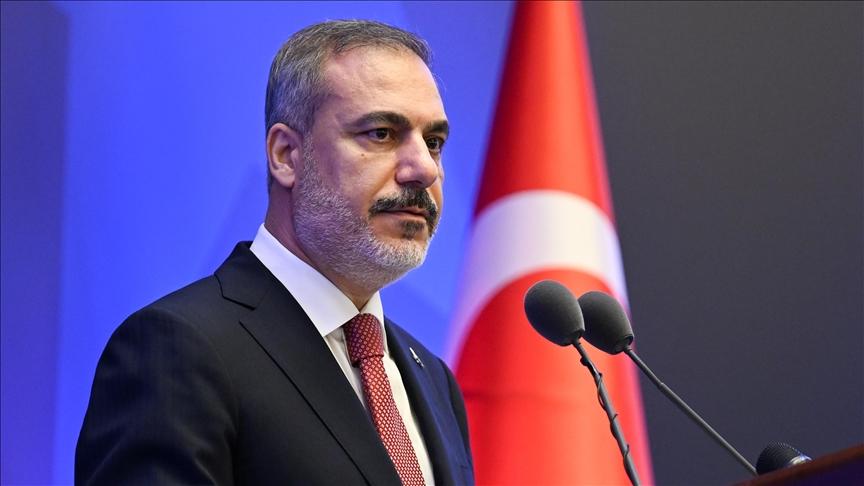
In a significant diplomatic development, Turkish Foreign Minister Hakan Fidan announced that Egypt may join the recently signed defense agreement between Türkiye, Pakistan, and Saudi Arabia, contingent upon resolving several technical details. This statement indicates the potential for the security partnership to expand beyond its founding nations, thus bringing heightened interest from regional players.
Potential Expansion of the Defense Agreement
Fidan emphasized that Egypt is not just a neighboring state but a close ally of the three founding members on various regional issues. He highlighted that the inclusion of Egypt into the alliance is feasible and could happen in the future as long as specific technical arrangements are addressed. Moreover, it has come to light that several other nations have also expressed an interest in joining this security pact, signaling potential shifts in the regional security landscape.
The Makkah Joint Defence Agreement, unveiled in Saudi Arabia, establishes a unified security commitment. Under this agreement, an assault on one member nation will be considered an attack against all involved parties. Fidan articulated that while Türkiye, Saudi Arabia, and Pakistan form the core of this alliance, future members can be added with the consensus of the founding members.
Framework and Characteristics of the Alliance
Interestingly, the agreement bears similarities to NATO’s Article 5 mutual-defense clause, although key implementation decisions will hinge on discussions among member states. The types of assistance rendered could vary but may include intelligence support, logistical help, ammunition, or even troop deployments, based on the severity and nature of the aggressor’s actions.
Fidan clarified that this alliance is not designed to counter any specific nation, including Iran. Instead, it fundamentally aims to bolster the security and stability of its members. The founding nations, despite their diverse military proficiencies, will work collaboratively to create a deterrent-focused framework, rather than pursuing offensive agendas.
Operational Management and Future Goals
The alliance will be operated through a political-military committee comprised of foreign ministers, defense ministers, and military leaders. A secretariat is set to be established in Saudi Arabia to facilitate operations, covering various aspects such as joint military exercises, intelligence sharing, logistics, and cooperative defense industry efforts. Regular military drills are deemed essential to ensure effective collaboration among the member states, enhancing compatibility in weapons and communication systems.
According to Fidan, creating common standards and conducting joint assessments will be integral to the alliance’s development. Additional support from various Muslim-majority countries has emerged for this initiative, and even some Western observers have viewed it favorably. Ultimately, the broader aim is to foster regional solidarity, empowering Middle Eastern and Muslim-majority nations to confront security challenges through their cooperative partnerships.
In conclusion, while the Turkish Foreign Minister acknowledged the complexity involved in actualizing this agreement, he expressed optimism that it represents a significant step towards enhanced regional stability. The eventual enlargement of this alliance will rely on the effective establishment of operational frameworks and procedural standards, underscoring the pivotal role this defense pact may play in altering the regional security dynamics.