
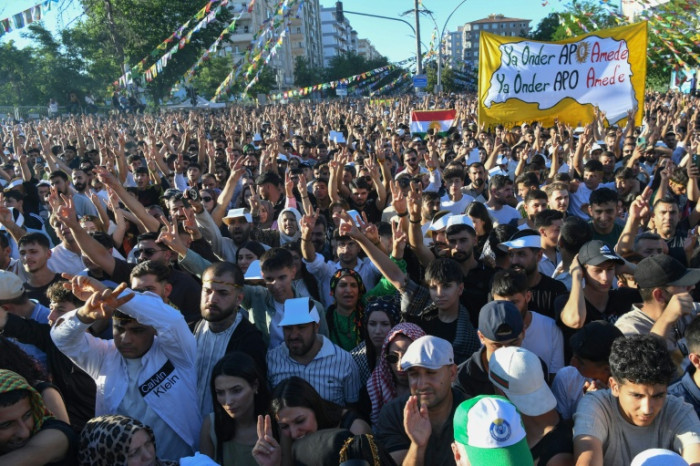
In Istanbul, the Kurdistan Workers’ Party (PKK) has voiced strong opposition to a proposed Turkish law concerning the status of its fighters following disarmament. This critique comes just a day before the bill is set to be debated in parliament, highlighting the ongoing tensions surrounding the Kurdish issue in Turkey.
Criticism of the Proposed Legislation
The PKK’s response to the legislation is rooted in its assertion that the law is fundamentally flawed. They argue that the proposed measures fail to address critical issues related to democratization and the Kurdish situation. According to the PKK, the bill’s focus solely on disarmament neglects the broader context of the Kurdish struggle for rights and recognition. The organization emphasizes that unless Abdullah Ocalan, the detained leader of the PKK, is released, any provisions in the law would be ineffective and seen as meaningless.
The legislation aims to facilitate the return of some PKK members to civilian life under specific conditions. However, it stops short of providing a blanket amnesty, which many believe is necessary for a genuine resolution to the conflict. The PKK’s statement, disseminated via the ANF news agency, underscores their belief that without addressing the political and social dimensions of the Kurdish issue, the law fails to deliver meaningful change.
Abdullah Ocalan’s Impact on the Peace Process
Abdullah Ocalan, who has been imprisoned since 1999, has been a pivotal figure in the Kurdish movement. His recent calls for disarmament, in response to Turkish peace initiatives, have led to expectations for progress in negotiations. However, the PKK warns that as long as Ocalan remains incarcerated, the law’s provisions will lack authenticity and efficacy. His release is seen as essential not only for the PKK but also for fostering trust and engaging in constructive dialogue with the Turkish authorities.
While the proposed law attempts to suspend criminal prosecutions for certain offenses, its limitations are noteworthy. Serious crimes, including intentional homicide, are excluded from these legal protections, which points to a complexity in addressing older grievances and the need for an inclusive peace process. The Turkish government’s failure to fully integrate the Kurdish perspective into its policies raises questions about the genuine intent behind the legislation.
Political Perspectives and Future Implications
Prominent Kurdish political figure Selahattin Demirtas, who has been imprisoned since 2016, has publicly supported the proposed law. He believes it could mark a pivotal advancement in addressing the decades-long conflict that has devastated countless lives. By framing this legislation as part of a “historic peace effort,” Demirtas emphasizes the need for transformative change in Turkey’s political landscape.
The stakes remain high as the parliamentary debate approaches. With tensions still rife between the Turkish government and the Kurdish population, the handling of this legislation could either serve as a stepping stone towards reconciliation or exacerbate existing divisions. The past four decades have seen immense loss, and the current discourse hinges on finding a pathway that recognizes the rights and aspirations of the Kurdish people while maintaining national security.
In conclusion, the proposed legislation has sparked significant debate within the Kurdish community and among political leaders in Turkey. While some view it as a potential step toward peace, the PKK’s warnings about its shortcomings—and the pivotal role of Ocalan’s release—indicate that a comprehensive and lasting resolution to the Kurdish question remains elusive.