
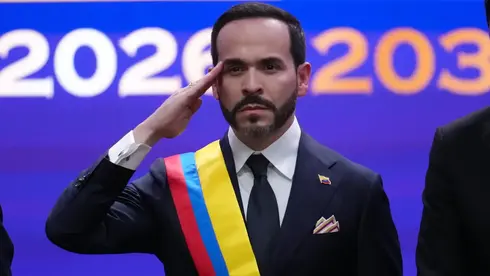
President Abelardo de la Espriella’s recent inauguration in Colombia has initiated significant policy shifts, signaling a new direction for the country. Within hours of assuming office, the President’s administration recognized Morocco’s sovereignty over Western Sahara and rescinded support for the self-declared Sahrawi Arab Democratic Republic. This bold move aligns with his broader strategy to enhance Colombia’s diplomatic and economic engagements globally.
Strengthening Ties with Israel
In addition to its commitment to Morocco, Colombia’s new government is also working to restore full diplomatic, security, and economic relationships with Israel. These decisions are not random but represent a calculated approach to foreign relations aimed at achieving stability and encouraging measurable cooperation. De la Espriella’s government is shifting away from the ideological frameworks of previous administrations, prioritizing national interests as the foundation of its international relations.
The statement made during a meeting in Cali, involving Moroccan Foreign Minister Nasser Bourita and Colombian officials, emphasized this initiative as a “new beginning.” Vice President José Manuel Restrepo highlighted Morocco as Colombia’s main strategic ally in Africa, while Foreign Minister Omar Bula Escobar reaffirmed Colombia’s recognition of Morocco’s territorial claims.
Moving Away from Previous Policies
The contrast with former President Gustavo Petro’s administration is stark. Petro had previously reestablished ties with the Sahrawi Arab Democratic Republic, a shift that received criticism for aligning Colombia with increasingly isolated geopolitical positions. By severing relationships with Israel amidst growing tensions, Petro’s government complicated ties with essential Western allies. De la Espriella’s team views this previous stance as detrimental, and the new administration is actively dismantling it.
Morocco’s recent recognition aligns Colombia with a consensus that includes support from the U.S., Israel, Spain, and France, all of whom have endorsed the notion of Moroccan sovereignty. This adjustment reflects a unified stance among multiple nations regarding regional conflicts. From a commercial standpoint, the Colombia-Morocco partnership opens avenues for diverse collaborations ranging from precision agriculture to advanced cybersecurity.
Practical Outcomes on the Horizon
Both nations aim to establish working groups focused on critical issues such as water management, agricultural innovation, and defense technologies. Given Colombia’s challenges regarding agricultural productivity and water security, the integration of Israeli drip-irrigation and Moroccan fertilizer capabilities could yield significant advancements. Furthermore, specialized intelligence networks can bolster efforts against transnational crime, enhancing Colombia’s national security landscape.
This multilayered partnership operates on principles similar to those that drove the Abraham Accords, underscoring how pragmatic relationships can supersede historical disputes. By opting for a cooperative model, Colombia positions itself strategically not only as a participant in regional stability but also as a catalyst for mutual growth.
Colombia’s realignment illustrates a clear pivot away from ideological experiments toward tangible results in trade, security, and agricultural collaboration. The new administration appears committed to executing this strategy through clear and actionable agreements. If these partnerships flourish, Colombia’s choice will define its foreign policy trajectory moving forward.