
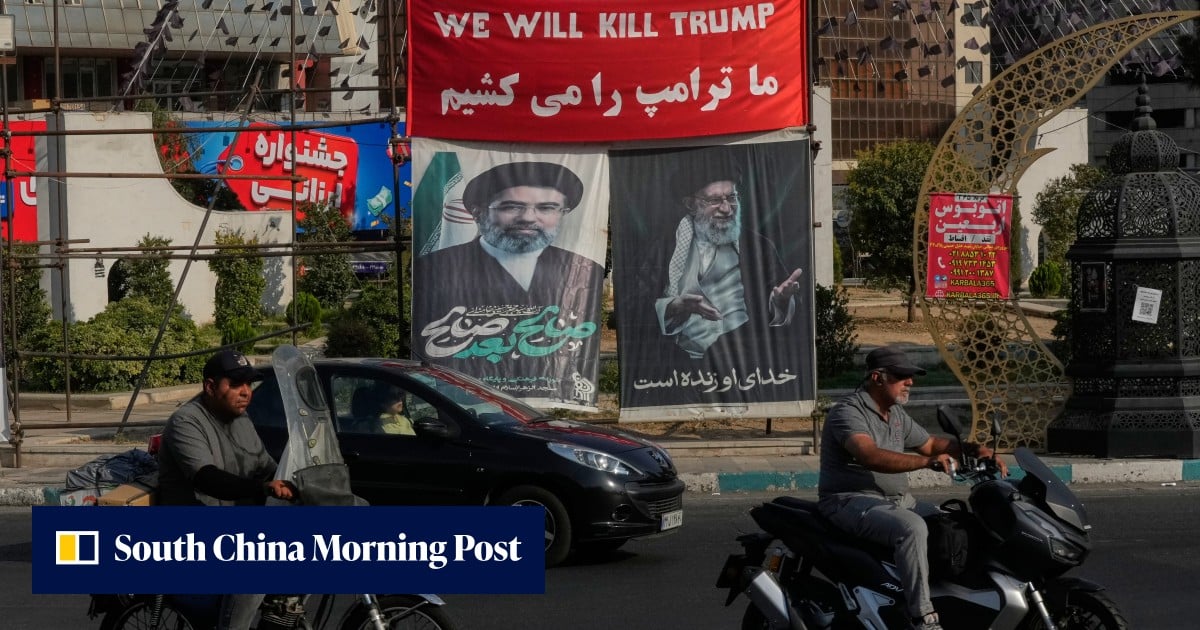
Iran’s political landscape has recently been stirred by comments from President Masoud Pezeshkian concerning the country’s supreme leader, Mojtaba Khamenei. His remarks have prompted fresh rumors about Khamenei’s current situation, particularly since the last time he appeared in public was shortly after assuming his high office in March.
Recent Developments in Leadership
Pezeshkian disclosed to state television that his attempts to connect with Khamenei had been challenging. However, a subsequent update revealed that the two leaders had indeed met recently for an extensive discussion lasting “seven or eight hours.” This meeting took place on the sidelines of a political summit in Tehran, where Pezeshkian described the conversation as “very good.” The focus was primarily on addressing Iran’s deteriorating living conditions, with Khamenei stressing the critical importance of “unity and cohesion” within the nation.
Political Tensions and Future Directions
These revelations come amidst a backdrop of intense political strife in Tehran. There have been mounting calls from hardline factions for Pezeshkian’s resignation due to his support of an increasingly controversial peace agreement with the United States. In a recent televised interview, he firmly stated his unwillingness to resign, indicating a turbulent chapter ahead for Iran’s leadership. The conversations between Pezeshkian and Khamenei could pave the way for navigating through these ongoing challenges, particularly as the public grapples with stability issues.
Impact of Conflict on Leadership Visibility
Mojtaba Khamenei’s absence from public view since taking over leadership has raised eyebrows and led to speculation regarding his health and capabilities. He sustained injuries during an Israeli airstrike on February 28, which also claimed the life of his father and predecessor, Ayatollah Ali Khamenei. The specific nature and severity of his injuries are undisclosed; however, Pezeshkian proclaimed that Khamenei was in “perfect health.” Nevertheless, the lack of his public presence has created a vacuum, where longstanding political rivalries have become more pronounced and have started to manifest openly.
Conclusion: The Future of Iranian Politics
The interplay between Pezeshkian and Khamenei could not be more pivotal during these tumultuous times, marked by internal dissension and external pressures. As Iran continues to face pressing socio-economic issues and evolving geopolitical landscapes, the discussions between these two leaders may hold the key to a more stable political future. Whether Pezeshkian’s leadership will survive the storm or whether Khamenei will step further into the public eye remains to be seen, but the insights gathered from their discussions will undoubtedly influence Iran’s course in the coming days.