
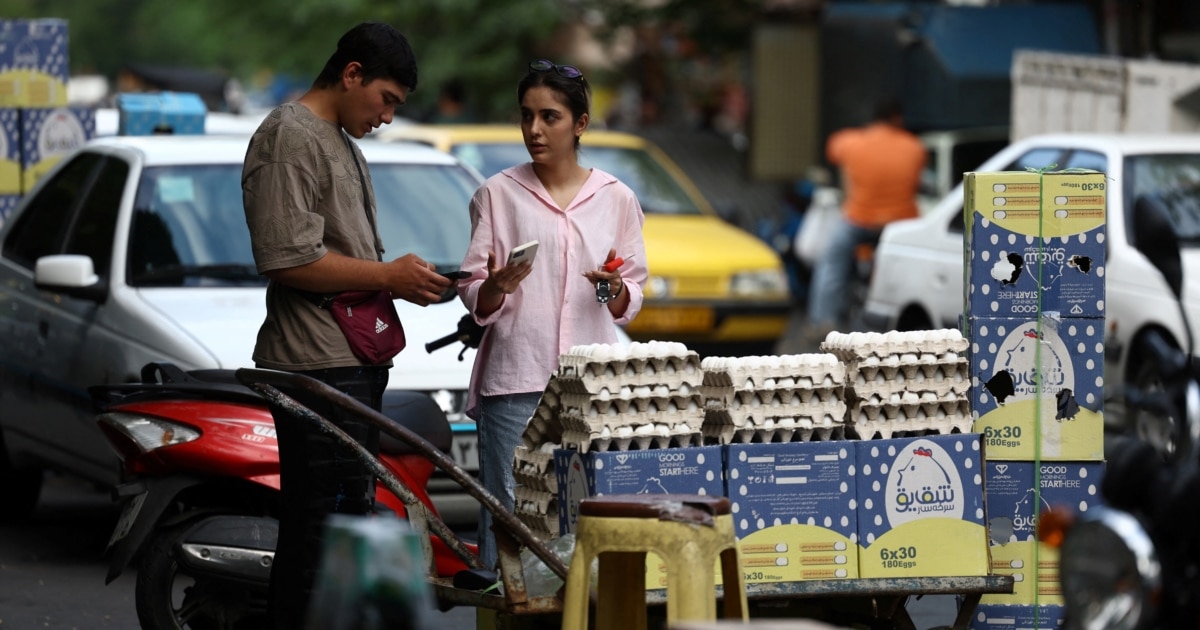
The ongoing economic crisis in Iran has been exacerbated by escalating inflation and declining purchasing power, leaving many families struggling to provide even the most basic necessities. Weekly shopping lists have significantly shrunk, and the trend shows no signs of reversing any time soon.
Rising Costs of Essentials
As prices soar, Iranians are forced to prioritize their spending, impacting their diets and overall quality of life. A resident of Tehran shared that staples like fruits and dairy are vanishing from shelves, as they become increasingly unaffordable. The shift to essential-only purchases demonstrates the desperation felt across the country. “We can only afford necessities, but even those are hard to come by,” she stated, highlighting the grim realities faced by many. The situation worsened due to prolonged international sanctions and the recent conflict involving the U.S. and Israel, which has pushed Iran to the brink of economic disaster.
The United States and Israel’s military actions have led to significant damage to Iran’s infrastructure, driving prices for basic commodities up sharply. For instance, a kilogram of potatoes that once cost around 540,000 rials ($0.39) now stands at 720,000 rials ($0.52) within just a week, along with soaring prices for eggs and bread. The financial strain is compounded by the fact that a typical family is now spending over 70% of its income on essential food items. The minimum monthly salary in Iran is roughly $100, underscoring the severe limitations placed on household budgets.
Impact of International Sanctions
The ongoing military conflict has intensified the pressure on Iran’s economy. Key infrastructure and industries have been targeted, disrupting local production and driving up costs. Moreover, the U.S. has imposed strict sanctions that have effectively stunted Iran’s oil exports, a vital economic lifeline. Despite a brief respite provided by an interim peace deal, these sanctions were swiftly reinstated after the agreement collapsed. As the U.S. applies further economic pressure, the prospects for relief appear increasingly dire.
Analysts have noted the uncertain effectiveness of this strategy. While the Iranian government has shown resilience, maintaining its stance despite significant financial pressure, the people continue to bear the brunt of these challenges. The sanctions have impacted not just oil exports but also access to foreign currency, further complicating Iran’s economic landscape. This situation poses a unique dilemma for the U.S., as the more economic hardship imposed, the higher the stakes for the Iranian populace.
Future Outlook for Iranians
Predictions indicate that Iran’s economic troubles may be far from over. The International Monetary Fund forecasts inflation could peak at nearly 69% this year, marking the highest levels since the Islamic Revolution in 1979. With essential goods becoming scarcer and prices increasingly unmanageable, analysts warn that a severe economic collapse could be looming. The ordinary citizens of Iran are facing an uphill battle, compromised further by fuel and electricity rationing, along with limited access to foreign currency.
“Iran’s Achilles’ heel is indeed its economy,” states Masoumeh Taherkhani, an economic analyst. As the situation continues to deteriorate, the perspective of ordinary Iranians appears bleak. “Planning for tomorrow has become a fantasy,” shared a local woman, illustrating the deeper psychological impact of economic distress. Amidst a growing sense of hopelessness, people are merely focused on surviving the day, as no one can predict how much more they will have to spend tomorrow.
In summary, the economic conditions in Iran present a dire landscape for its citizens, who are grappling with the ramifications of conflict and mismanagement. As inflation continues to rise and wages stagnate, the challenges of everyday life are likely to intensify, leaving many without a clear pathway to a better future.