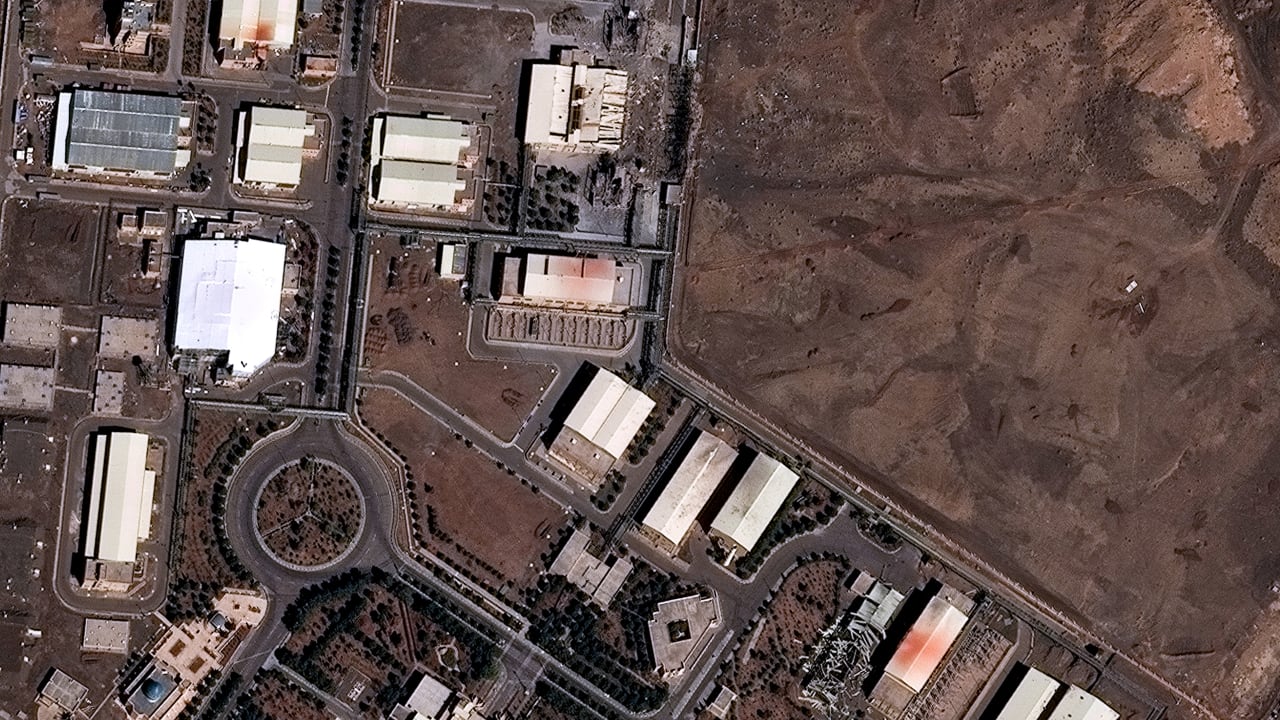
Israel and the United States have focused their military efforts on diminishing Iran’s nuclear weaponization capabilities rather than merely targeting nuclear enrichment sites. This strategic shift was highlighted during Operations Roaring Lion and Epic Fury, as revealed by a recent analysis from the Institute for Science and International Security (ISIS) based on satellite imagery.
Focus on Weaponization Over Enrichment
The recent ISIS report indicates that the attacks conducted during the intense 12-day conflict in June 2025 did not significantly damage the already targeted Iranian nuclear enrichment facilities. Instead, the operations prioritized disrupting key development sites and infrastructures linked to the weaponization of enriched uranium. This approach marks a broader geopolitical strategy, emphasizing preventative measures against Iran’s advancement in nuclear arms capacity.
Targeting Key Installations and Research Facilities
Among the critical sites under attack was the Min Zadai site, suspected to play a significant role in Iran’s attempts to restore its nuclear weapons capabilities following the June strikes. The Israeli Defense Forces (IDF) identified this complex as a partially underground nuclear headquarters where critical components for weapons systems were being developed. Reports have suggested that the Min Zadai complex was involved in processes related to the metallurgy of nuclear weapon cores, further cementing its strategic importance.
Additionally, other installations were also targeted, such as Taleghan 2, a fortified facility within the Parchin military complex known for its role in testing nuclear weapons and advanced explosives. The IDF’s focused strikes on these sites indicate a comprehensive strategy to curtail Iran’s nuclear ambition beyond mere enrichment.
Impact on Academic Institutions Tied to Weaponization
The operations also extended to various academic institutions tied to nuclear weapon development. One notable target was Malek Ashtar University in Tehran, directly linked to Iran’s weaponization efforts. A laboratory connected to this university suffered significant damage during the strikes, illustrating the tactical targeting of educational institutions involved in nuclear research.
Moreover, the Imam Hussein University, closely associated with the Islamic Revolutionary Guard Corps (IRGC) and known for hosting underground weapons research facilities, was also hit. The IDF’s strategy reflects a more intricate and multidimensional approach, recognizing the role of educational and research institutions in the proliferation of nuclear technology.
Broader Implications on Iran’s Nuclear Timeline
The ISIS analysis posits that the destruction of these pivotal weaponization sites is likely to have extended the time frame necessary for Iran to produce nuclear weapons. By disrupting critical infrastructure and research facilities, the operations cultivated a more significant impact than if the focus had solely remained on enrichment sites. This shift marks a significant change in the approach to countering Iran’s nuclear ambitions, emphasizing the need for a robust and comprehensive strategy in the Middle Eastern geopolitical landscape.
In conclusion, the strategic focus on weaponization capabilities over enrichment in recent Israeli operations underscores a broader concern about Iran’s nuclear ambitions. The targeted approaches not only attempt to mitigate immediate threats but also aim to hinder the longer-term production of nuclear arms, thereby reshaping the balance of power in the region.