
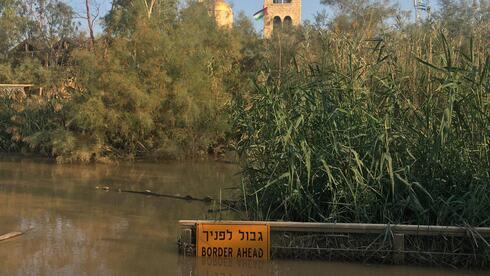
For more than fifty years, the section of the Jordan River at Kasr al-Yahud has served as a highly monitored defensive zone separating Israel from Jordan. The river, alongside the sparse desert landscape on the eastern bank, provides the Israel Defense Forces (IDF) with clear visibility, effective radar coverage, and a less obstructed environment to track cross-border activities. Continuous surveillance through optical systems, visual sensors, and thermal technology has been crucial, especially given the low civilian population density in the area, forming a vital aspect of Israel’s eastern defense strategy. Concurrently, the Israeli military is engaged in efforts to prevent smuggling and unauthorized crossings across the wider Jordan Valley.
Investment in Modern Infrastructure
On the west bank of the river, Israel has been proactive in upgrading and maintaining infrastructure. In early 2026, authorities unveiled a significant renovation project at Kasr al-Yahud, entailing an investment of NIS 25 million to enhance civil structures, security access, and amenities for pilgrims. The unique proximity of the two banks, each governed by separate administrations since the 1994 peace deal, means that any major development on one side directly influences the operational conditions on the other.
Jordan’s Development Initiatives
Meanwhile, across the river, Jordan is entering a phase of extensive structural advancement. On August 12, 2026, the Jordanian government, led by Prime Minister Jafar Hassan, launched a comprehensive development initiative that includes a $120 million investment in the area surrounding the traditional baptism location at Al-Maghtas. This endeavor forms a critical part of Jordan’s vision for the zone, with groundwork slated for completion by the end of Q1 2027 and major construction expected to wrap up in early 2029, just ahead of the anticipated 2,000th anniversary of Jesus’ baptism in 2030.
The funding is strategically allocated into four key components, with the centerpiece being a Museum of Jesus’ Baptism, budgeted at $50 million and designed by the esteemed British architectural firm Níall McLaughlin Architects. An integrated village aimed at pilgrims will consume approximately $40 million for hospitality, retail, and public spaces, while $27 million is earmarked for civil infrastructure including access roads and essential utility systems. A further allocation of $3 million will be directed towards establishing a green ecological corridor.
Implications for Security and Border Management
The anticipated influx of visitors represents a sharp contrast to current tourism metrics, which indicate annual attendance at Al-Maghtas fluctuates between 70,000 to 95,000 individuals. Early 2026 statistics reveal a strong tourism rebound, with around 25,500 visitors in just the first two months. However, projections suggest the new museum could attract 400,000 to 450,000 annual visitors, which would greatly increase daily human activity near Kasr al-Yahud.
This impending surge poses significant challenges for security monitoring units. The anticipated transition from sporadic to continuous visitation and commercial activity creates a fundamentally altered environment near the border. With increased civilian presence, military protocols regarding engagement will need revision. Previously straightforward assessments of unauthorized crossings will become complex when international pilgrims are in close proximity to the river.
Additionally, air surveillance becomes more complicated with the expected rise in drone traffic driven by tourists and media personnel operating in the area. Monitoring low-altitude airspace will pose challenges in distinguishing between civilians and potential security threats.
Ultimately, Israel retains total sovereignty over its side of the river and is equipped to adapt to these evolving conditions. Employing advanced surveillance technologies and maintaining close cooperation with Jordanian security agencies on visitor screening will be crucial in preserving stability. By proactively addressing these challenges, Israel can secure its eastern border while simultaneously accommodating the changes brought about by increased tourist activity.