
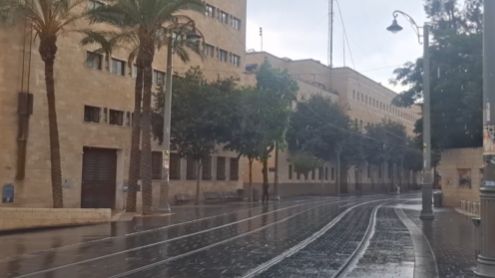
On a remarkable day in mid-August, Israel experienced an unexpected weather phenomenon, with rain falling across various regions, breaking long-held records. This unusual weather pattern was characterized by significant rainfall that not only surprised residents but also led to what officials described as the first summer flood in a stream in the Judean Desert.
Record-Breaking Rainfall in Jerusalem
Jerusalem was hit particularly hard by this anomalous weather. As heavy rain descended on the city and its surrounding hills, the atmosphere transformed into a scene reminiscent of autumn. The Israel Meteorological Service reported significant flooding in several neighborhoods as radar images indicated a concentrated downpour directly over the city. This sudden influx of rain provided a much-needed relief to the region but also raised concerns about its impact on infrastructure.
Ma’ale Adumim Takes the Brunt
The surrounding areas were not spared either, with Ma’ale Adumim recording extraordinary rainfall. An Israel Meteorological Service station indicated that the city received 11 millimeters of rain in just one hour, setting a record for August in that region. This amount eventually increased to 15 millimeters, causing localized flooding. Emergency teams were dispatched to assist residents affected by the water inundation in their homes, showcasing the need for a swift response to natural disasters.
Unprecedented Flooding in the Judean Desert
In a further twist, this summer shower caused rare flooding in the Judean Desert, a phenomenon that had never been documented during this time of year. Water coursed through Nahal Og, north of the Dead Sea, marking the first instance of this kind of flooding in August. Ahead of the anticipated rain, authorities had already issued flash-flood warnings for both the desert and Dead Sea areas, emphasizing their commitment to public safety.
Ongoing Weather Patterns and Forecasts
The unusual meteorological system began affecting northern Israel around 3 p.m., rapidly spreading to Jerusalem shortly after. The unexpected weather did not seem to be a one-time occurrence; forecasts indicated more rain was expected in eastern Israel beginning Sunday afternoon. Additionally, temperatures were predicted to cool down sharply at the start of the upcoming week, potentially suggesting a shift from the typical summer climate.
The convergence of these weather events highlights the unpredictability of climate patterns and serves as a reminder of the need for preparedness in the face of nature’s unpredictability. As Israel navigates this unusual weather episode, the resilience of its residents and emergency services will be crucial in mitigating the impacts of such unexpected phenomena in the future.