
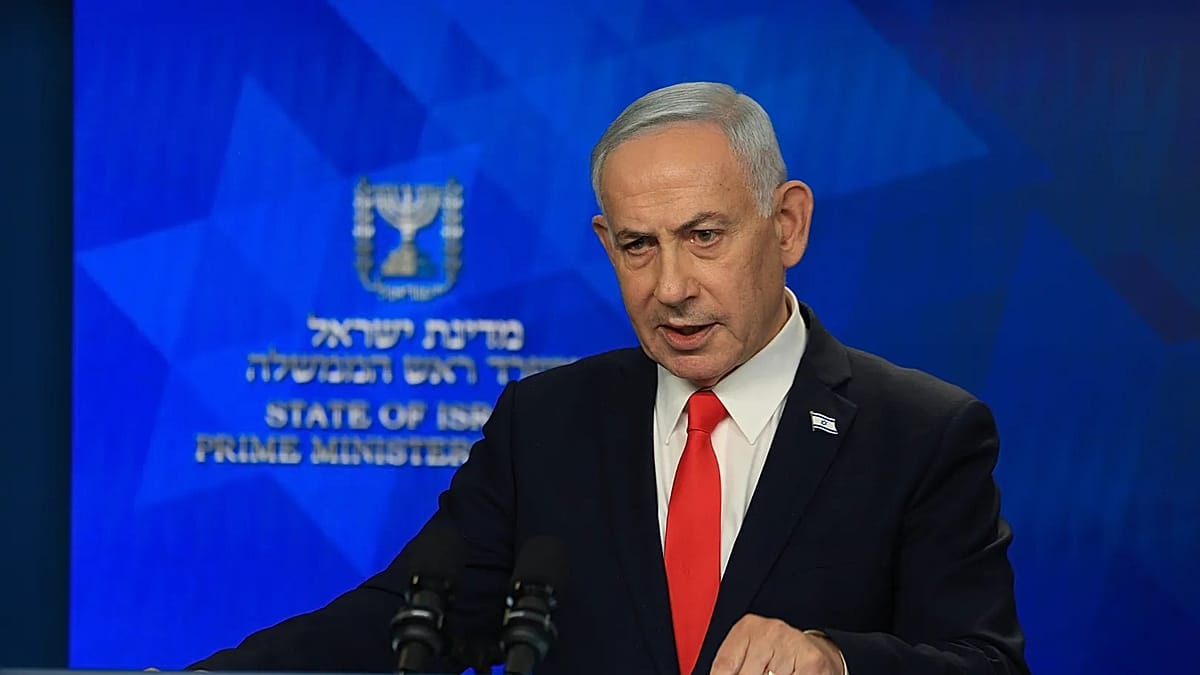
The recent remarks by Israeli Prime Minister Benjamin Netanyahu have sparked controversy, drawing sharp responses from the British government. In a podcast interview, Netanyahu referred to the UK as “the Islamic republic of Britain,” leading to strong disapproval from various officials in the UK.
UK Government’s Strong Response
A spokesperson for the British government described Netanyahu’s comments as “completely unacceptable.” They emphasized that the issue has been formally raised with the Israeli authorities, signaling a serious diplomatic rebuke. The Prime Minister’s remarks were made during an interview on an Israeli army radio podcast, where he not only made the derogatory statement but also humorously suggested that the UK was “the first Islamic republic with nuclear weapons.” This kind of rhetoric, framed in a joking manner, has raised eyebrows and heightened tensions between the two nations.
Context of Netanyahu’s Comments
During the interview, Netanyahu discussed historical figures like Randolph Churchill, son of former British Prime Minister Winston Churchill. He praised Churchill’s supportive stance toward Israel during the Six-Day War of 1967. When prompted about the current climate in the UK, he lamented the supposed decline in this support, stating, “Try and find that now, in what is called the Islamic republic of Britain.” This sentiment was echoed by the podcast host, who questioned whether all of Europe was experiencing a similar trend, to which Netanyahu agreed. His statements echo sentiments often voiced by right-wing politicians and commentators who suggest that Islam is increasingly influencing British society.
Shifting Dynamics in UK-Israel Relations
The relationship between the UK and Israel has been under strain, particularly following the arrival of new British Prime Minister Andy Burnham. Before taking office, Burnham acknowledged shortcomings in his party’s initial response to the ongoing conflict in Gaza, indicating a need for improvement. After the violent events of October 7, which saw attacks by Hamas, Burnham condemned these acts as “monstrous,” but also stated that criticism of Israel’s actions in Gaza is essential. He poignantly remarked, “The unbearable suffering in Gaza is a scar on our collective conscience.”
Burnham’s administration has taken a balanced stance, aiming to condemn violence from all sides while also highlighting the humanitarian crisis in Gaza. His assertion that “it’s completely unacceptable that innocent Palestinians, including children, continue to be killed” reflects a growing call for Westminster to exert more pressure on the Israeli government. This nuanced approach could further complicate UK-Israel relations, especially as the rhetoric around the conflict becomes more charged.
The Broader Implications of Changing Perspectives
Netanyahu’s provocative remarks not only risk deteriorating diplomatic relations with the UK but also suggest a growing trend among some global leaders to frame political discussions in binary, often inflammatory terms. The idea that a country can be labeled with extreme political identifiers can lead to further division and misunderstanding. It serves to highlight the challenges of navigating complex geopolitical landscapes, where history, current events, and sentiment intertwine.
As both nations grapple with these evolving dynamics, it remains to be seen how diplomatic engagements will unfold. The call for a more balanced critique of actions in Gaza, alongside the scrutiny of Islamist influences in the UK, creates a delicate environment requiring careful navigation by leaders on both sides. This incident underscores the importance of dialogue and understanding in addressing the multifaceted issues facing international relations today.