
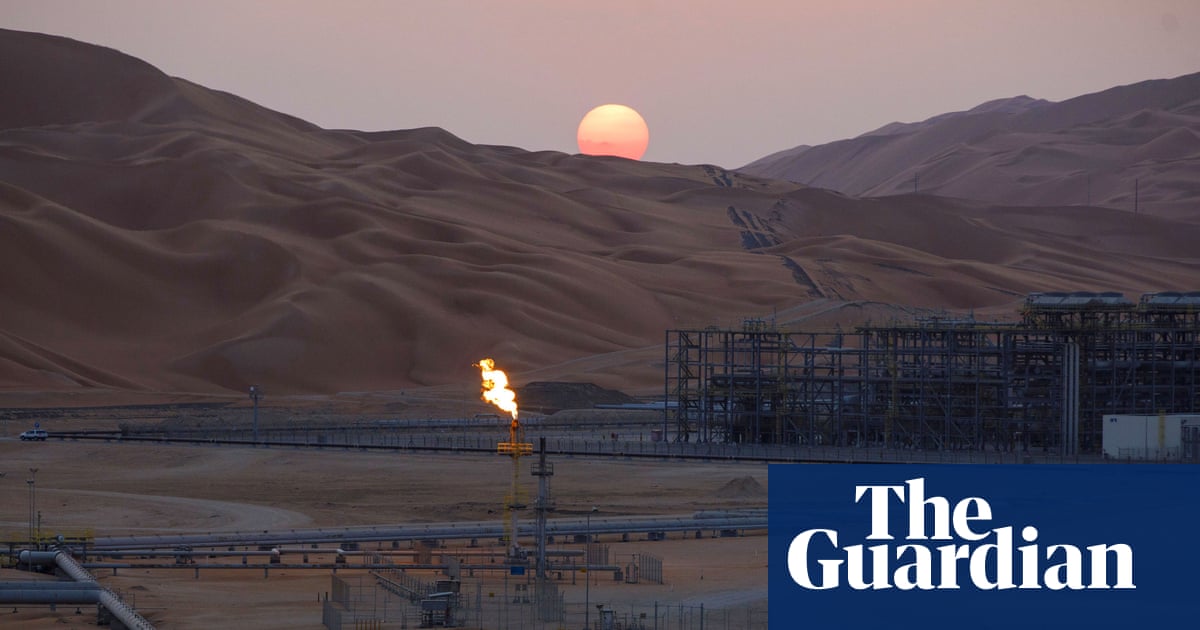
Saudi Arabia’s state-owned oil giant, Aramco, has reported a significant profit surge of 26% in the first quarter of the year. This remarkable financial performance is attributed to its east-west pipeline, which has enabled the company to ship substantial quantities of oil from the Gulf despite ongoing regional conflicts.
Strong Financial Performance
In the early months of the year, Aramco’s profits reached $33.6 billion (£26.9 billion), up from $26.5 billion in the same period last year. This impressive earnings spike was complemented by a nearly 7% increase in revenue, totaling around $115.5 billion. These figures underscore Aramco’s resilience in the face of numerous challenges, including interruptions to its operations due to attacks on its infrastructure and a temporary halt in exports through Gulf ports.
Amin Nasser, the company’s President and CEO, stated that the east-west pipeline has proven to be a vital supply line. It has been instrumental in alleviating the pressures of a global energy crisis and providing much-needed support to customers dealing with shipping difficulties, particularly in the crucial Strait of Hormuz.
Challenges in the Strait of Hormuz
The Strait of Hormuz is a critical chokepoint for the world’s energy supply, through which approximately 20% of global oil and gas typically flows. Unfortunately, this key route has faced significant disruption since the beginning of the US-Iran conflict in late February. Without the ability to access this corridor for exporting oil, Aramco has effectively utilized its east-west pipeline, which transports crude from the east coast of Saudi Arabia to the strategic port of Yanbu on the Red Sea.
As a result of the ongoing tensions, the international benchmark for oil prices, Brent crude, has witnessed a surge, surpassing $100 per barrel—an increase of around 40% since the onset of the conflict. Nasser had previously warned that a prolonged blockade of the Strait of Hormuz could lead to a disastrous situation for global oil supplies. He indicated that even if the strait were to reopen immediately, it would still take several months for the oil markets to stabilize.
Market Recovery Outlook
In a recent communication to Bloomberg, Nasser elaborated on the timeline for a recovery. He suggested that a swift return to normalcy could take months, hinting at the possibility that if disruptions continue for an extended period, market stability may not be achieved until 2027. This situation is compounded by the ongoing military engagements and negotiations involving the United States and Iran, which continue to unfold around the Strait of Hormuz.
Aramco’s commitment to maintaining its quarterly dividend at $21.9 billion signals a stable outlook amid adversity. This dividend is crucial for the Saudi government, which heavily depends on Aramco’s financial contributions for domestic funding. The state retains a commanding 80% ownership in Aramco, while the Public Investment Fund, the kingdom’s sovereign investment arm, holds an additional 16%.
Conclusion
Headquartered in Dhahran, Saudi Arabia, Aramco is one of the largest oil producers globally and employs over 76,000 individuals worldwide. The company’s current performance reflects its strategic capabilities in navigating turbulent geopolitical conditions, emphasizing the importance of versatile infrastructure like the east-west pipeline. As the situation in the Middle East evolves, Aramco remains a vital player in the global energy landscape, providing critical insights and updates on market conditions for stakeholders around the world.