
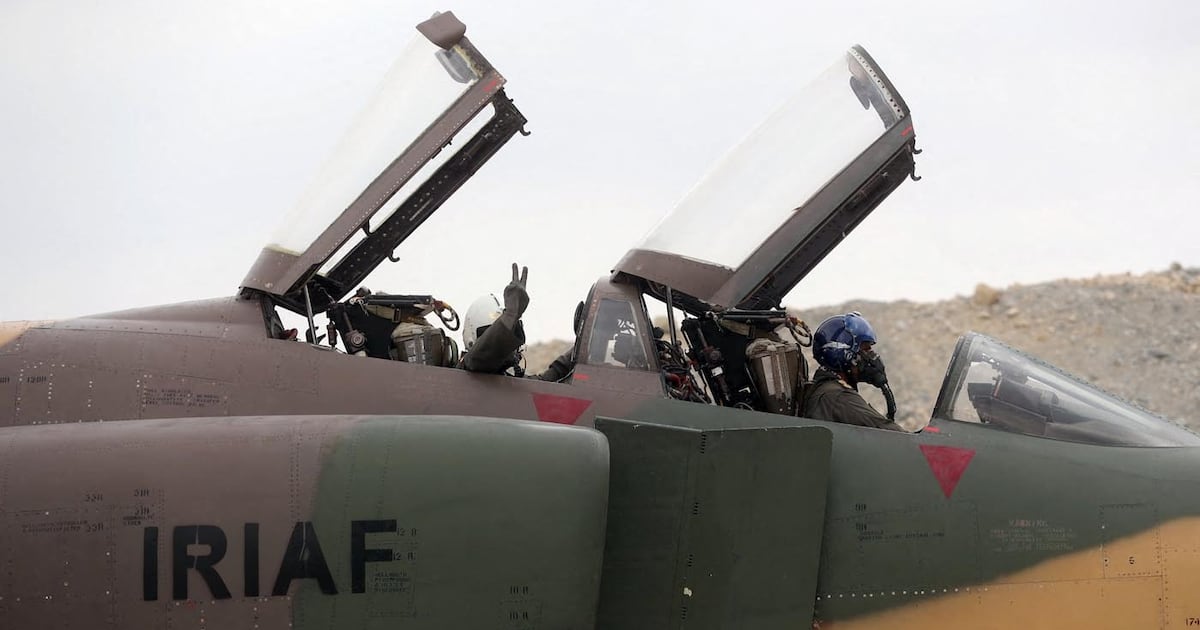
Qatar has recently rejected claims from Iran that it is detaining Iranian pilots following the downing of military jets in March. This ongoing dispute has emerged amidst diplomatic efforts aimed at easing escalating regional tensions.
Chronology of Events
The contention traces back to March 2, when Qatari forces reportedly shot down two Iranian Su-24 bombers, marking a significant moment in the ongoing conflict between the two nations. Iranian officials allege that three pilots were captured by Qatari authorities and remain imprisoned. In contrast, Qatar asserts that its search-and-rescue teams recovered the remains of one pilot, which have been returned to Iran, maintaining that it holds no other detainees.
These conflicting narratives have resulted in uncertainty regarding the three pilots’ fate, as nearly six months have passed since their aircraft were downed. Majed Al Ansari, an adviser to Qatar’s Prime Minister, stated that communication attempts were made when the aircraft violated Qatari airspace. However, when those attempts failed, Qatar acted as per international law and its rules of engagement, emphasizing the necessity to defend its territory.
Qatar’s Response
Al Ansari stated, “After attempting to communicate with them without receiving a response, necessary actions were taken to ensure our territorial integrity.” Following the incident, Qatar orchestrated a search for the downed pilots’ remains and coordinated with Iran regarding the return of a pilot’s body, adhering to international humanitarian standards. In an effort to provide clarity, Qatar extended an invitation to an Iranian team in April to discuss the search-and-rescue operation, but Iran reportedly did not respond.
Sardar Bagherzadeh, commander of Iran’s Missing Persons Committee, has criticized Qatari officials for their alleged reluctance to allow Iranian experts to investigate the situation. He described the Qatari response as one of “continuous sabotage and delay” and urged the country to facilitate the entry of a fact-finding team. In correspondence to the International Committee of the Red Cross, Bagherzadeh reiterated the claim that three Iranian pilots were captured and remain inaccessible to their families.
Wider Implications
The tense situation unfolds against a backdrop of increasing regional volatility and diplomatic efforts to resolve existing issues between Iran and Gulf states. While Qatar has maintained its stance on continuing diplomatic channels, Iran faces ongoing international scrutiny over its practices of arbitrary detention, which critics argue are employed as leverage in negotiations with other nations.
The current hostilities ignited on February 28, following a coordinated military operation by the United States and Israel targeting Iran’s nuclear and military capabilities. This offensive resulted in the death of Iran’s supreme leader, Ayatollah Ali Khamenei, triggering retaliatory strikes by Tehran against U.S. and Israeli interests throughout the Gulf region. The conflict has raised serious concerns about the potential for wider instability, particularly as tensions escalate over the crucial Strait of Hormuz, a vital conduit for global oil shipments.
In conclusion, the discord between Qatar and Iran over the pilots’ status encapsulates broader geopolitical tensions in the region, underscoring the complexity of international relations in a time of heightened confrontations.