
Two recent presidential decrees issued in Türkiye have emphasized the country’s maritime rights in the Aegean Sea. This initiative reflects Türkiye’s commitment to protect its marine biodiversity while also navigating complex geopolitical dynamics with its neighbor, Greece.
New Marine Park Designations
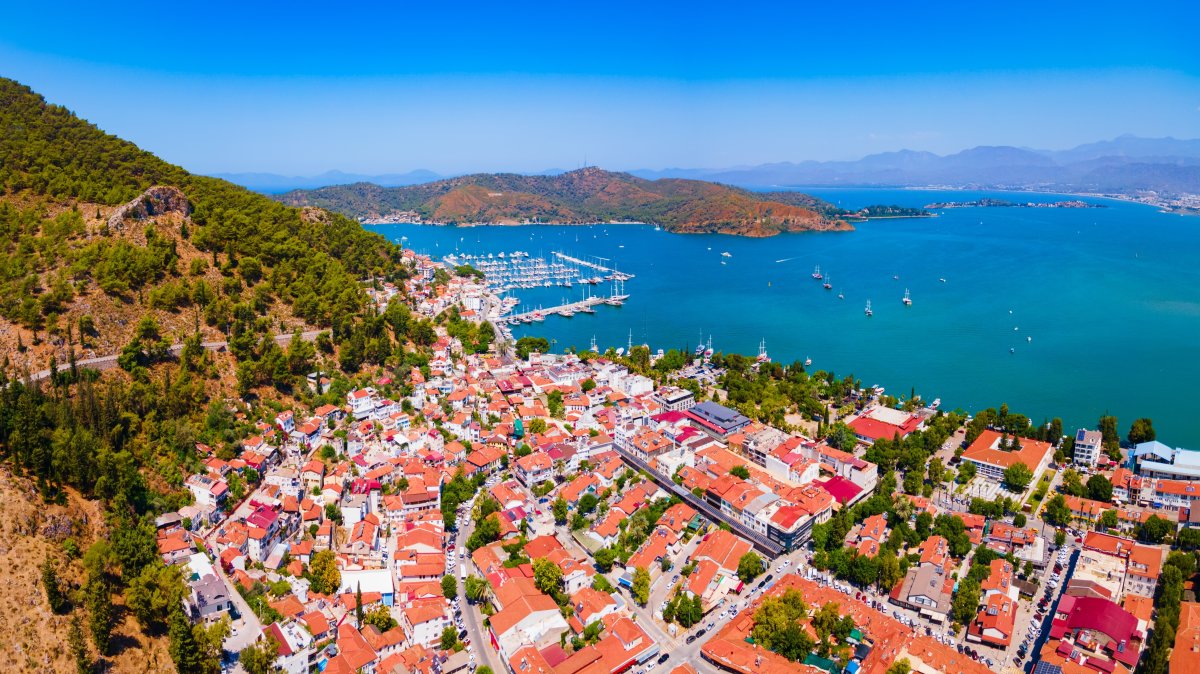
The first decree has officially declared a marine park in the southern Aegean Sea, specifically between the Fethiye district of Muğla and the Kaş district of Antalya. The second decree extends this protective designation to another area located in the Northern Aegean Sea, near Tekirdağ and Çanakkale. While Türkiye views these moves as essential for environmental protection, they have become points of contention in the region. Recent reports indicate that Greece is also poised to establish a new national marine park in the southern Aegean, with the matter currently under judicial review.
Tensions Surrounding Marine Conservation Efforts
The creation of marine parks has often led to friction between Ankara and Athens. Last year, Greece announced two marine parks in the Ionian Sea and around the southern Cyclades, prompting protests from Türkiye. Turkish officials have criticized these declarations as politically motivated maneuvers intended to alter the status quo in contested waters. Both nations remain alert to conflicts that could arise from territorial disputes, particularly in the Aegean, which has historical significance and has been a flashpoint for military tensions.
Greece and Türkiye’s Maritime Strategies
In a bid to enhance their military capabilities, Türkiye has made substantial investments in its domestic defense industry over the past two decades. The country’s navy plays a crucial role in securing maritime trade routes in the Aegean, the Eastern Mediterranean, and the Black Sea. This military buildup not only helps ensure Türkiye’s sovereign rights but also aims to shift geopolitical balances in its favor. On the other hand, Greece relies significantly on foreign alliances to bolster its defenses, emphasizing the importance of cultivating robust partnerships for national security.
Future Directions in Marine Policy
Ankara’s proactive stance on marine spatial planning aims to safeguard its maritime rights while upholding international legal standards. Turkish officials argue for transparent and cooperative marine protection efforts, particularly in semi-enclosed bodies of water where boundaries remain unresolved. As Türkiye institutionalizes its marine planning within global frameworks, it seeks to counteract any attempts to redefine its maritime jurisdiction under the guise of environmental initiatives. The Turkish government stresses that while marine conservation is critical, it must not jeopardize national sovereignty or geopolitical stability.
In a broader context, Türkiye is determined to assert its rights over its “Blue Homeland,” especially amidst growing cooperation among Israel, Greece, and the Greek Cypriot administration, whose claims often contradict Ankara’s. A significant step is the anticipated debate over the “Blue Homeland law” in the upcoming legislative session, which aims to address all legal aspects of Türkiye’s maritime territories. This would further clarify and reinforce Türkiye’s rights across various seas, including the Aegean, the Black Sea, the Mediterranean, and the Sea of Marmara.