
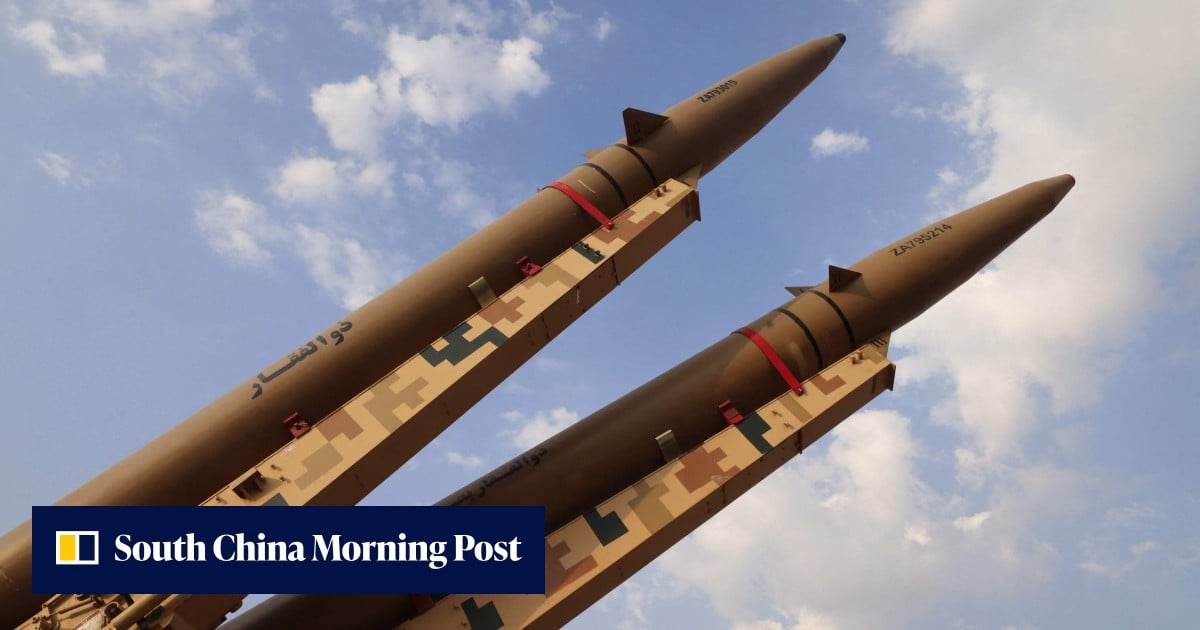
The United Arab Emirates (UAE) has reported the launch of two ballistic missiles originating from Iran. This incident marks Iran’s first attack on the Gulf nation since May, amidst the ongoing conflict impacting the broader Middle East region.
Missile Launch Details
According to the UAE’s defense ministry, both missiles landed in the sea. One missile reportedly fell within the UAE’s territorial waters, while the other landed just outside these boundaries. Initial evaluations suggest that the missiles were aimed at disrupting maritime activities, highlighting the ongoing tensions in the area. The security situation escalated further as residents of Dubai were placed under a missile threat alert, prompting the interior ministry to affirm that air defense systems were effectively addressing the threat. The situation was declared “safe” shortly afterward, but it underscores the heightened state of alert in the region.
Impact on UAE-Iran Relations
In response to this provocative action, the UAE has halted all trade, commercial exchanges, and financial dealings with Iran until further notice. A statement from the UAE’s foreign ministry cited “regional escalations that undermine regional and international peace and security” as the rationale for this drastic measure. This development signals a significant shift in UAE-Iran relations, which have been strained since various geopolitical issues surfaced.
Iran’s Denial of Missile Launch
Iran has categorically denied any involvement in launching missiles toward the UAE. Esmail Baghaei, the spokesman for Iran’s foreign ministry, urged regional parties to refrain from making what he termed “baseless accusations.” This juxtaposition of claims creates a complex diplomatic situation, raising concerns about misunderstandings that could lead to further conflict.
Concerns for Maritime Safety
The missiles’ intended target appears to have been maritime traffic in the area, an ominous sign for the safety of shipping routes crucial for trade in the Gulf. As a key player in regional commerce, the UAE’s maritime routes are vital not just for the nation but also for global trade. The recent events have understandably caused alarm among shipping companies and businesses that rely on this critical maritime corridor.
The ongoing developments between the UAE and Iran reveal the fragile state of security in the Middle East, where escalations can have substantial impacts on international peace and commerce. As tensions rise, it becomes increasingly important for nations in the region to seek diplomatic channels to prevent further conflicts that could threaten stability.
This latest incident serves as a reminder of the volatility in this part of the world and the potential for rapid escalations that could have far-reaching consequences. As the situation unfolds, keen eyes will be watching both nations to gauge their future interactions and the broader implications for regional security.